The villages of the Faroe Islands.
Eighteen islands. A few dozen settlements. Each is a different conversation between basalt, ocean and weather.
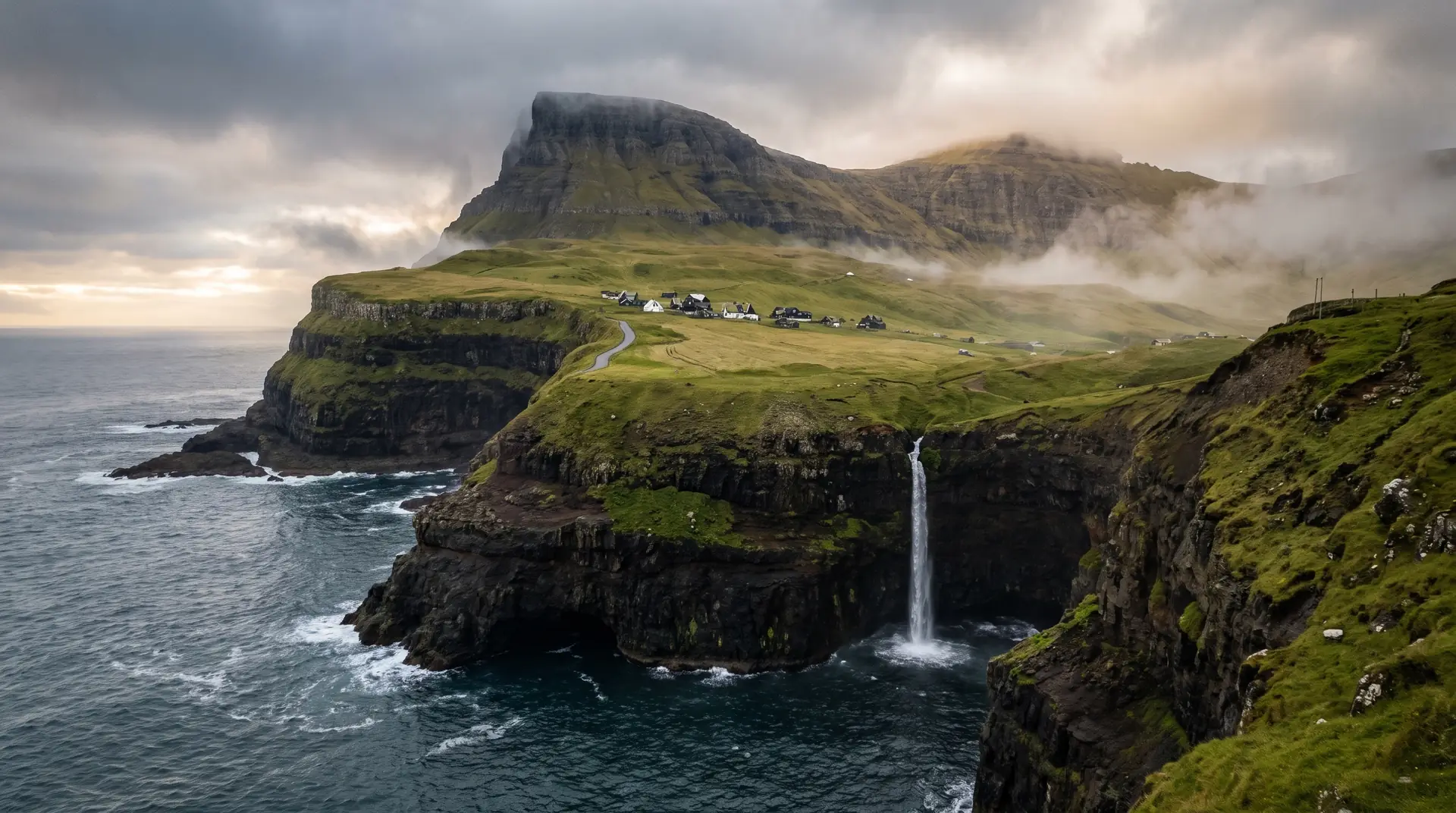
Where a waterfall falls clean off the island into the Atlantic.
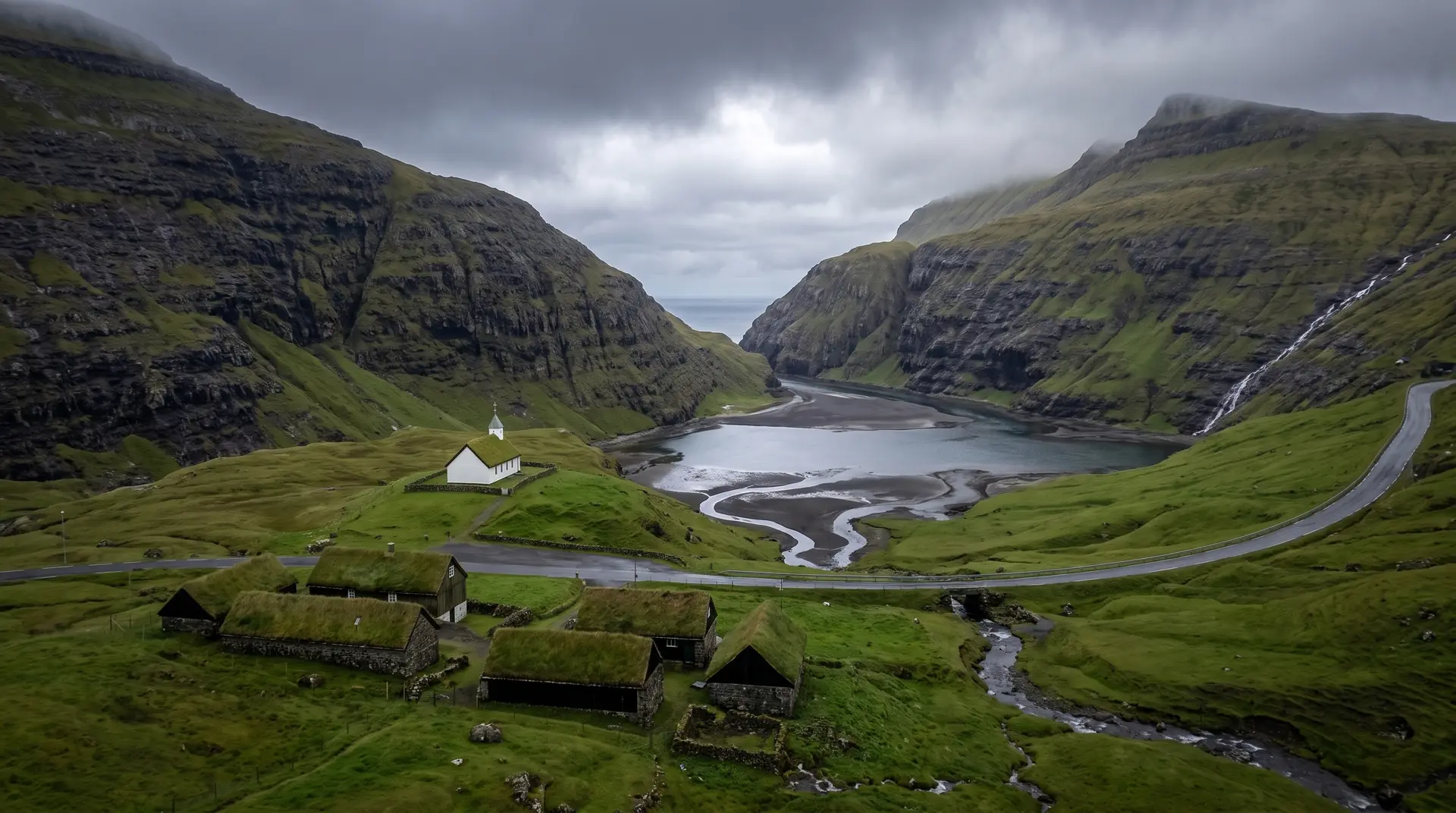
A turf-roofed chapel above a lagoon that empties twice a day.
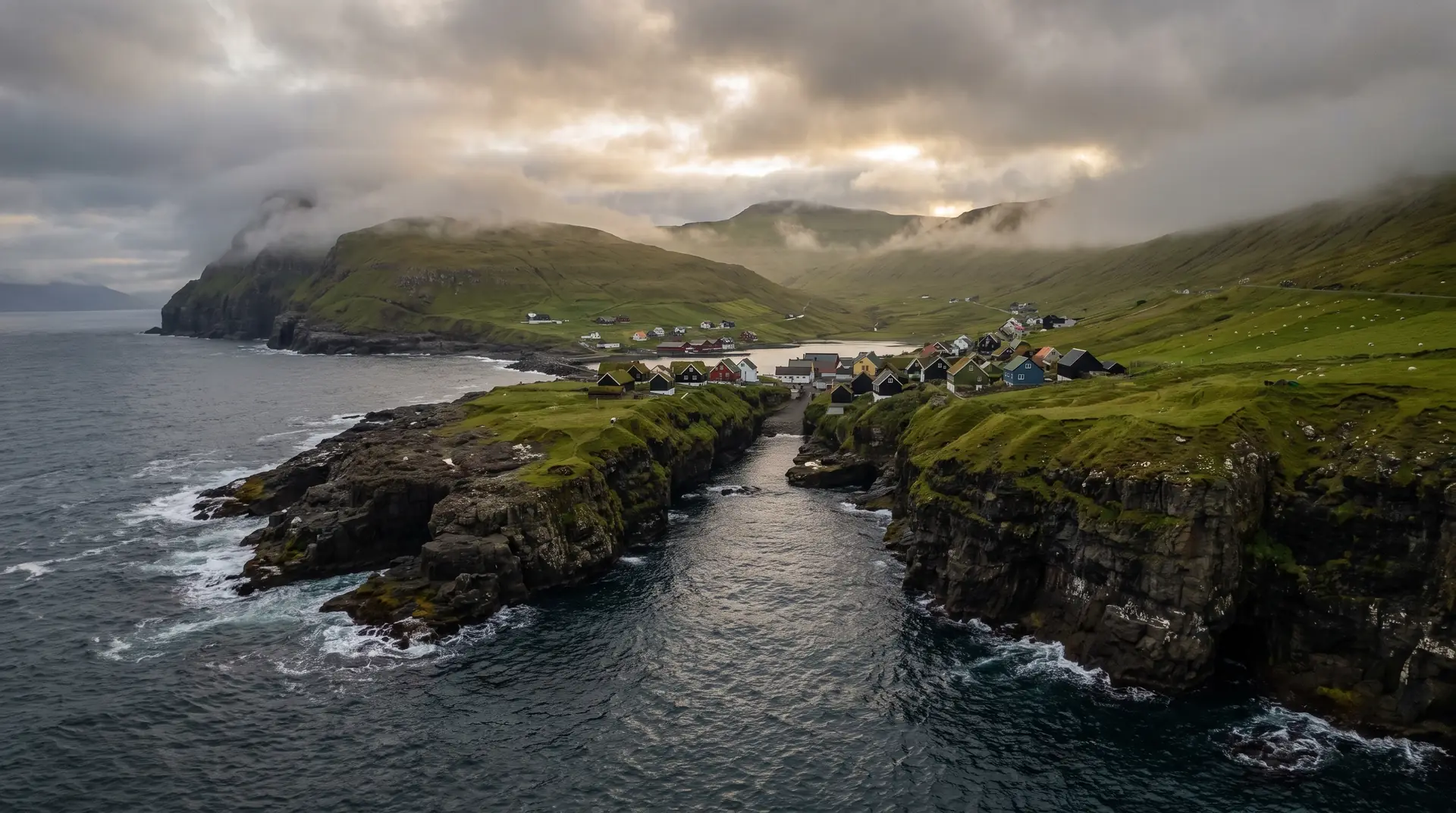
A village named for the gorge the sea carved into its harbour.
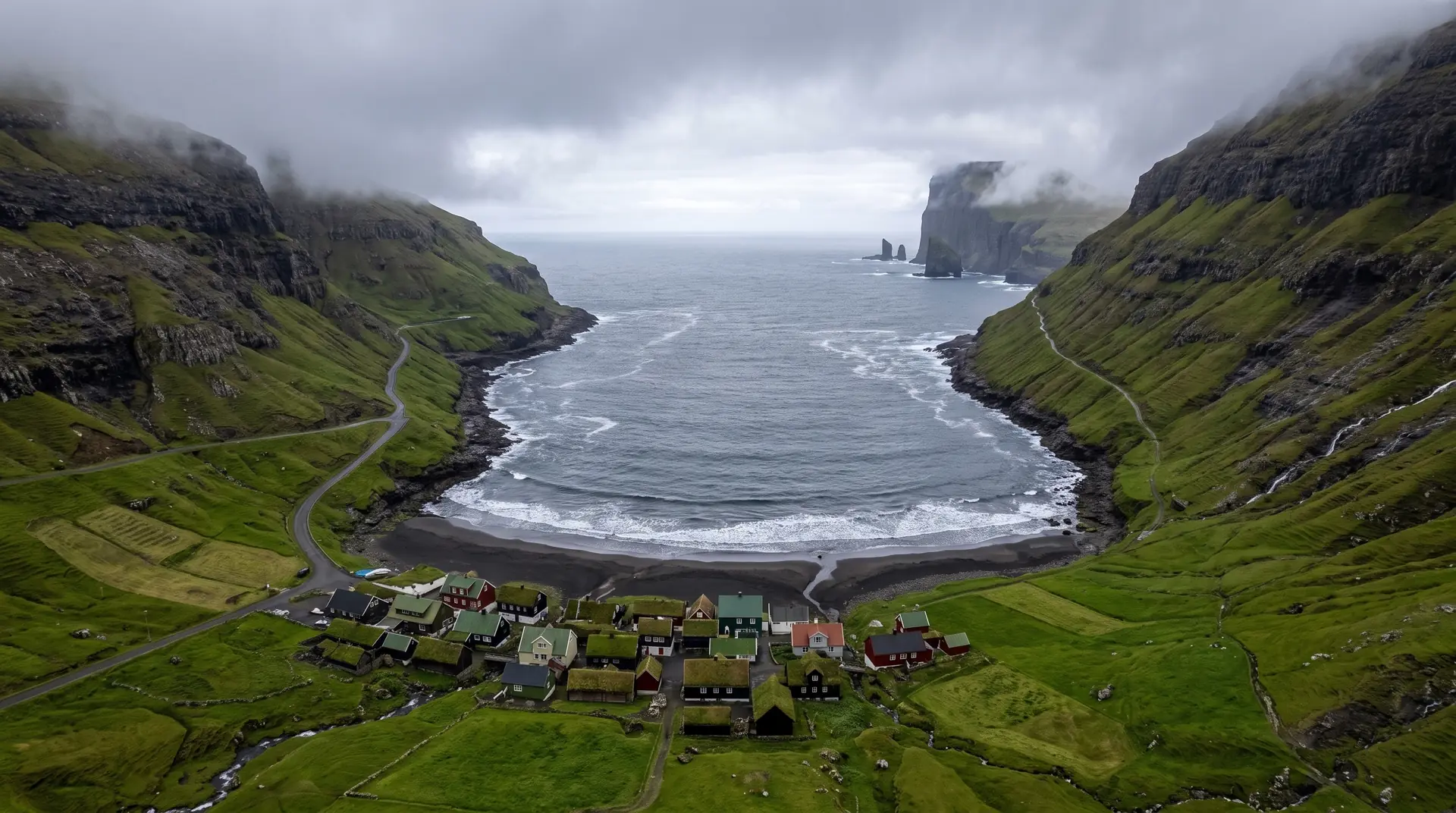
A black-sand bay at the end of the road, facing the Giant and the Witch.
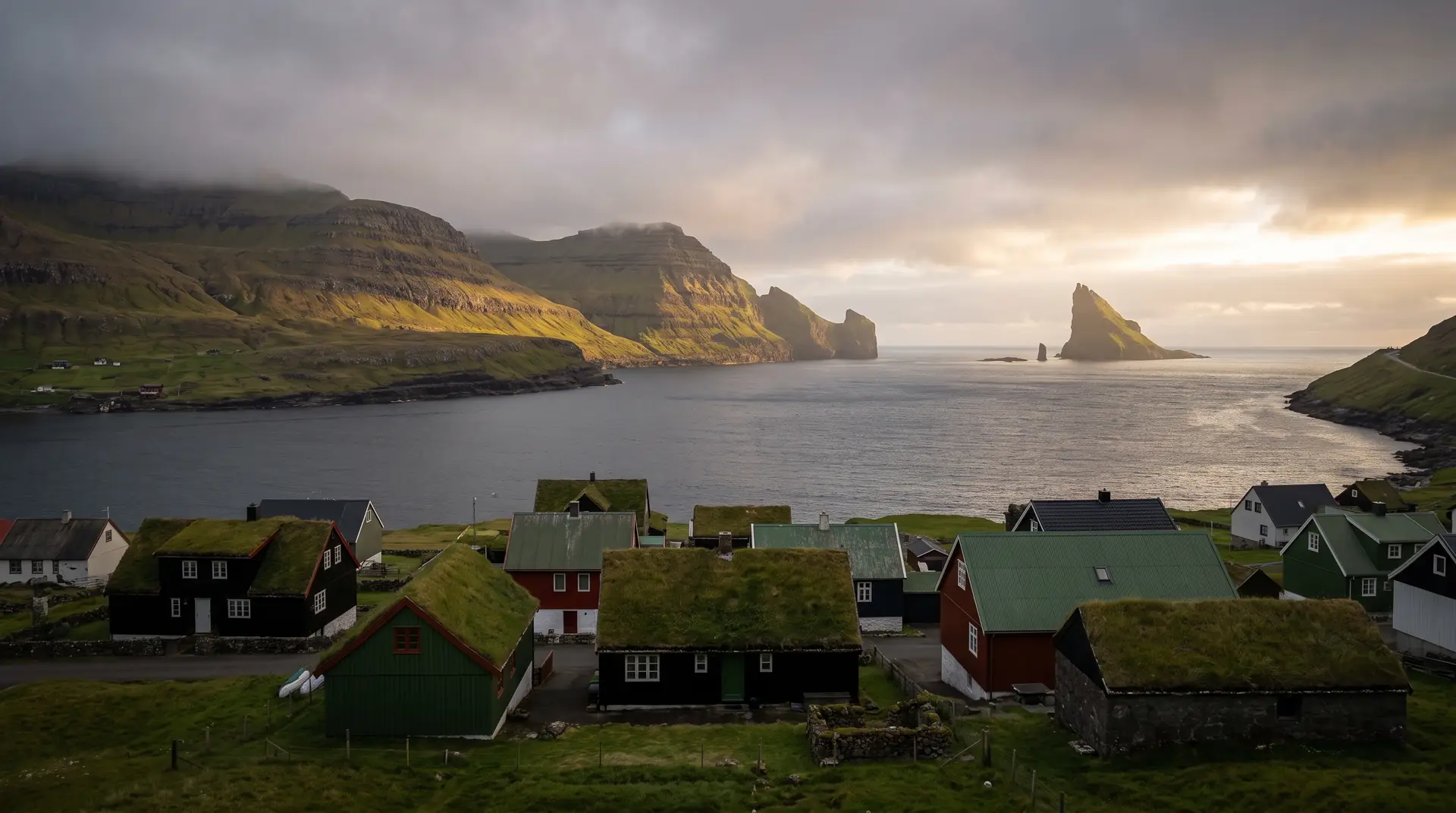
Turf roofs arranged before the islands’ finest window.
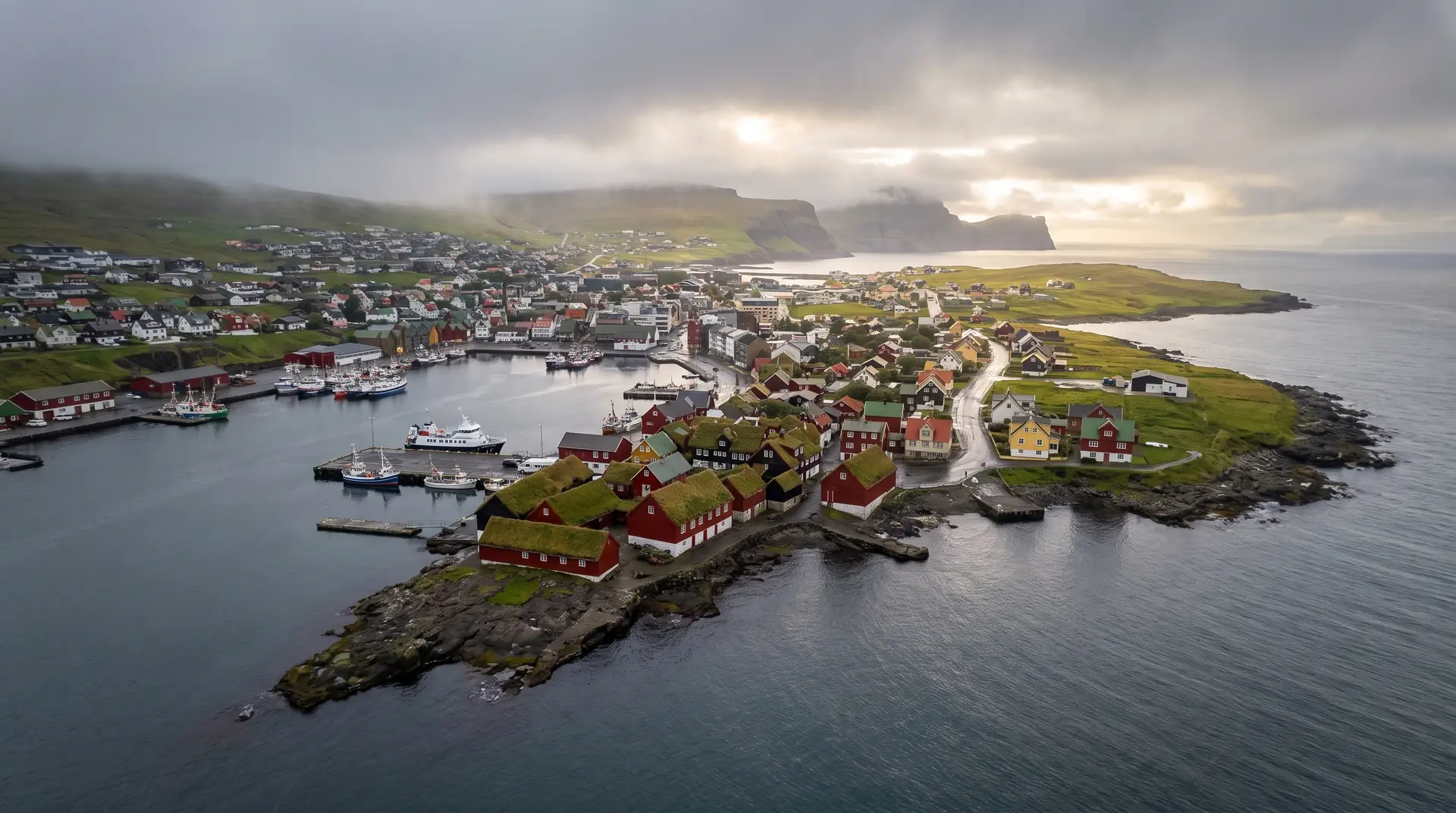
One of the world’s smallest capitals, with one of its oldest parliaments.
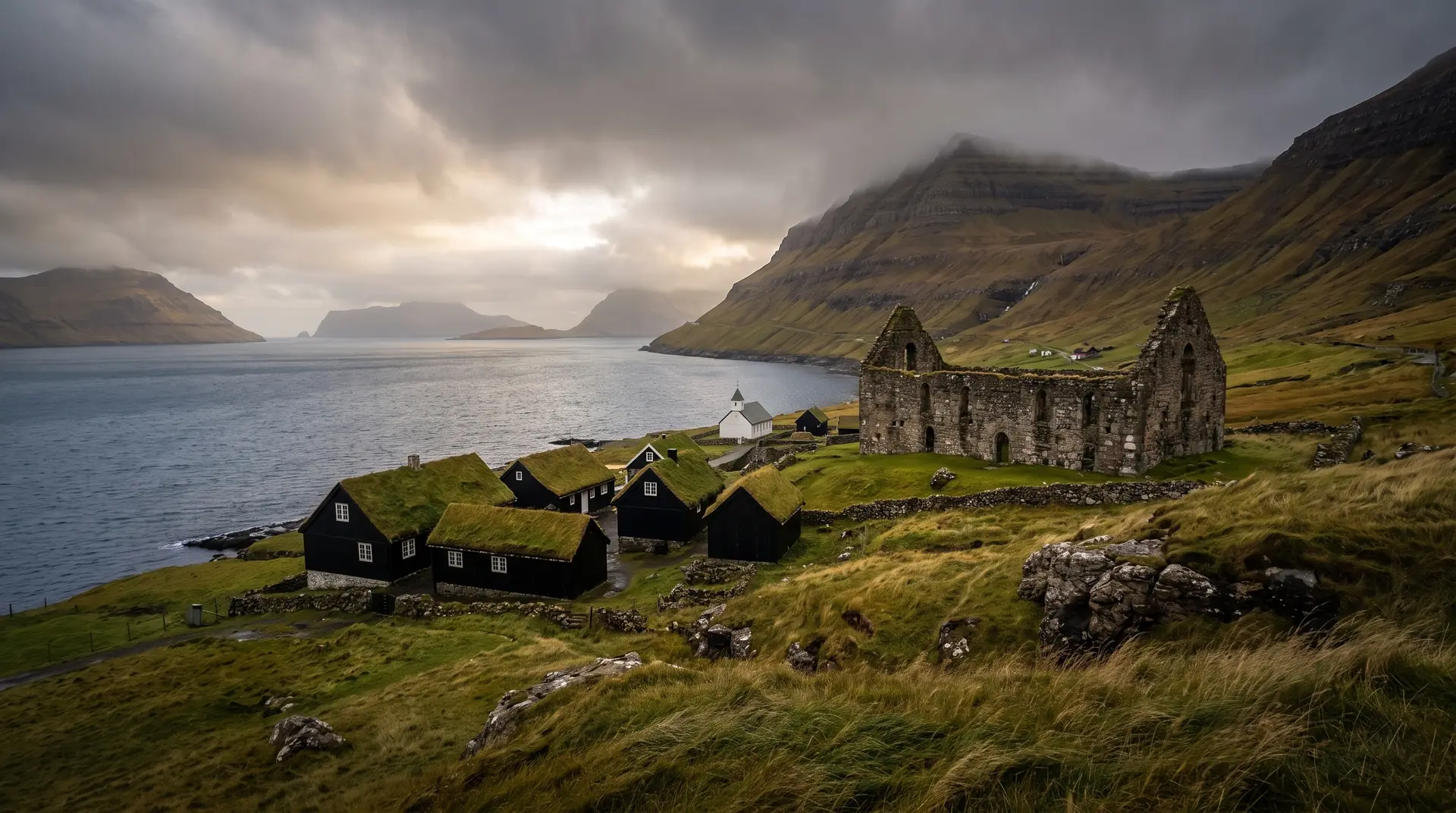
Nine hundred years of Faroese history in one shoreline hamlet.
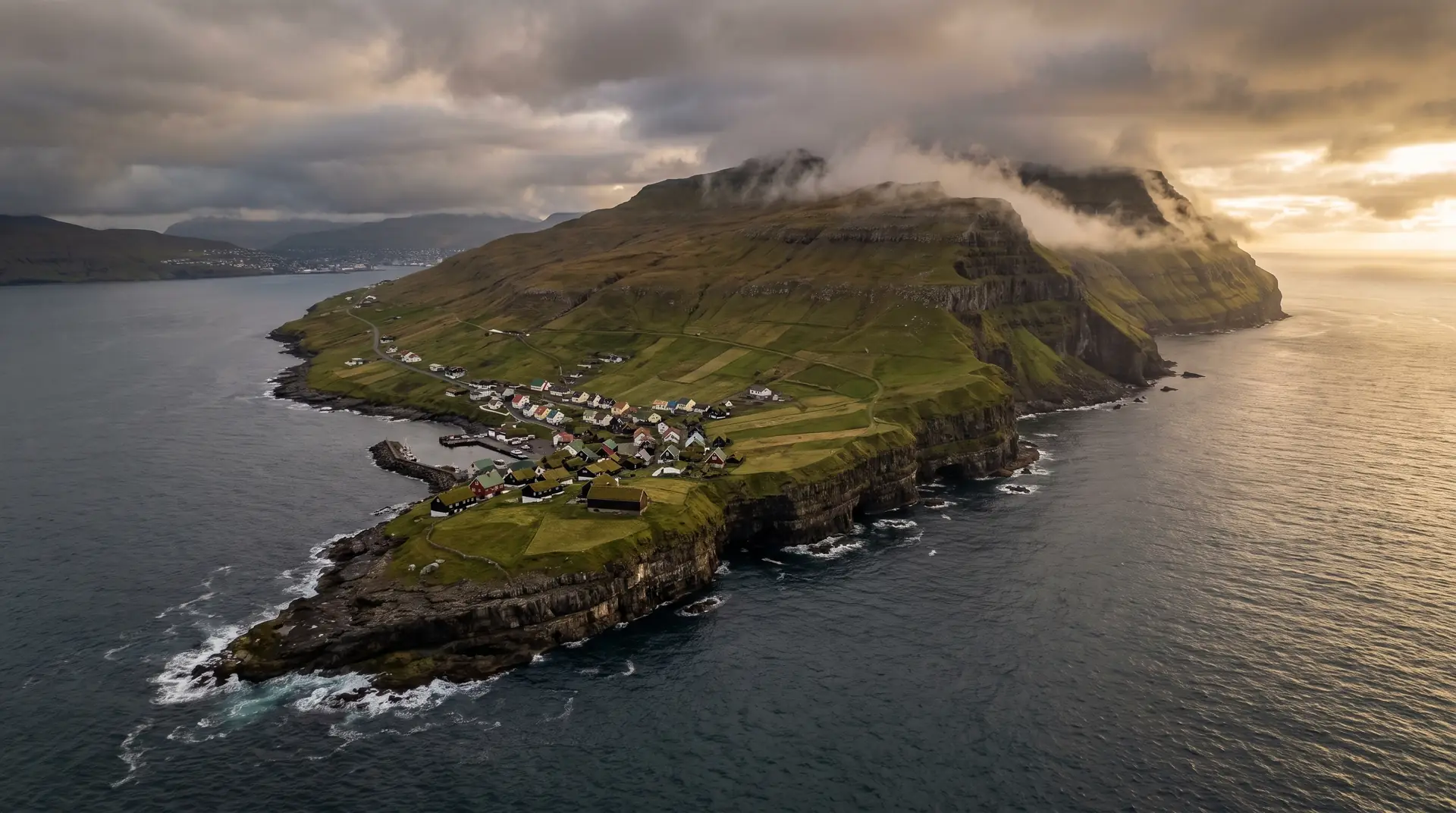
The island that shelters the capital and hosts a million night birds.
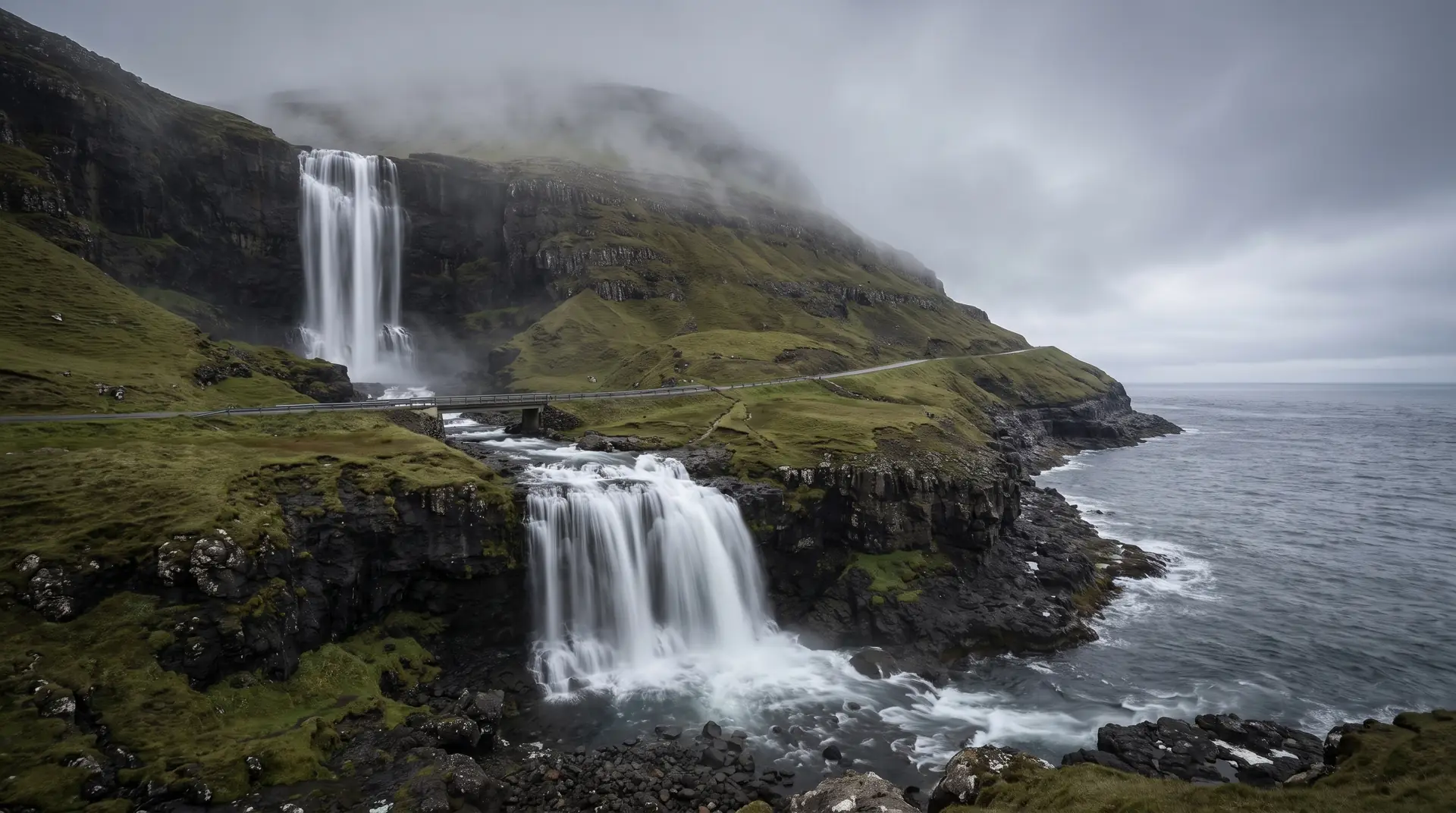
The islands’ tallest waterfall, stacked in two roadside tiers.
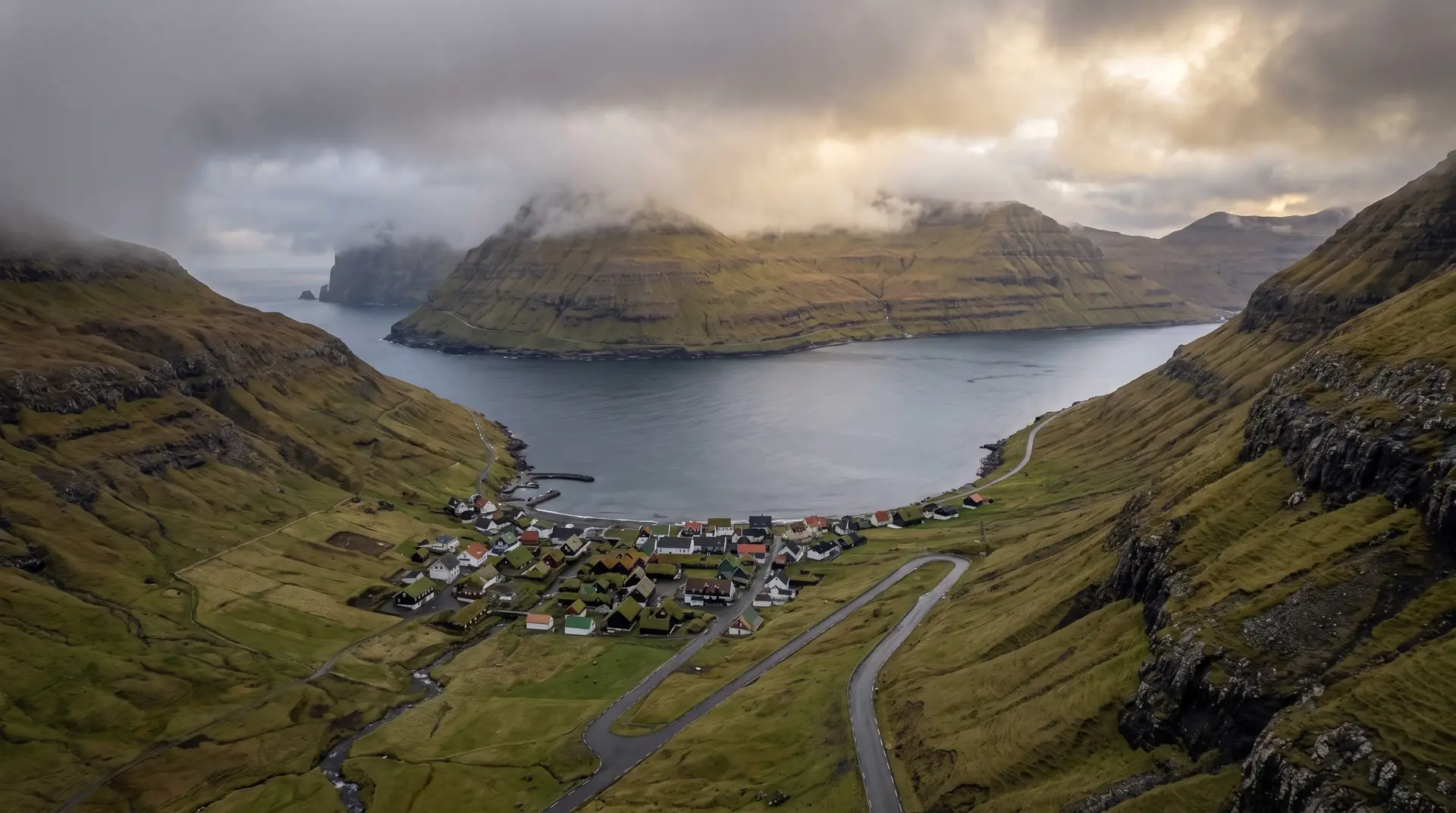
Where Faroese history is said to have stepped ashore.
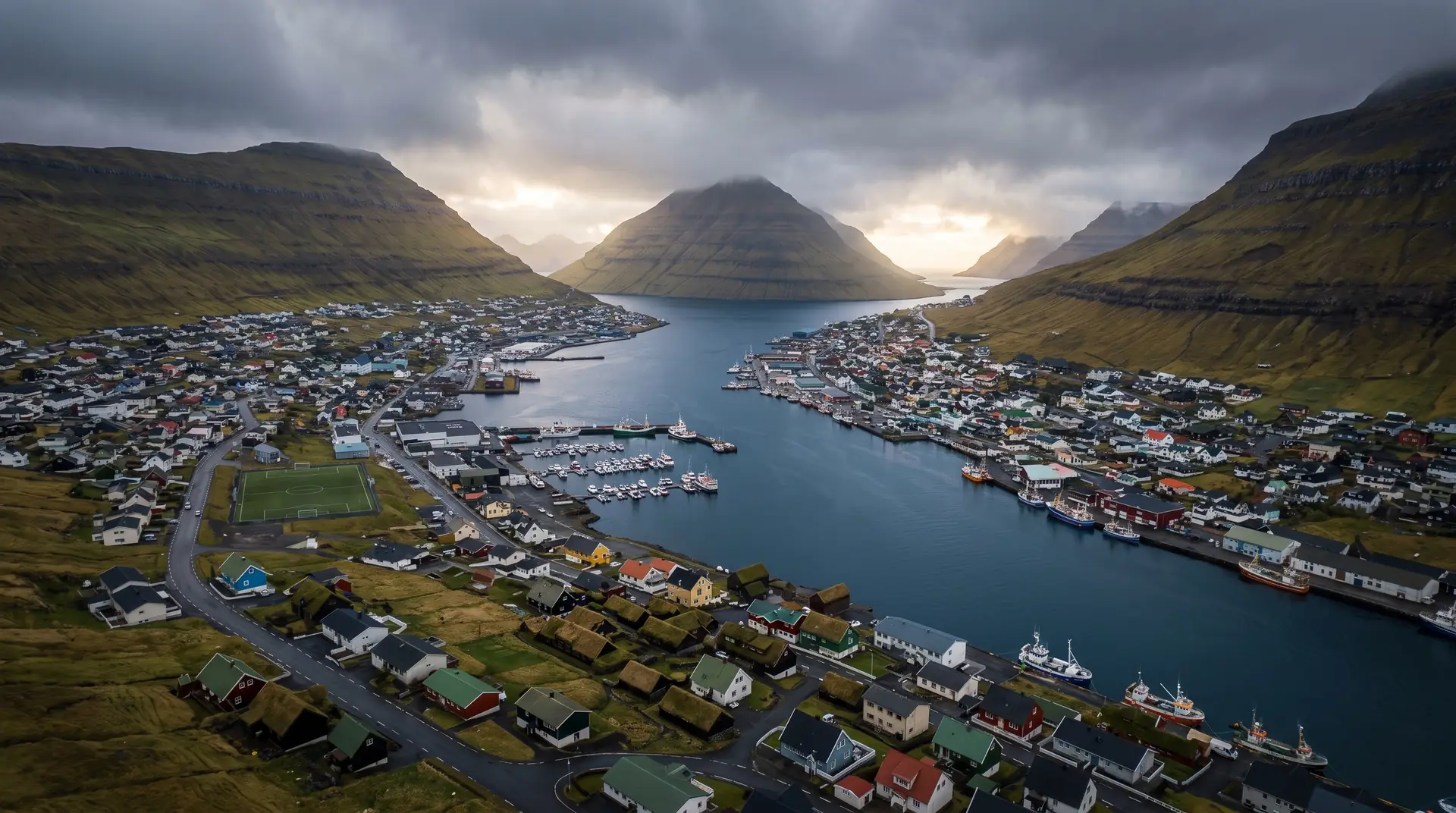
The fishing capital, moored between two fjords.
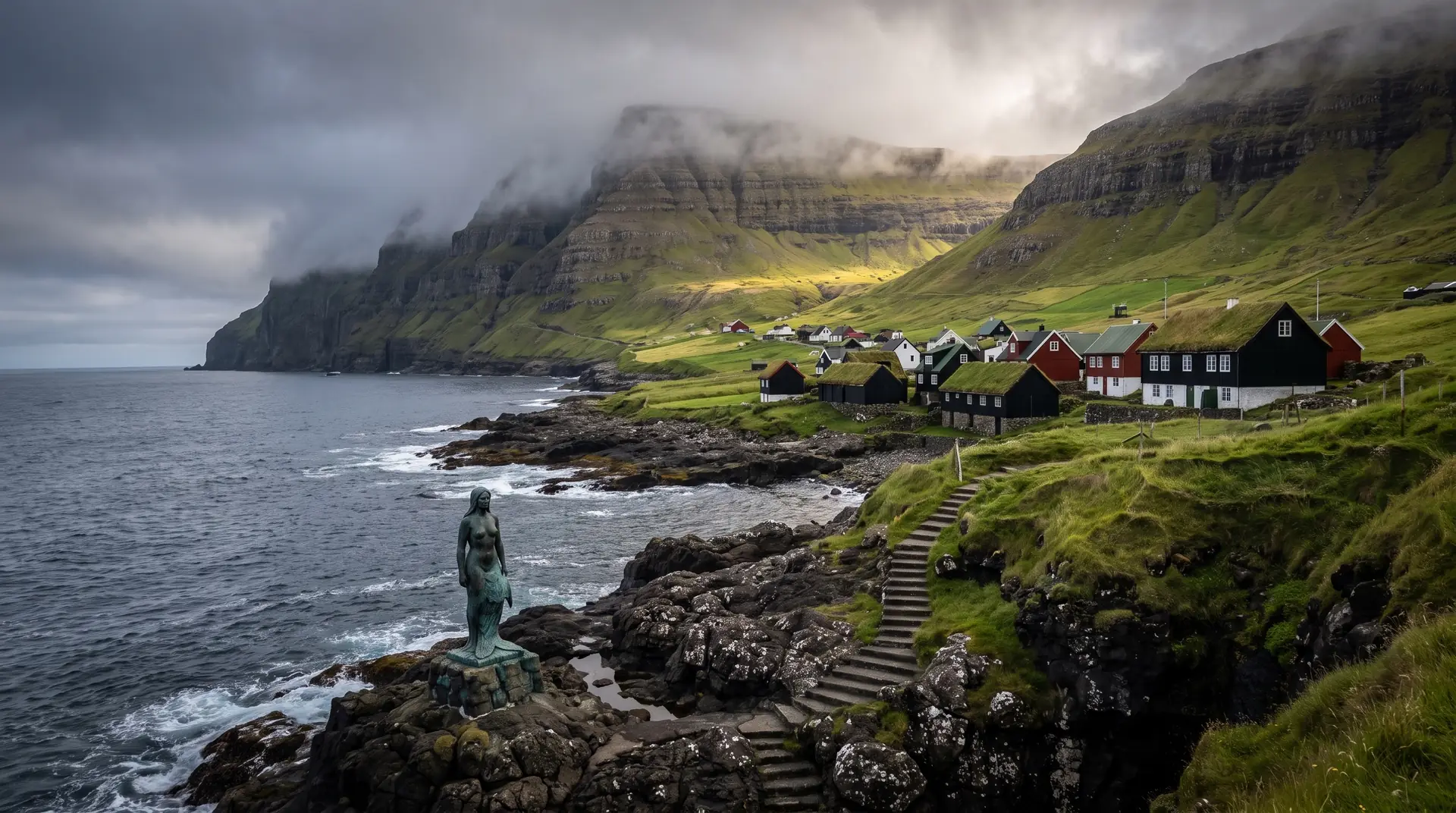
A cliff stairway down to the bronze woman who was once a seal.
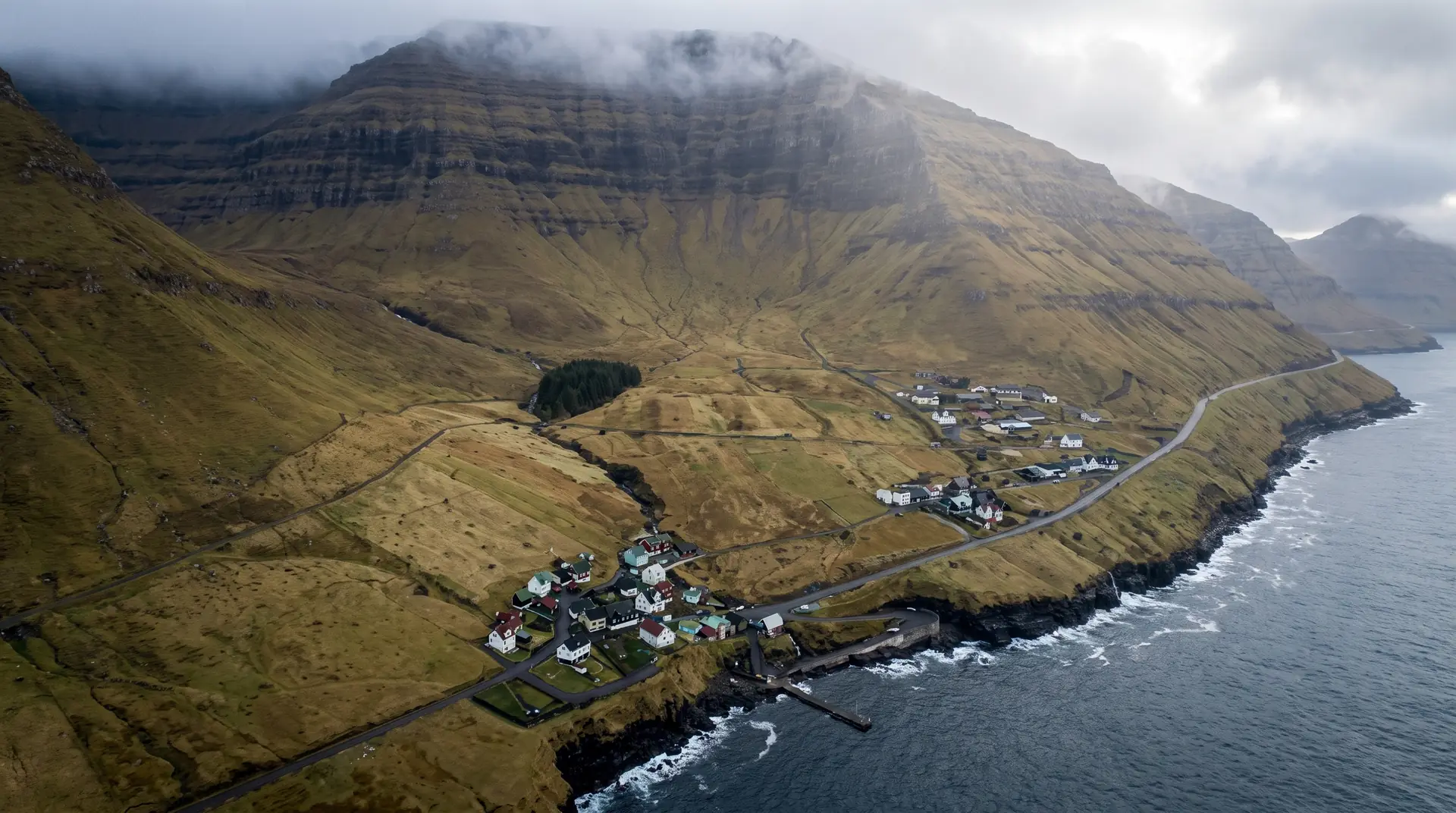
One of the only woods in the Faroes, planted at the foot of a wall of rock.
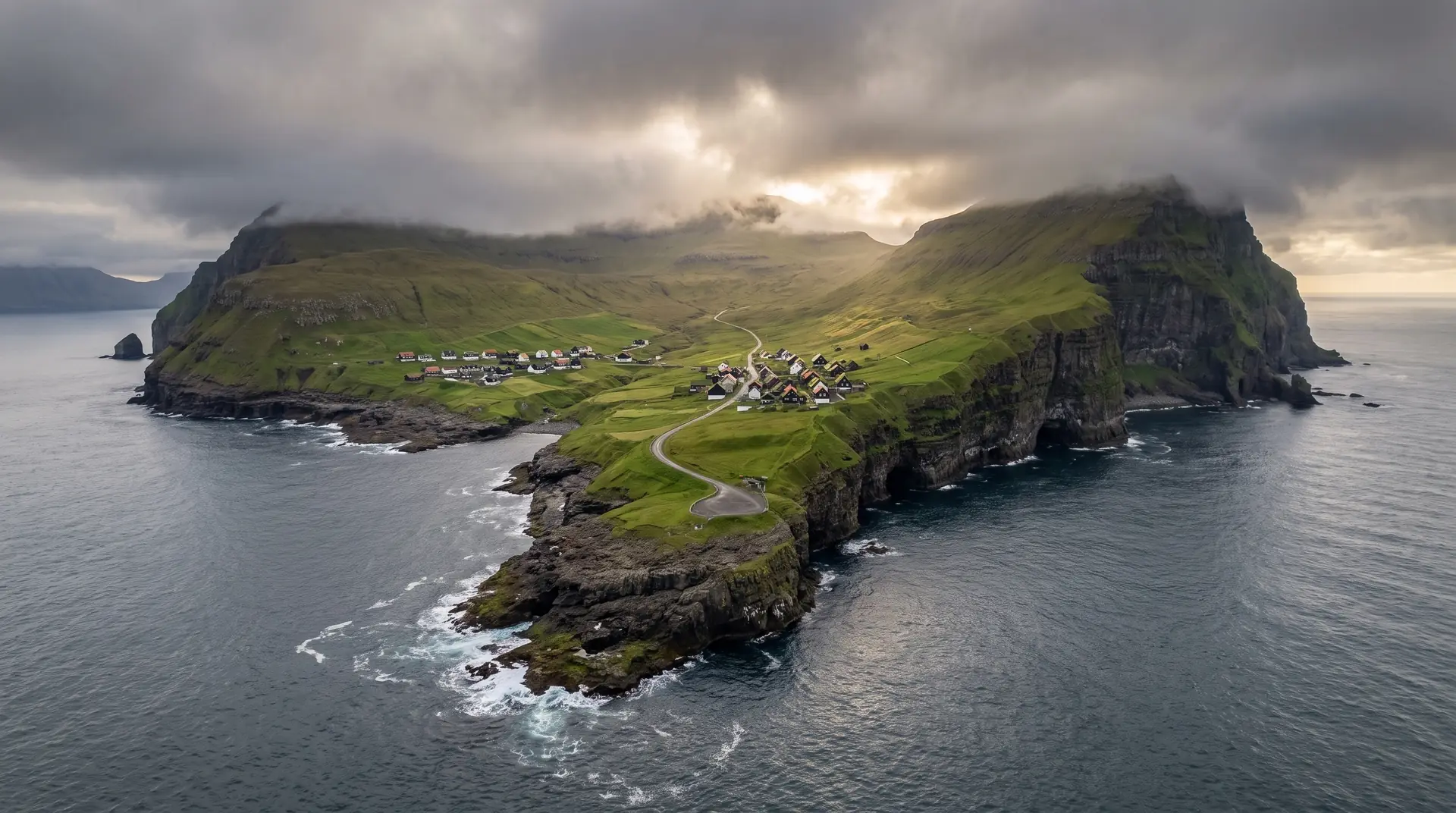
The last island east, where the road ends at the water and never resumes.
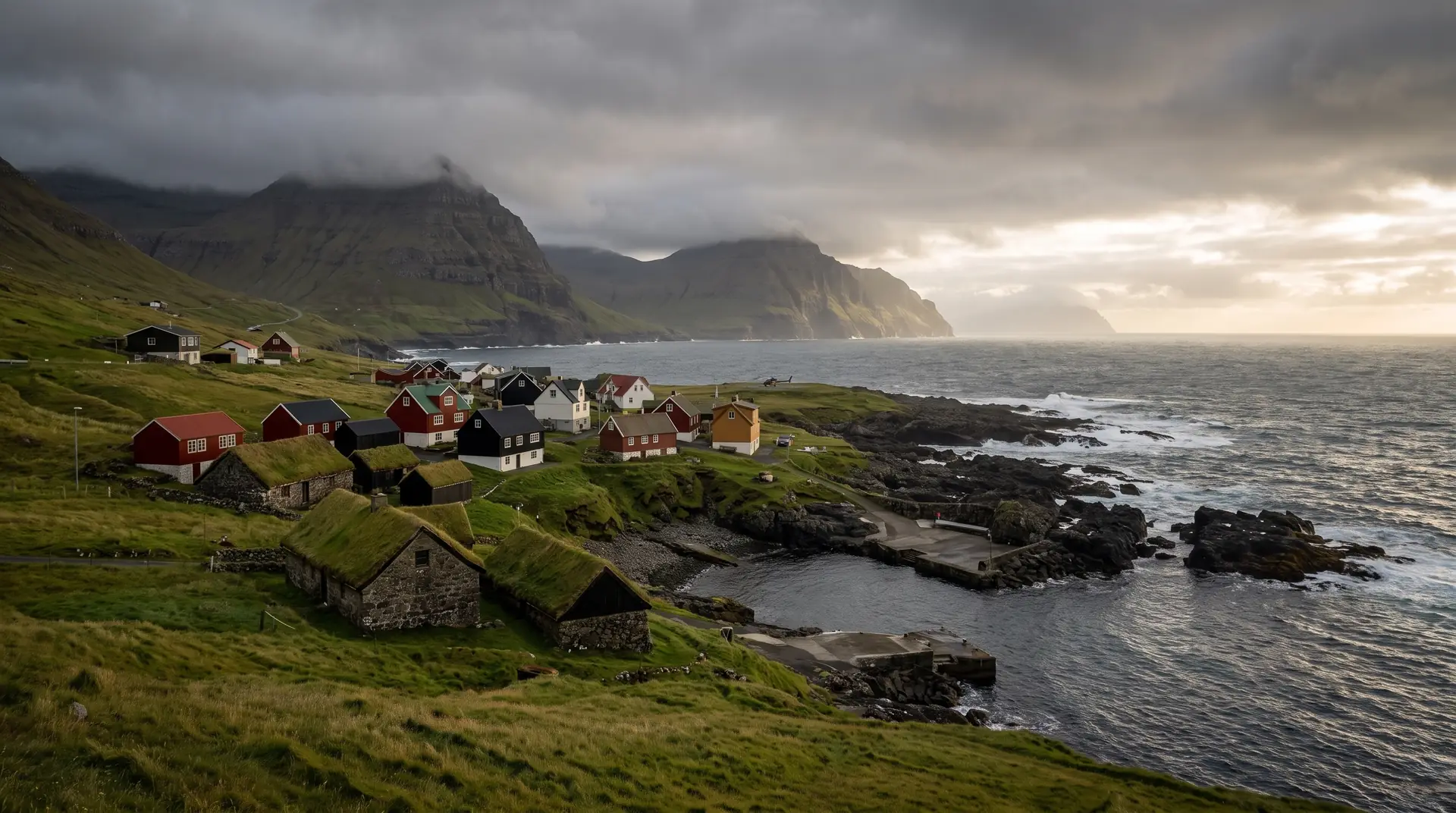
One village, thirty-one people, and a helicopter timetable instead of a road.
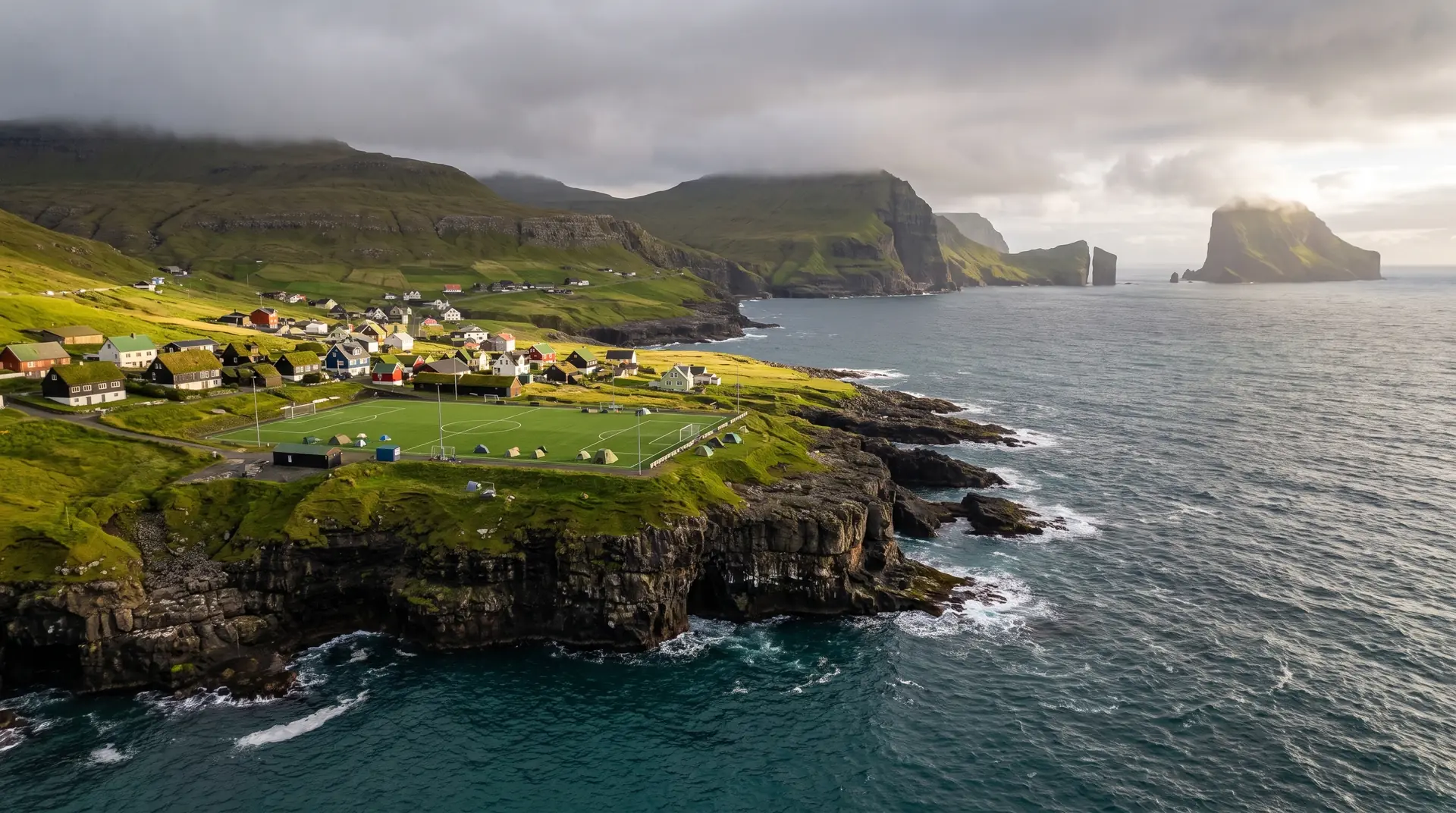
A football pitch at the edge of the Atlantic, retired into a campsite.
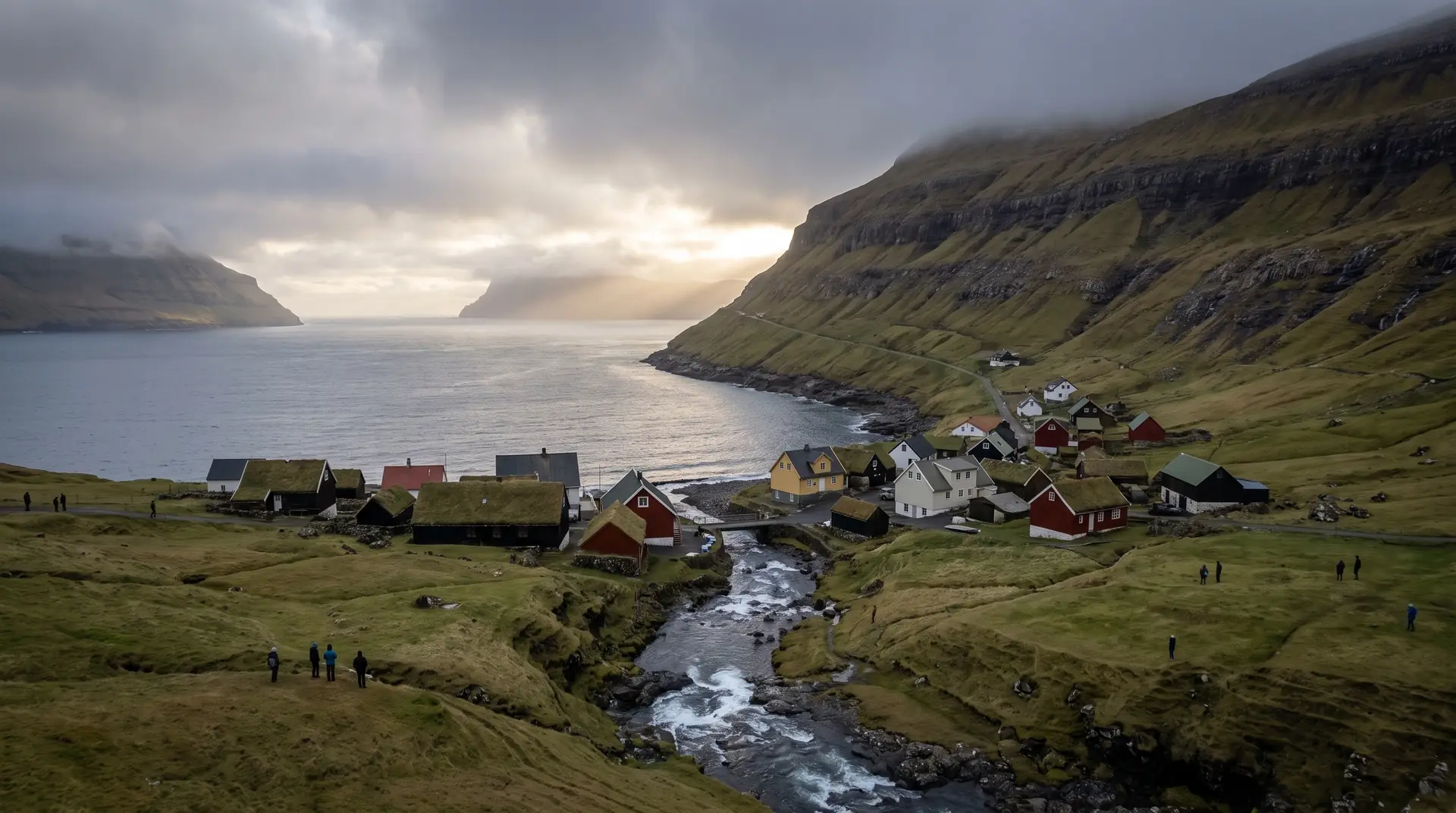
Twelve people, a stream through the middle, and a fjord that opens onto Kalsoy.
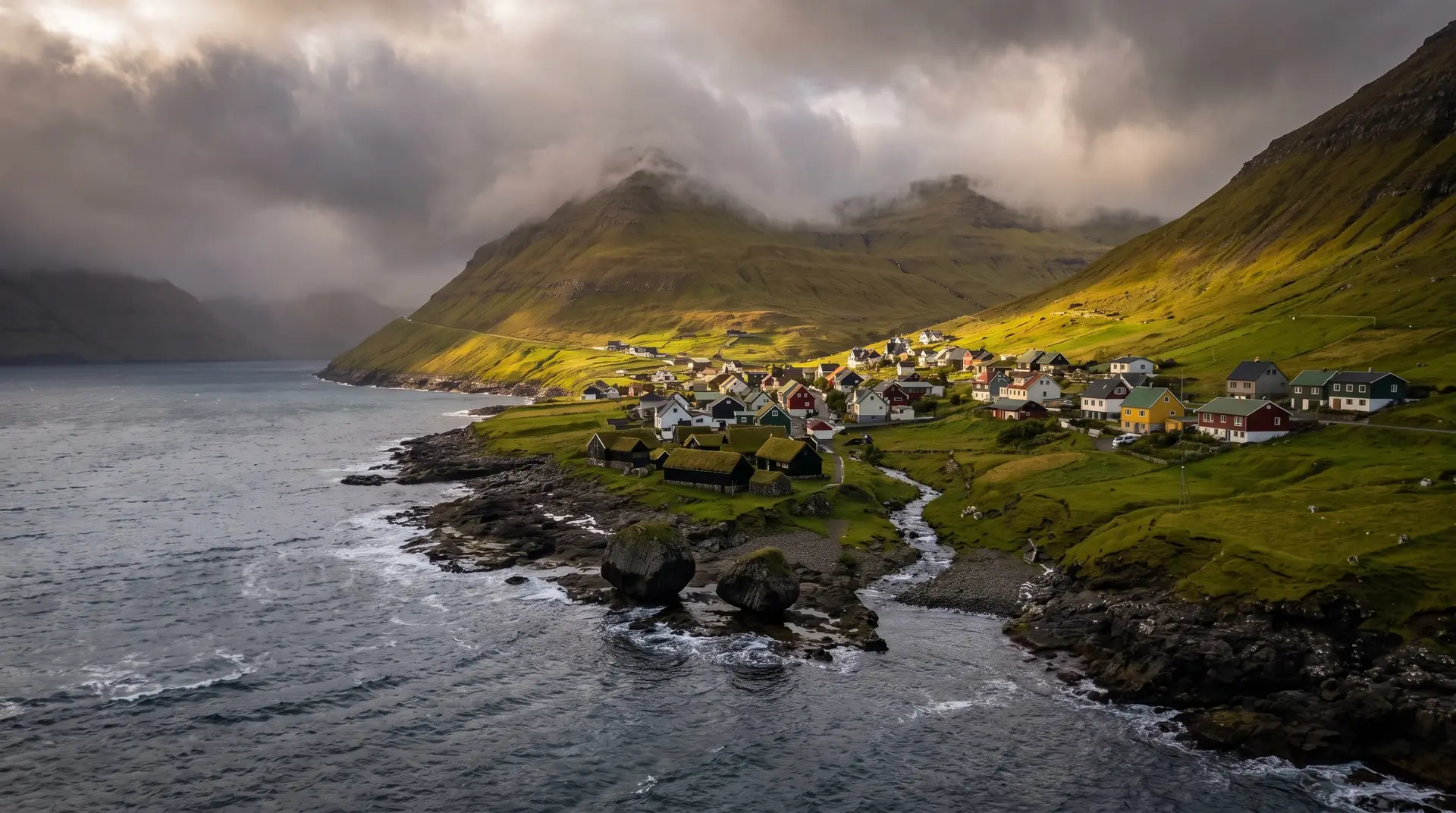
Two boulders on the shore that the swell has never quite settled.
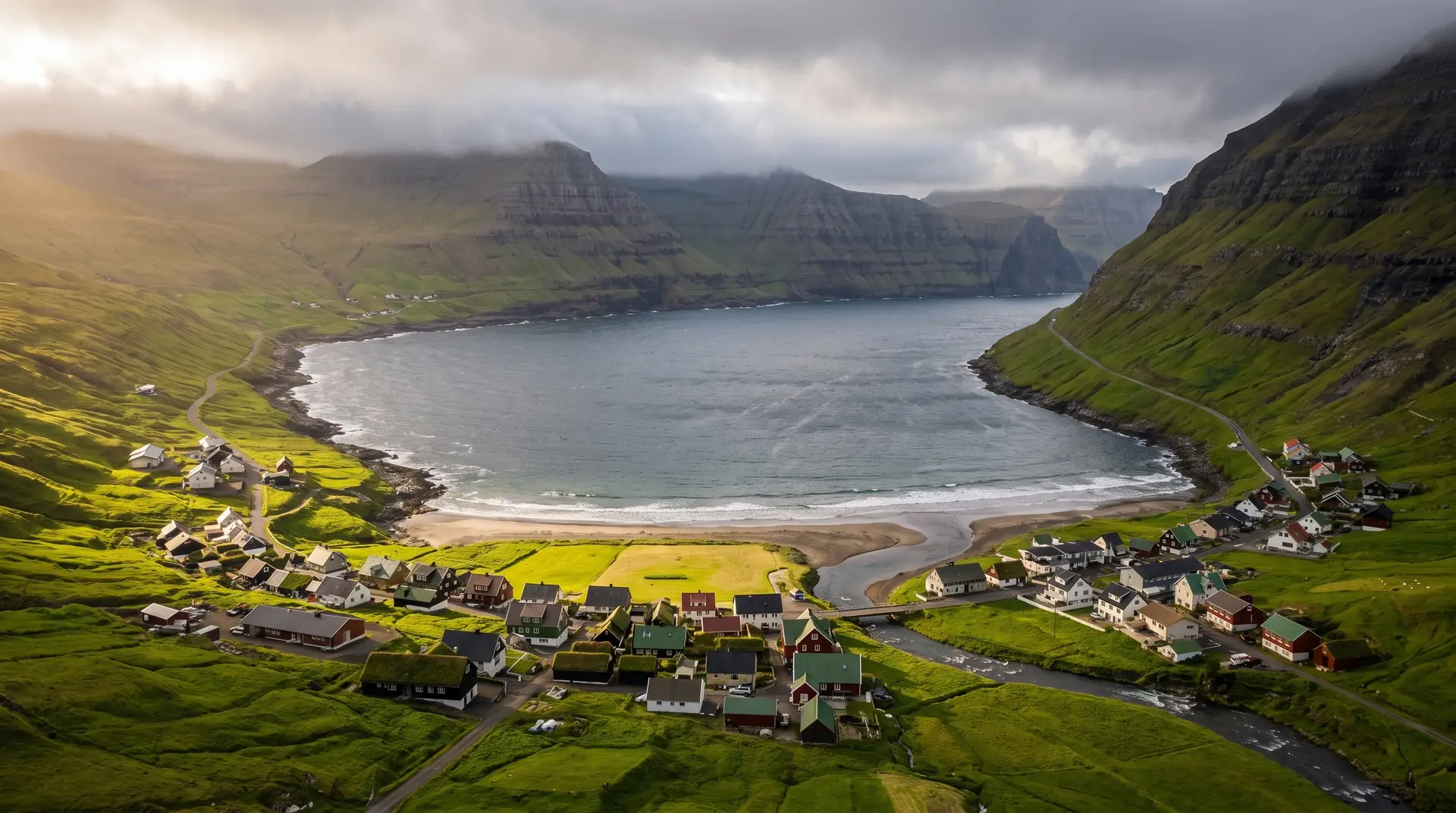
A beach that becomes a main stage for three days every July.
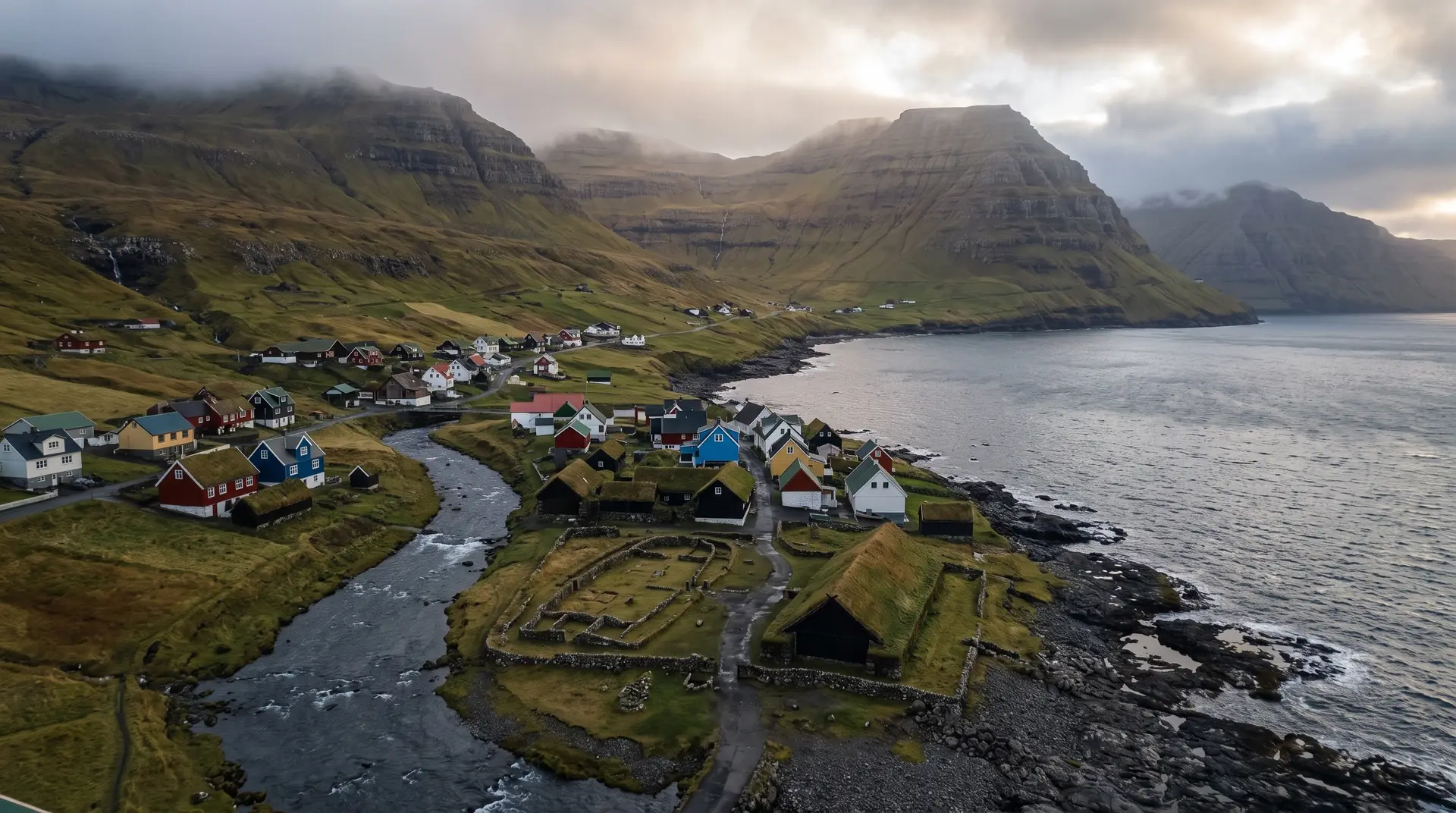
Two Norse longhouses at a river mouth, dug out of the turf in the 1940s.
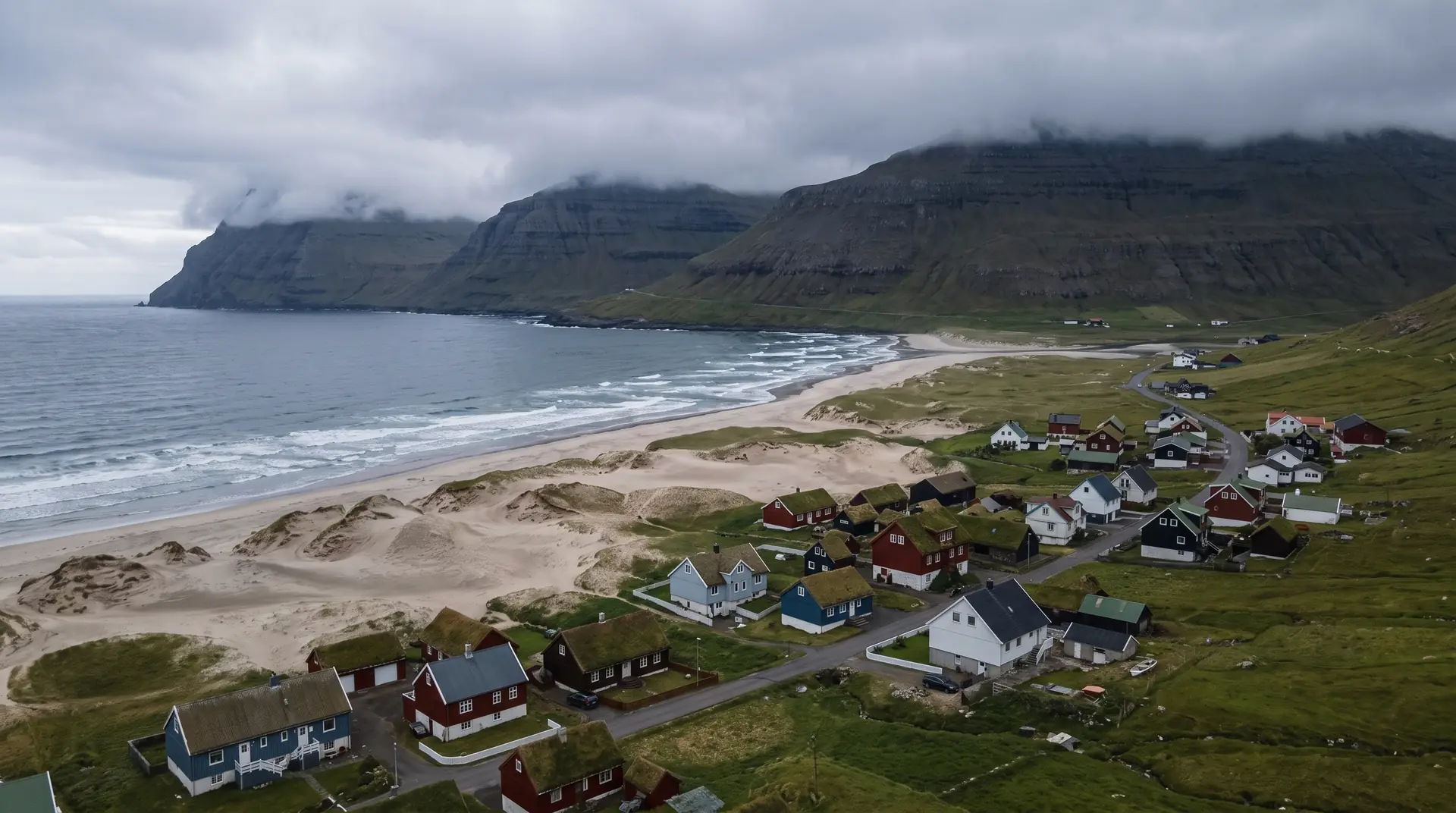
The only sand dunes in the Faroes, on the island that was named for them.
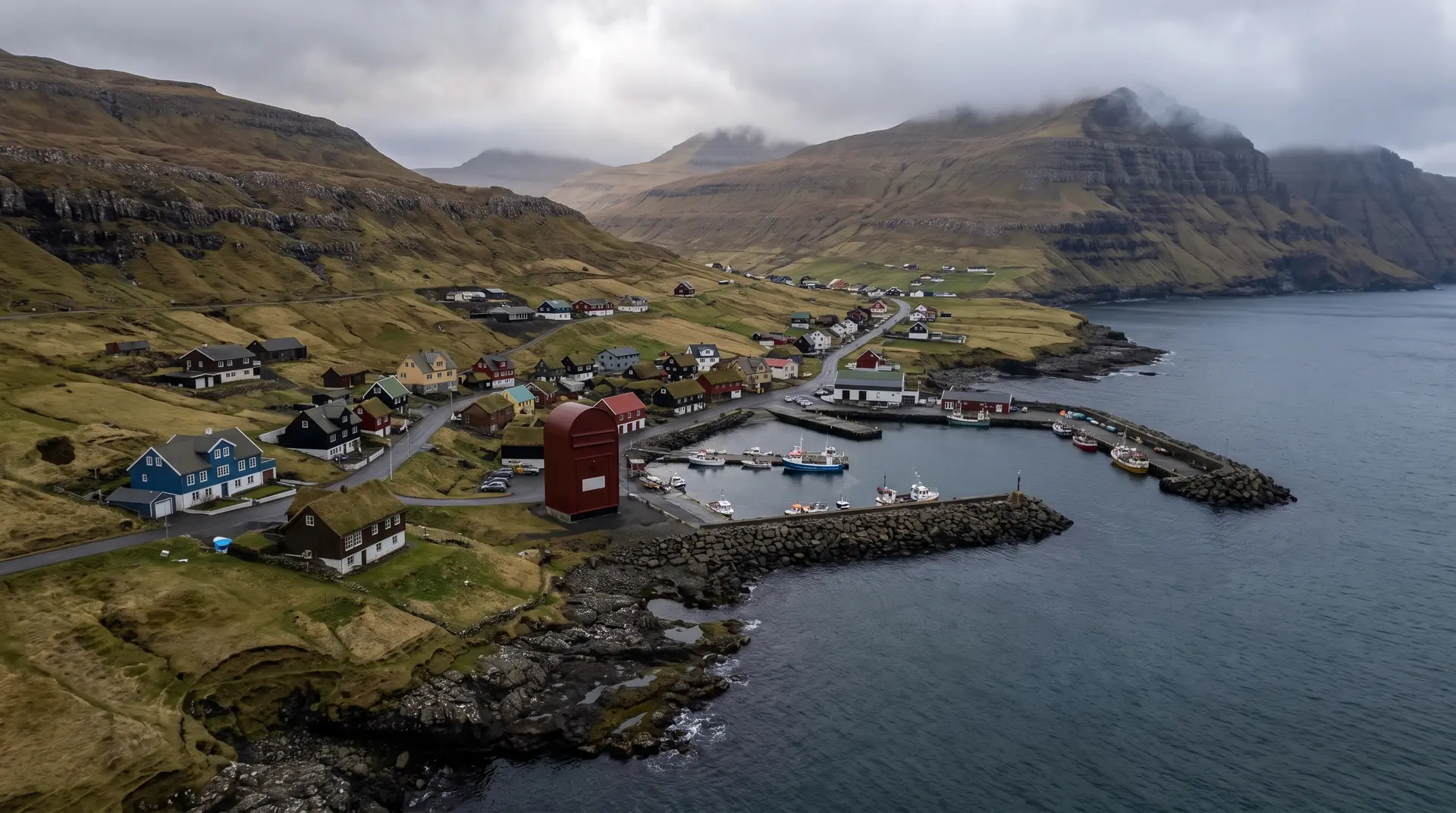
A working harbour with a letterbox seven and a half metres tall.
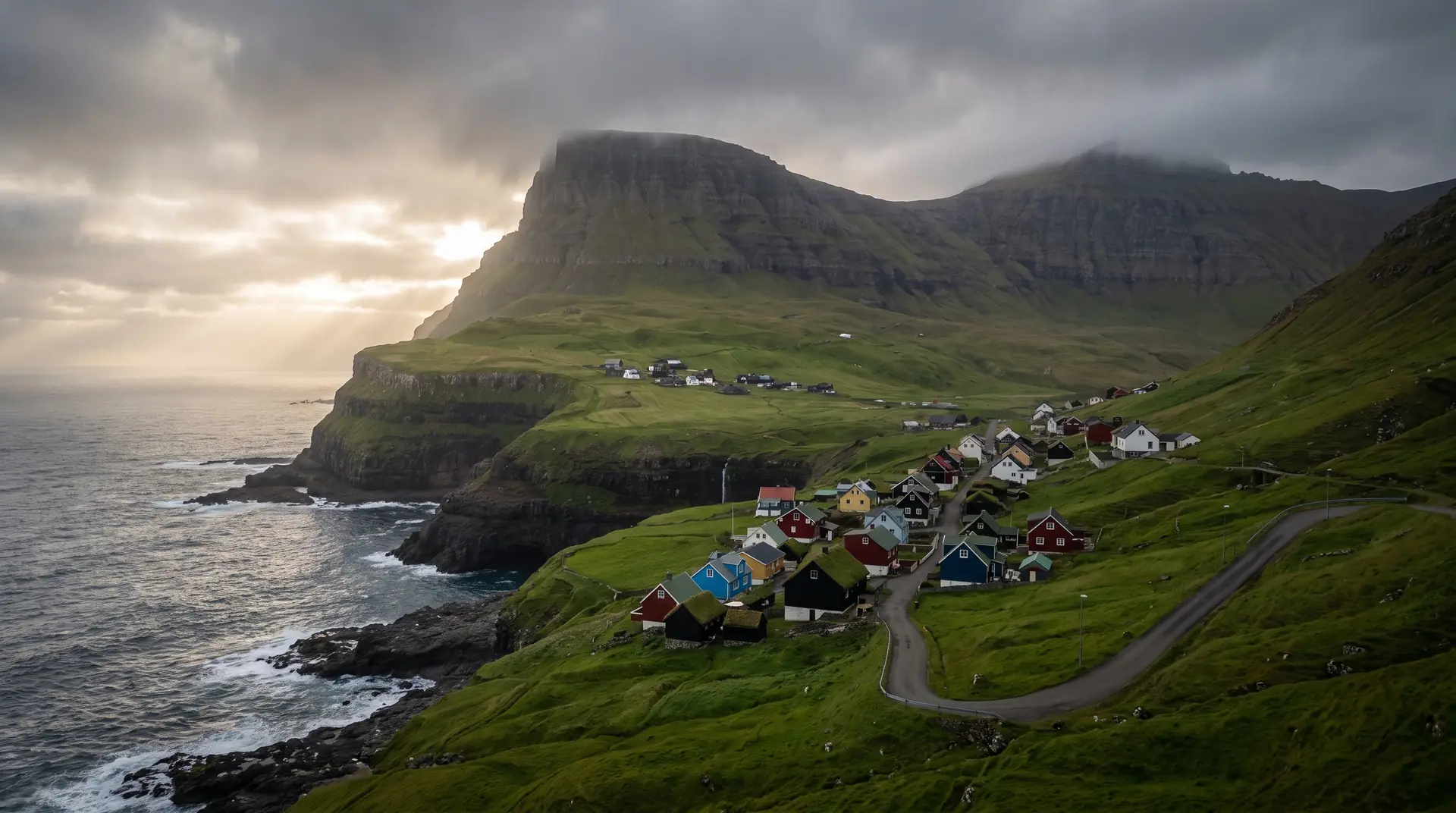
The last village in the country, in a valley under Beinisvørð.
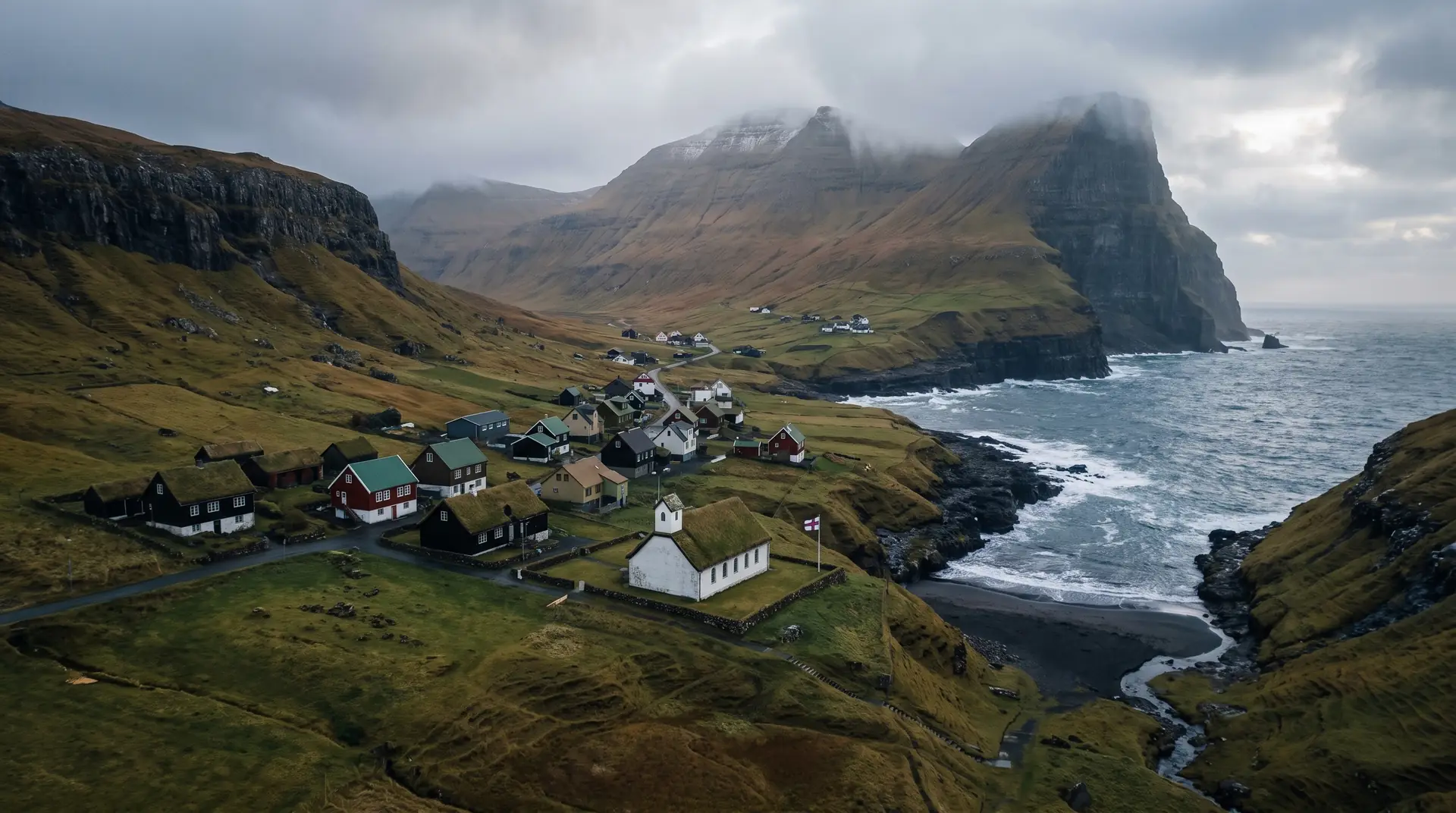
A west-coast church that keeps the original Merkið in a glass case.