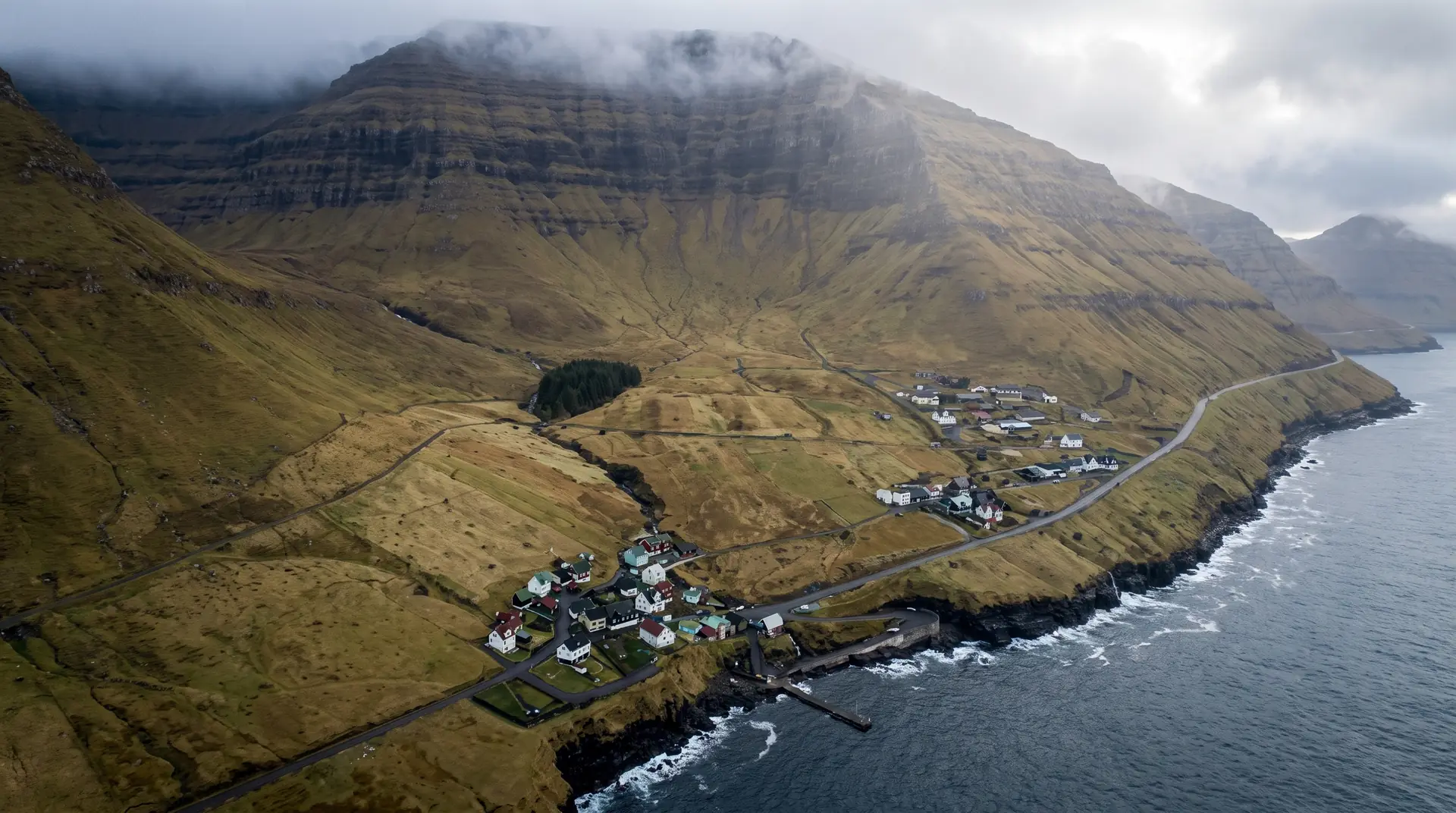
Kunoy.
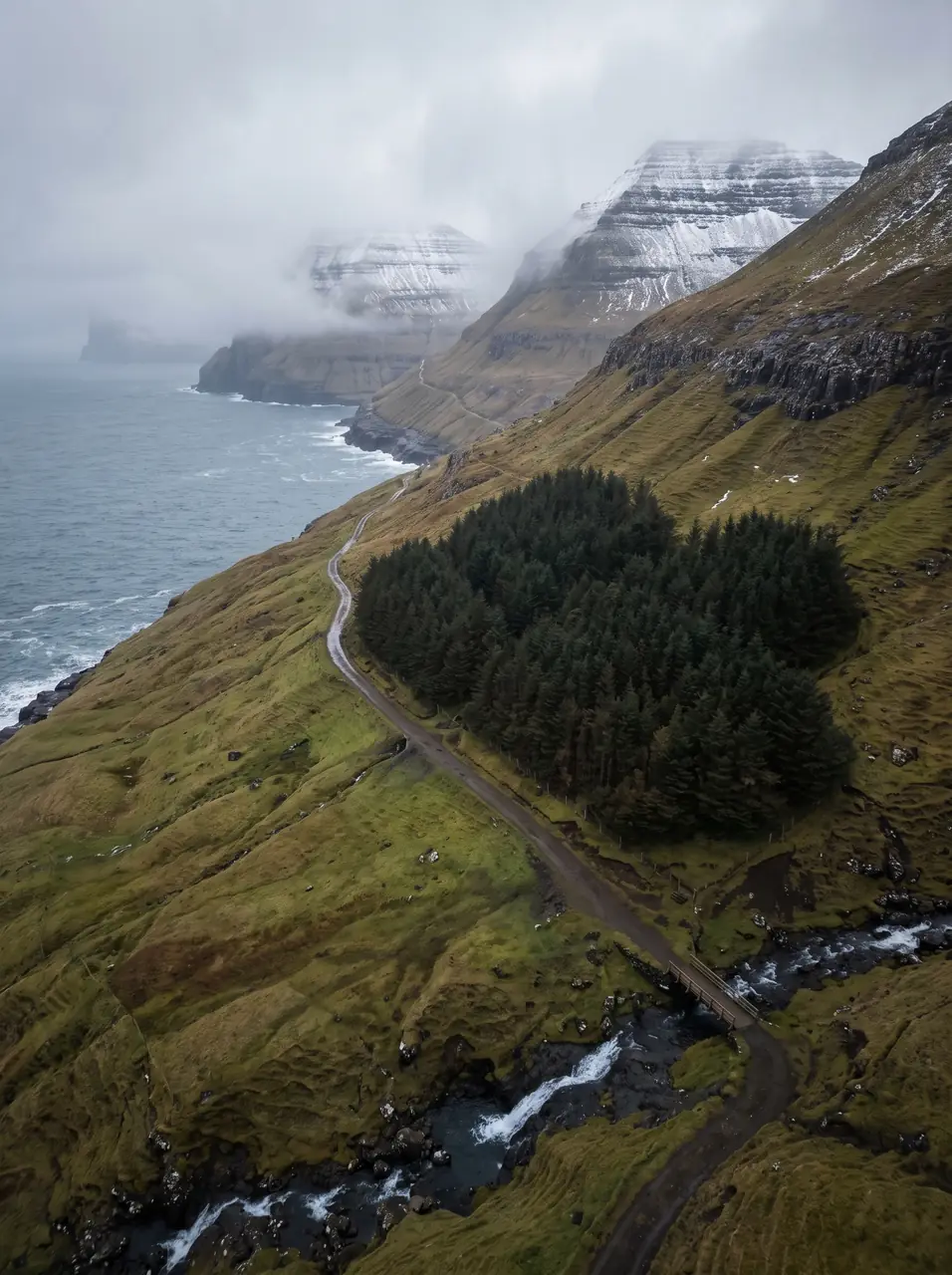
One of the only woods in the Faroes, planted at the foot of a wall of rock.
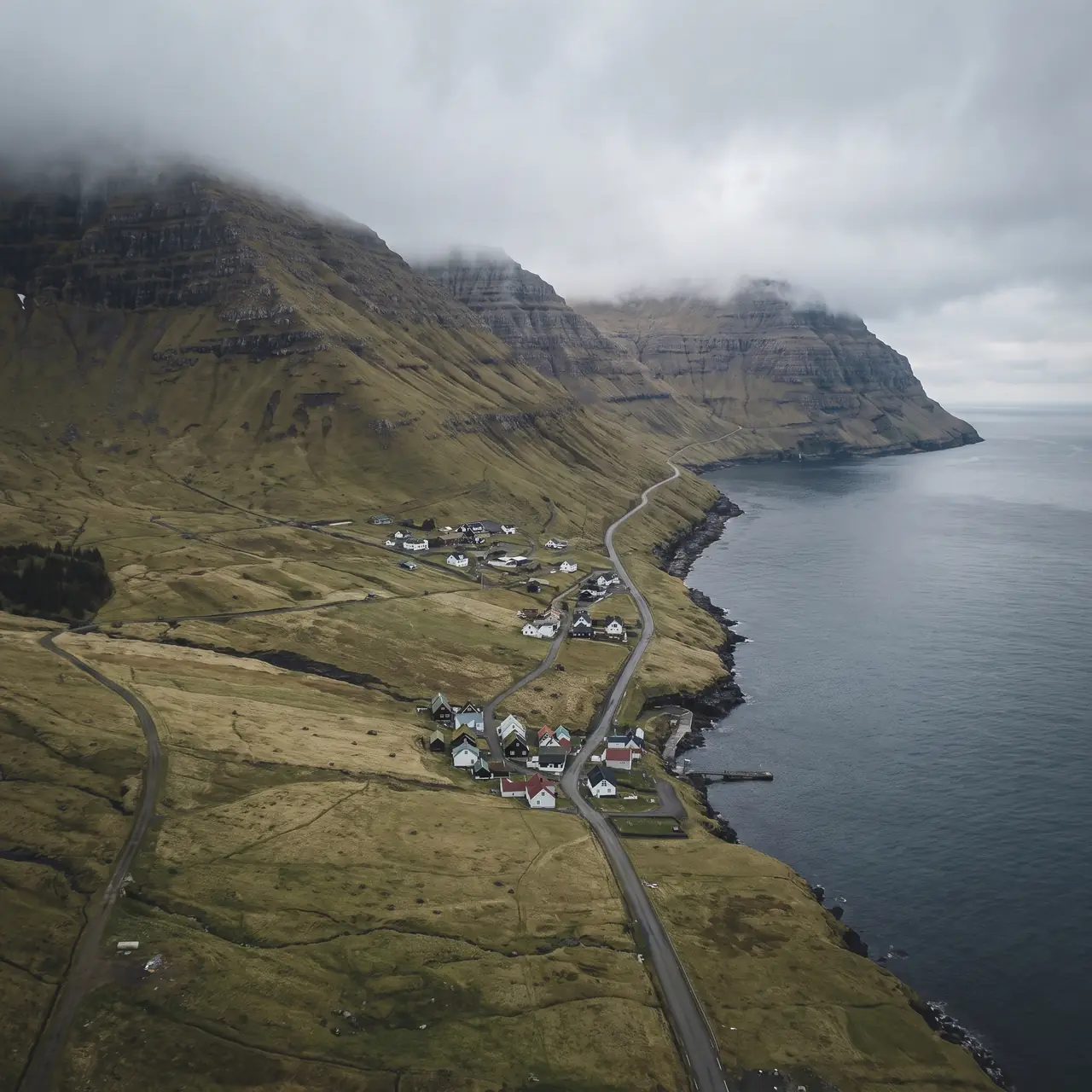
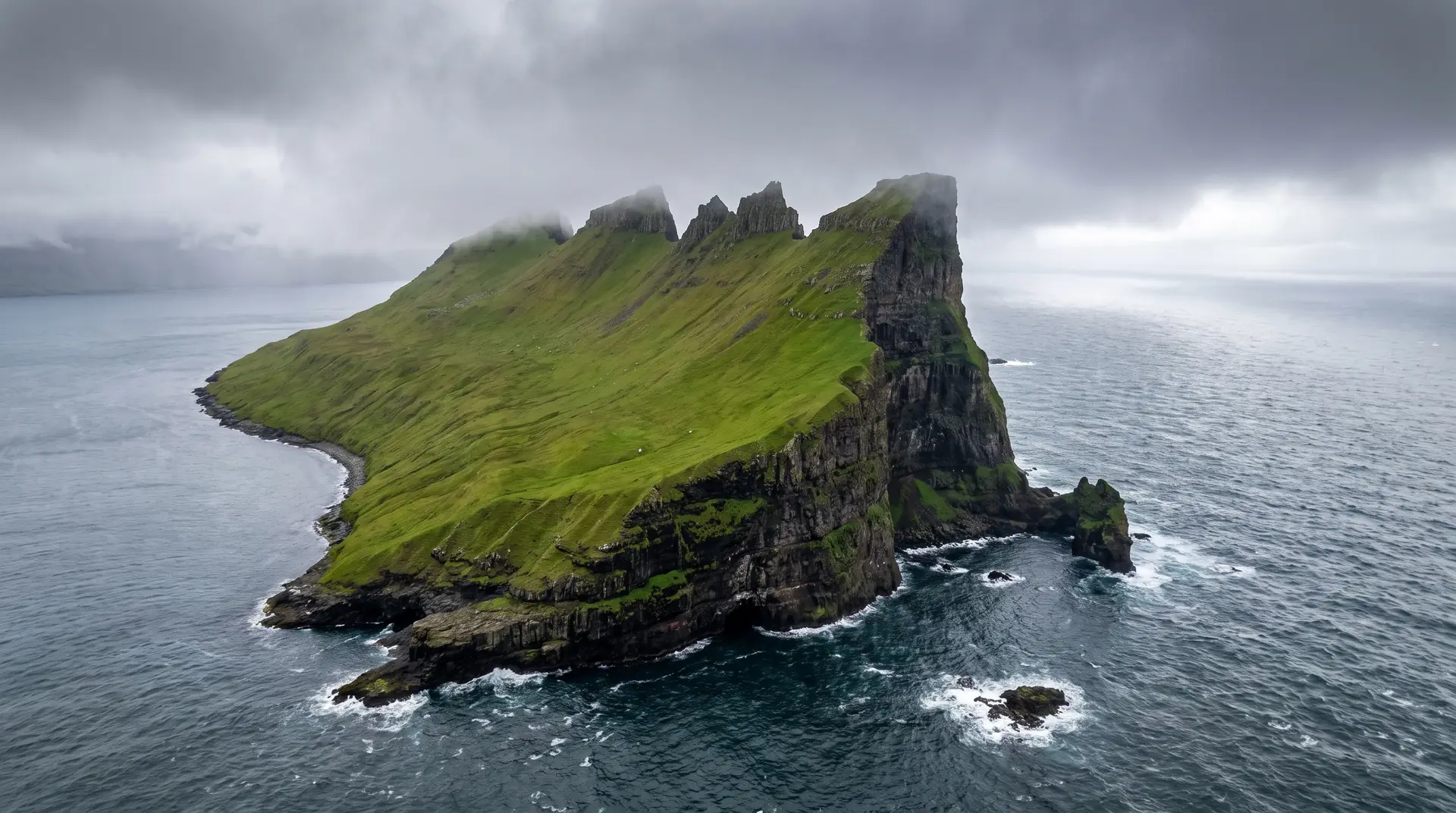
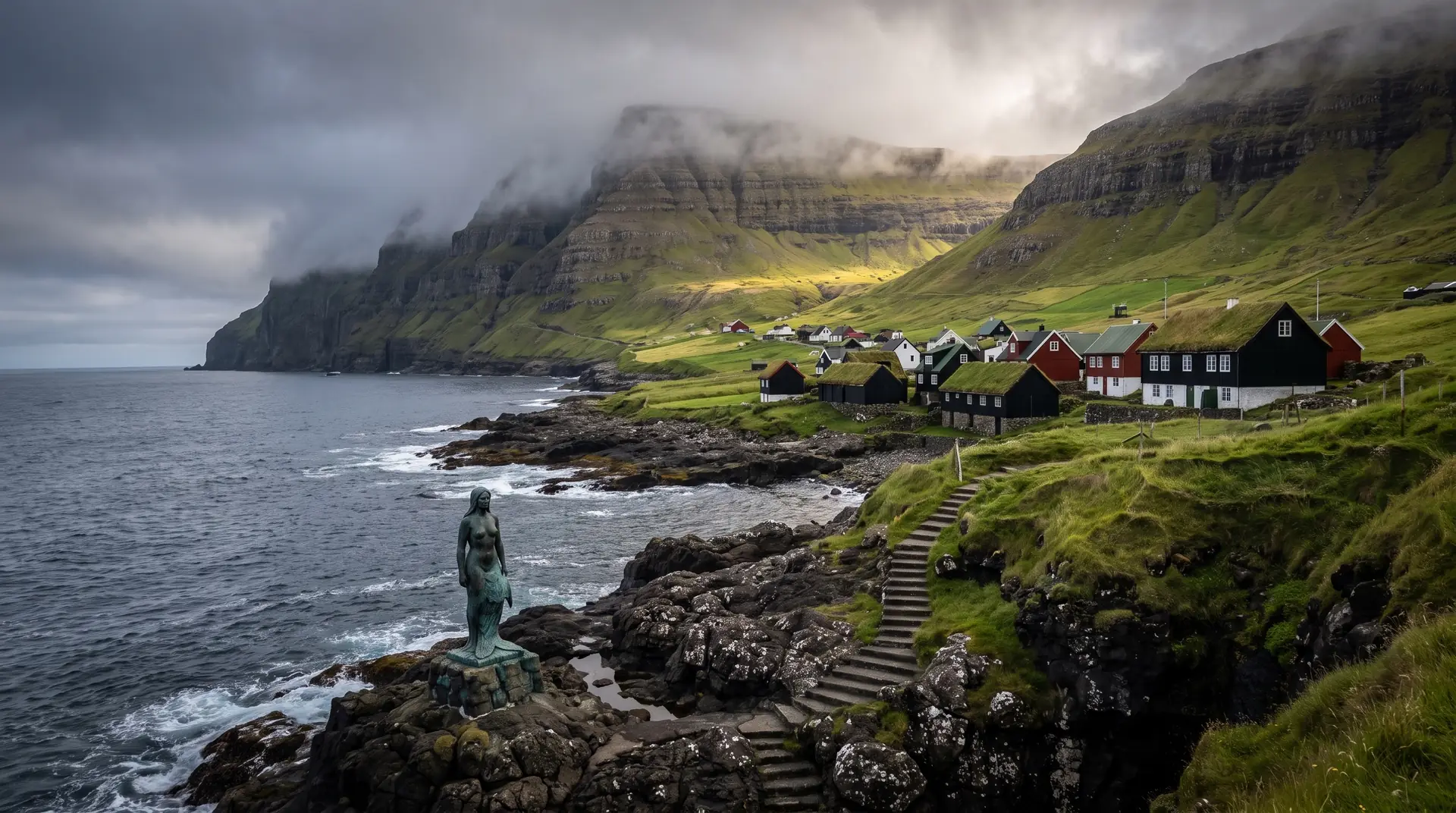
Seventy-nine people live on Kunoy’s west shore facing Kalsoy across the sound. Behind the houses stands Viðarlundin í Kunoy, a plantation begun in 1914 and one of the very few groves of trees in the islands.
- 01Trees — the rarest thing in a Faroese landscape
- 02The mountain behind the village takes the afternoon outright
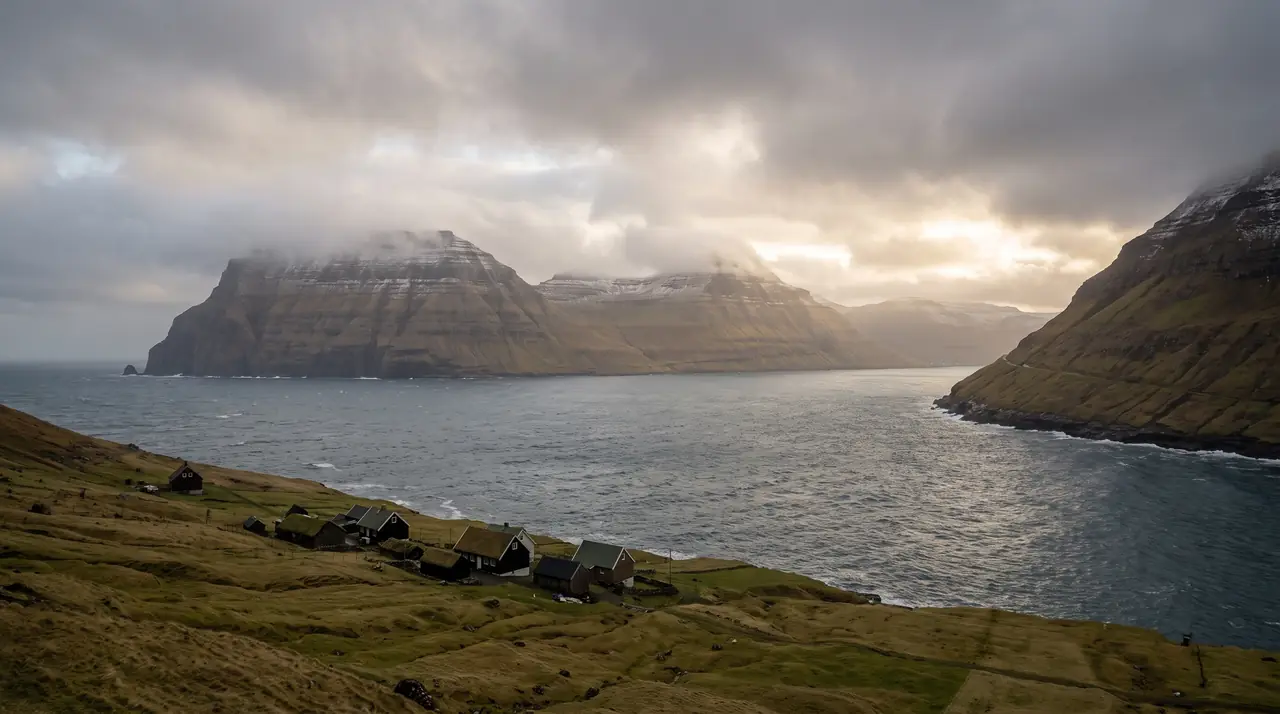
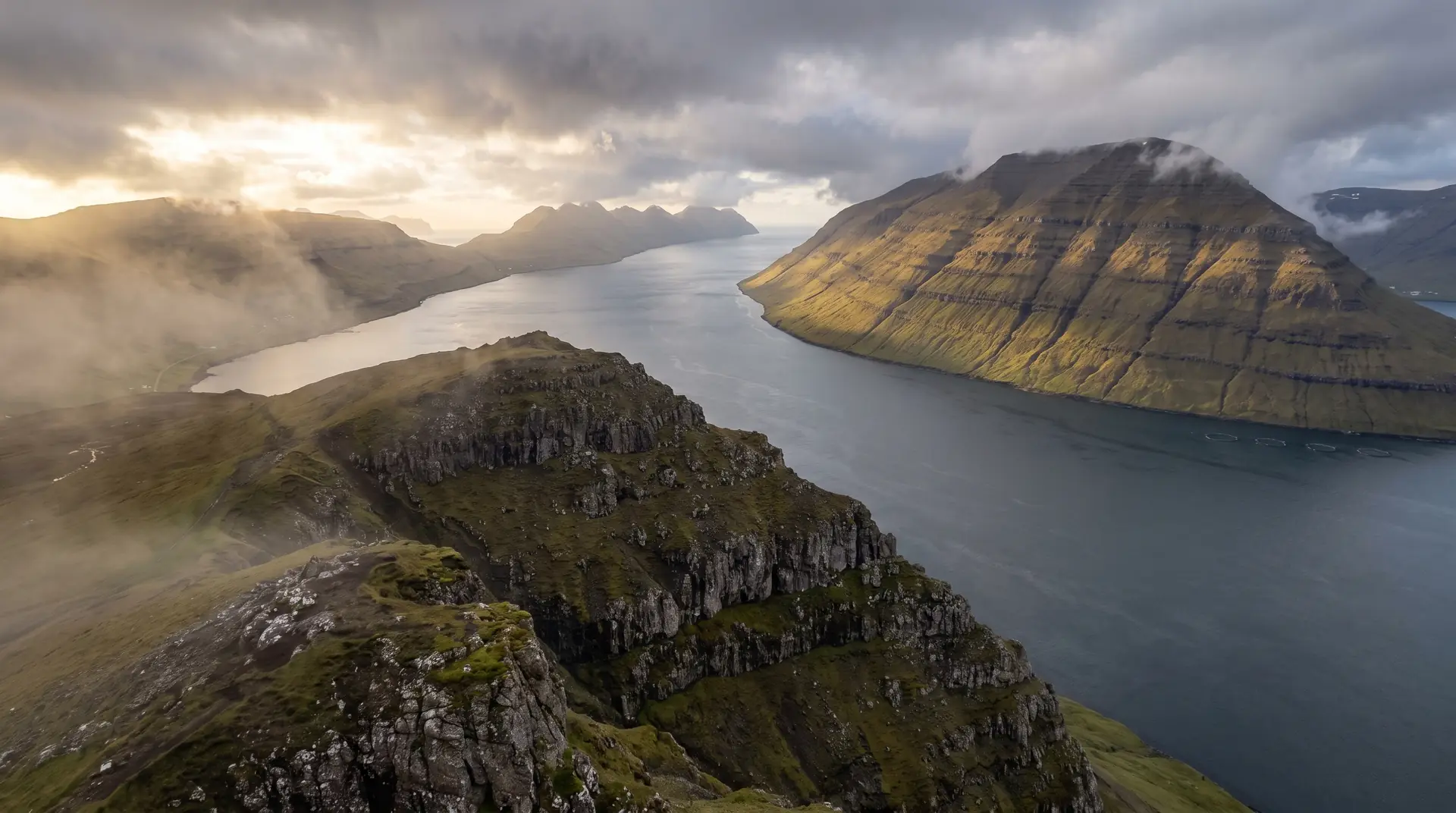
- 03Kalsoy’s spine collects the sunset across the sound
- 04A single-lane unlit tunnel is the only way in
The place, as it lets itself be seen.
How the weather
behaves here.
Read the air before you arrive. Fronts pass fast in the Faroes — fog, wind, and light can rewrite this place within an hour.
How to arrive,
how to stay.
- Access
- Road from Klaksvík over the Haraldssund causeway (1986), then the single-lane Kunoyartunnilin (1988)
- Parking
- A handful of spaces in the village · park before walking up to the grove
- Fees
- Free · neither the village walk nor the grove carries a charge
- Difficulty
- Easy
- Duration
- 1.5–2 hours · about 4 km with 150 m of climb
- Best season
- May–September
- Crowd level
- Quiet
- Drone
- Restricted
- Safety
- Unlit single-lane tunnel · the old route over the mountain to Skarð is far steeper than it looks
A field guide
for the light.
Late sun on Kalsoy while the village sits in its own shadow. Shoot out of the grove — trees as a dark frame, Kalsoy’s ridge burning at the far end of the sound.
- 24–70mm standard
- 35mm prime in the grove
- 70–200mm across the sound
Keep 150 m from the houses and under 120 m · the sound north of the village is the clean line.
June for the grove in leaf · September for low sun on the water
62.29° N · 6.67° W
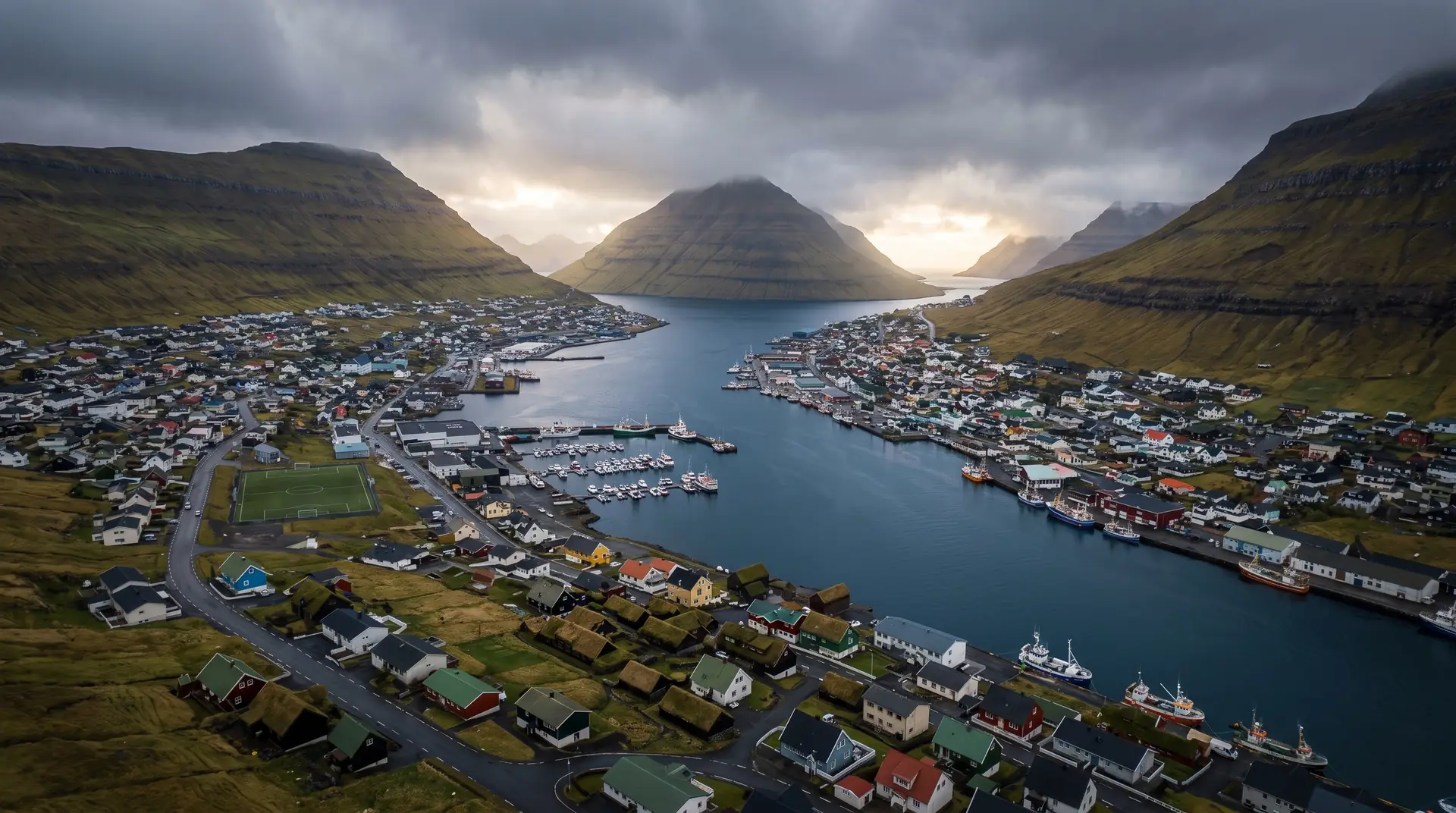
Surrounding villages, hikes, and weather overlays — open the full atlas to explore in motion.
Within an
afternoon's drift.
A wood, on purpose.
“The Faroes have almost no trees. Kunoy decided to argue.”
Wind, salt and sheep are why these islands are bare, and any Faroese wood is therefore a deliberate act. The plantation above Kunoy was begun in 1914, tucked into the one pocket of shelter the mountain provides, and it has become the island’s quiet oddity: a few hundred metres of path where the sound of the sea is filtered through leaves.
The island itself was a boat trip away until recently in Faroese terms. The Haraldssund causeway arrived in 1986 and the three-kilometre Kunoyartunnilin — single lane, unlit, passing bays only — in 1988. Over the mountain on the east side lies Skarð, abandoned and roofless, reachable on foot for anyone who wants the long version of the day.
Come late. The wall behind the village shuts the light off early, and the compensation is the far shore: Kalsoy holds the last hour of sun on its spine while Kunoy watches from the shade.