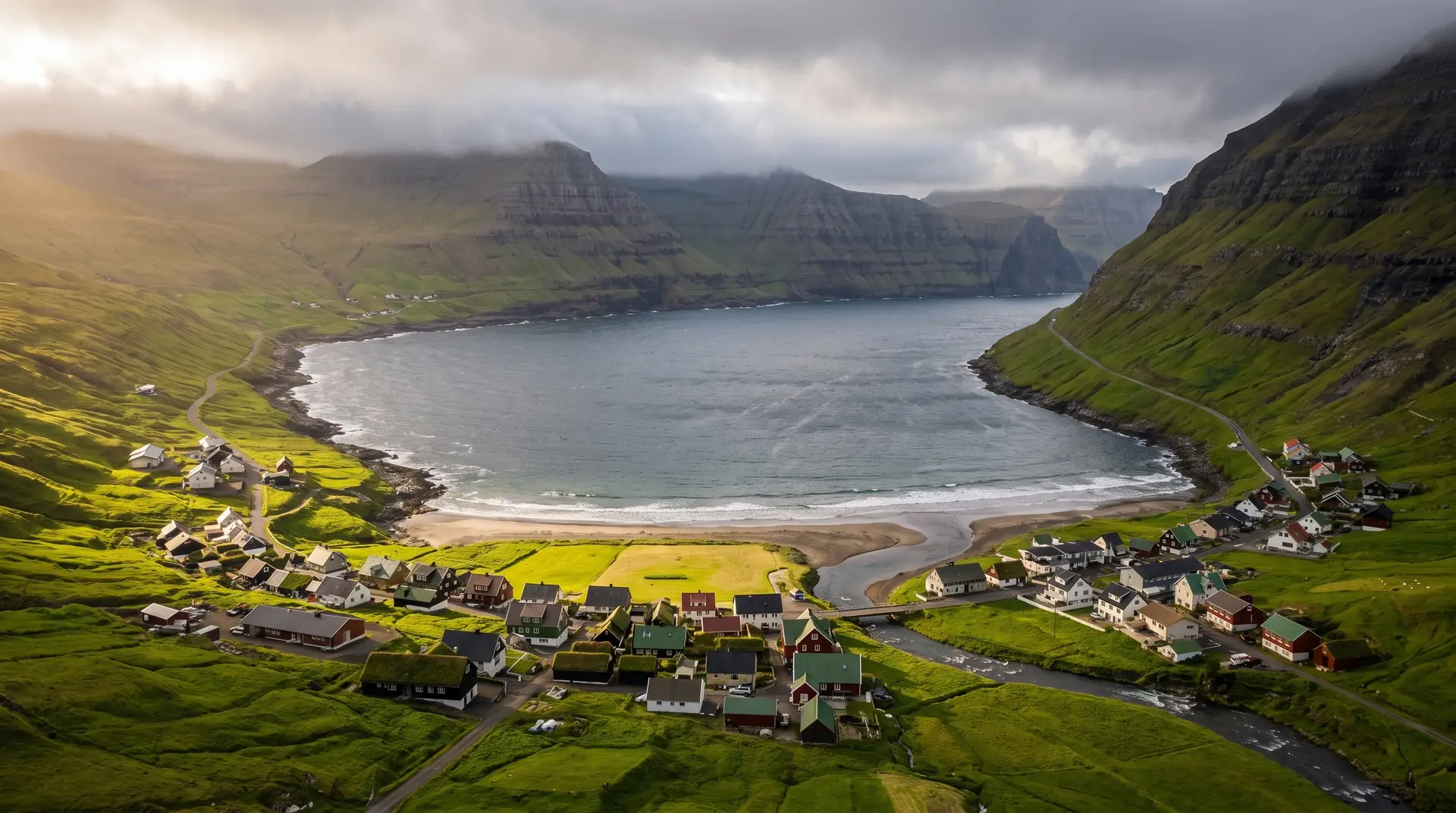
Gøta.
A beach that becomes a main stage for three days every July.
Norðragøta and Syðrugøta share a bay on Eysturoy’s east coast — six hundred and thirty-seven residents in one, five hundred and six in the other. Between them they have hosted G!, the islands’ largest music festival, every July since 2002.
- 01For fifty-one weeks a year it is an ordinary coastal village
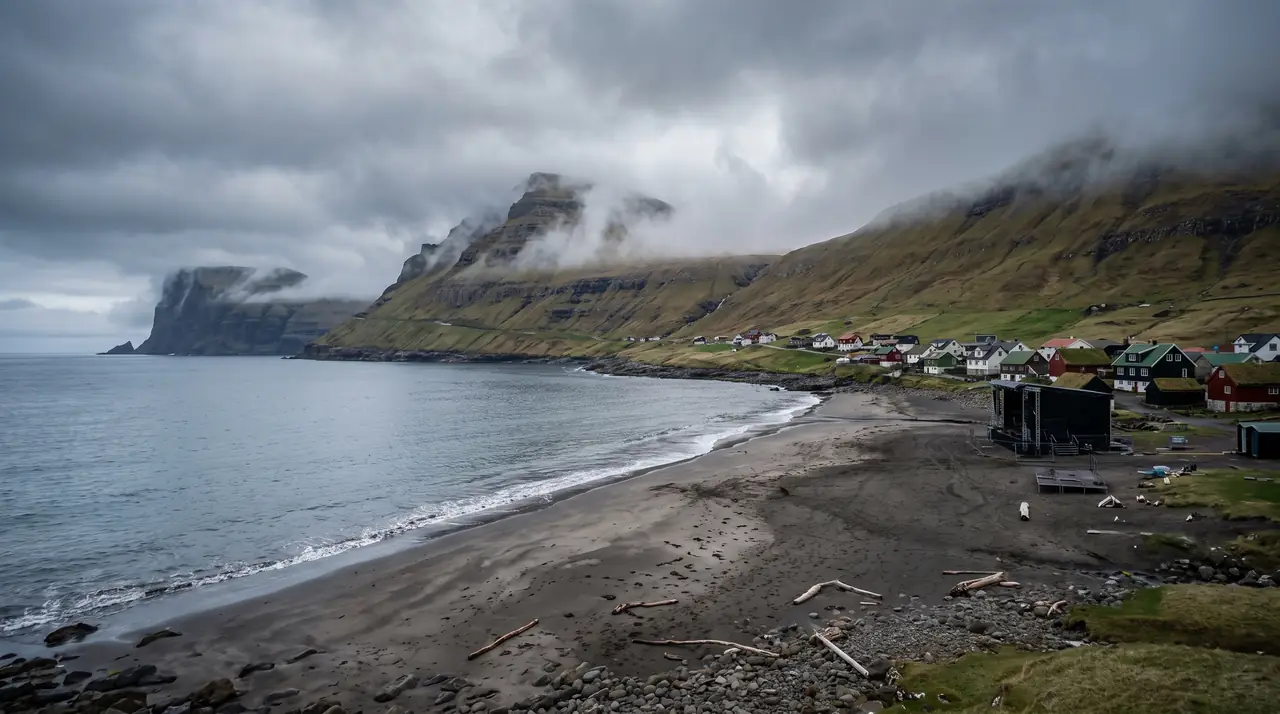
- 02The bay is the venue — stages go up on the sand
- 03Tróndur í Gøtu’s name is still attached to the place
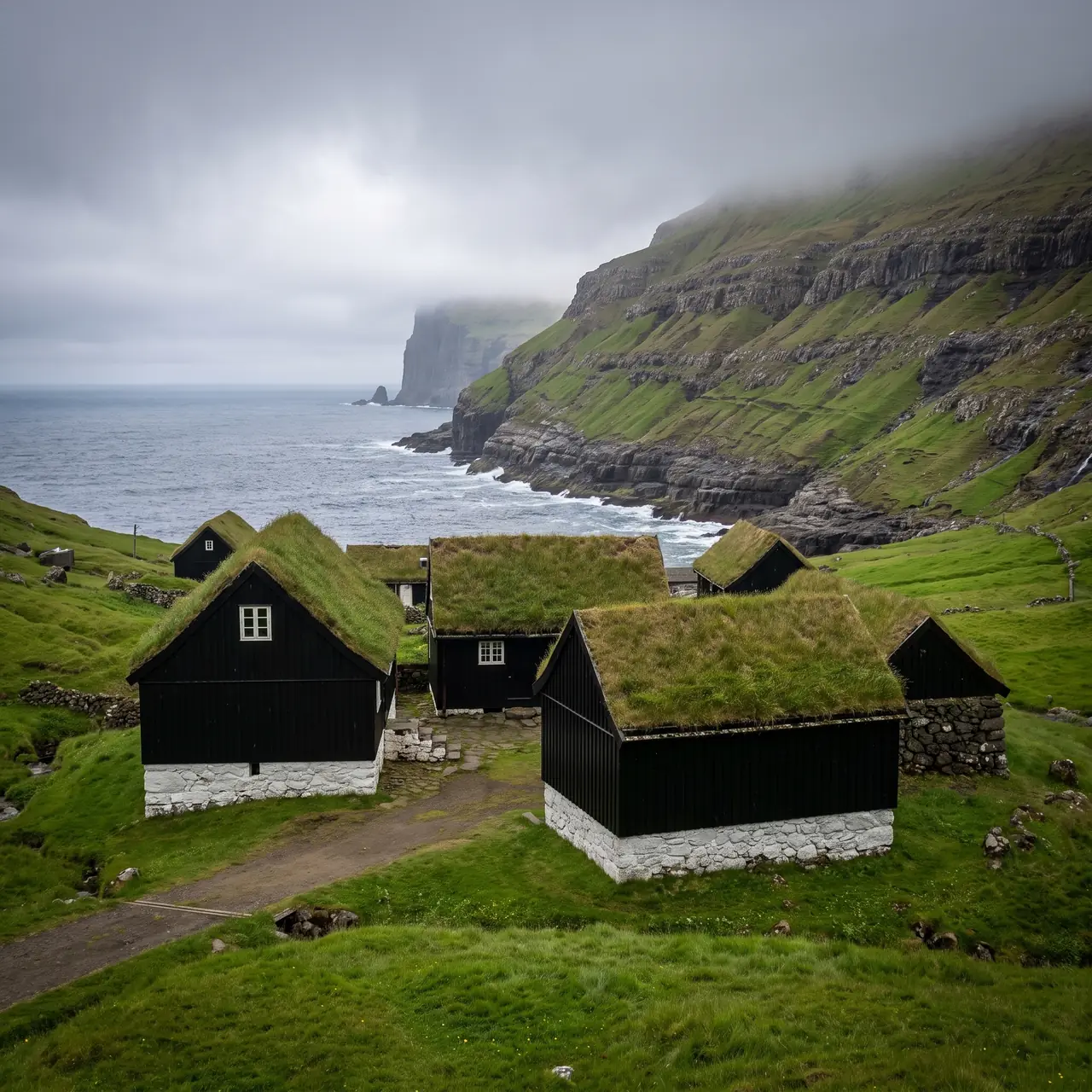
- 04Turf roofs and a house museum hold the older story
The place, as it lets itself be seen.
How the weather
behaves here.
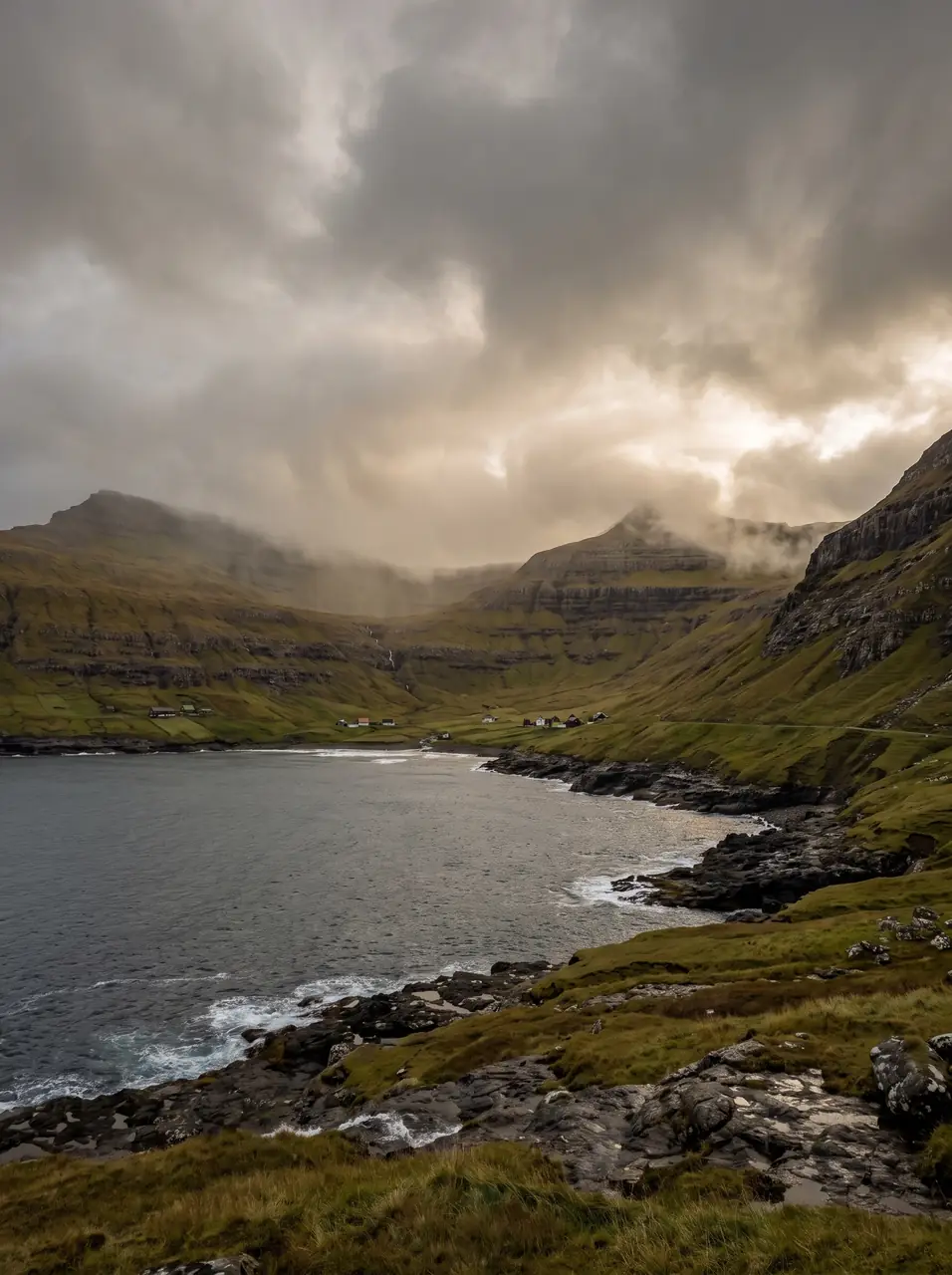
Read the air before you arrive. Fronts pass fast in the Faroes — fog, wind, and light can rewrite this place within an hour.
How to arrive,
how to stay.
- Access
- Road along Eysturoy’s east coast · regional buses pass through
- Parking
- Small lots and roadside spaces · tightly managed during the festival
- Fees
- Blásastova charges a small admission — ask at the door. Festival passes are sold by the organisers each spring
- Difficulty
- Easy
- Duration
- 1–2 hours · three days in mid-July
- Best season
- Year-round · mid-July for the festival
- Crowd level
- Moderate
- Drone
- Restricted
- Safety
- Ordinary village roads · festival days bring closures, crowd control and no flying at all
A field guide
for the light.
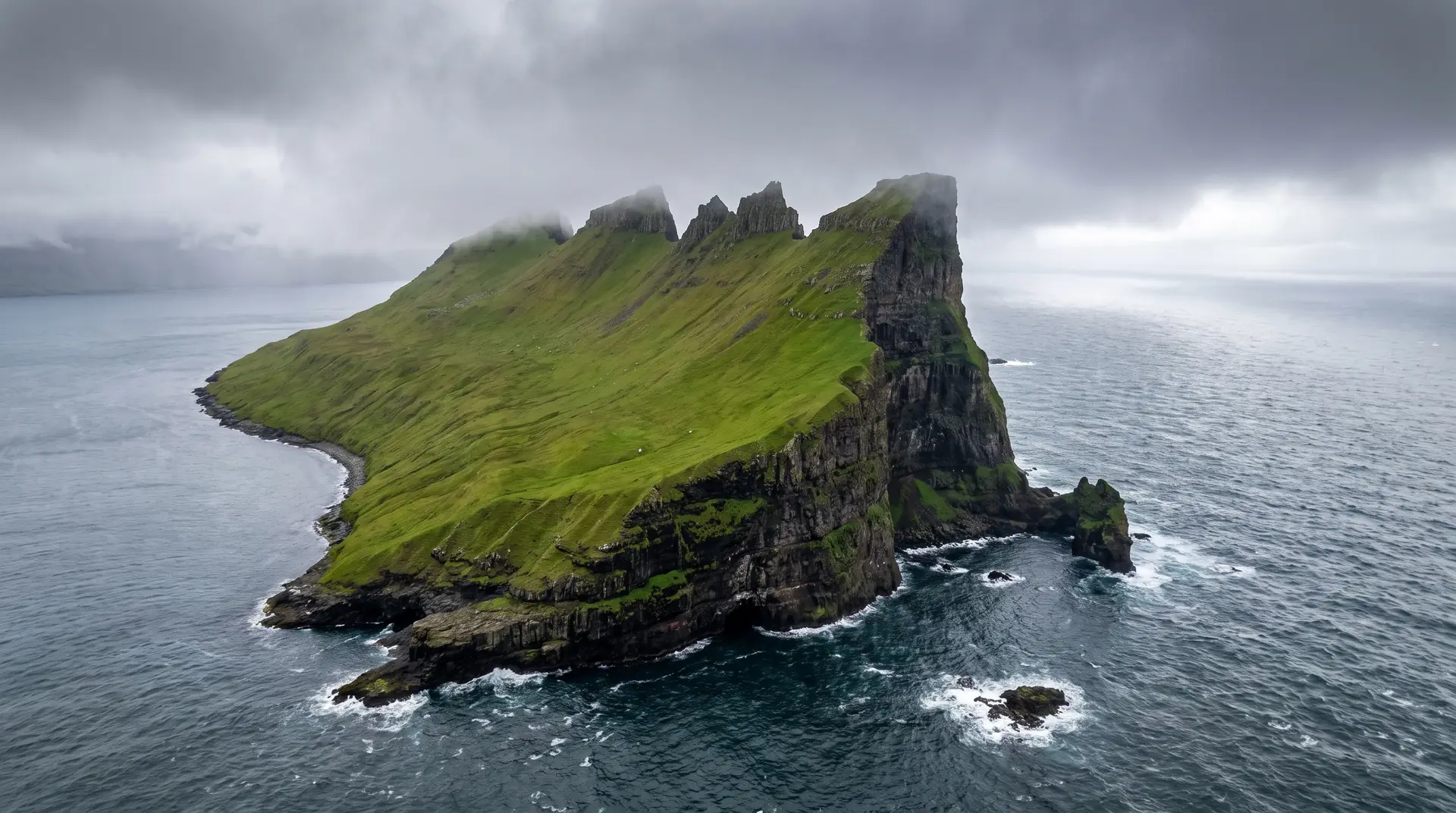
Late sun down the bay with the hills already in shadow. From the north side of the bay the two villages stack against each other — turf in front, water between, festival ground on the far sand.
- 35mm prime
- 24–70mm standard
- Fast glass for stage light
150 m from the houses and under 120 m · over a festival crowd the airspace is closed outright.
July for the festival · September for quiet light on the bay
62.20° N · 6.74° W
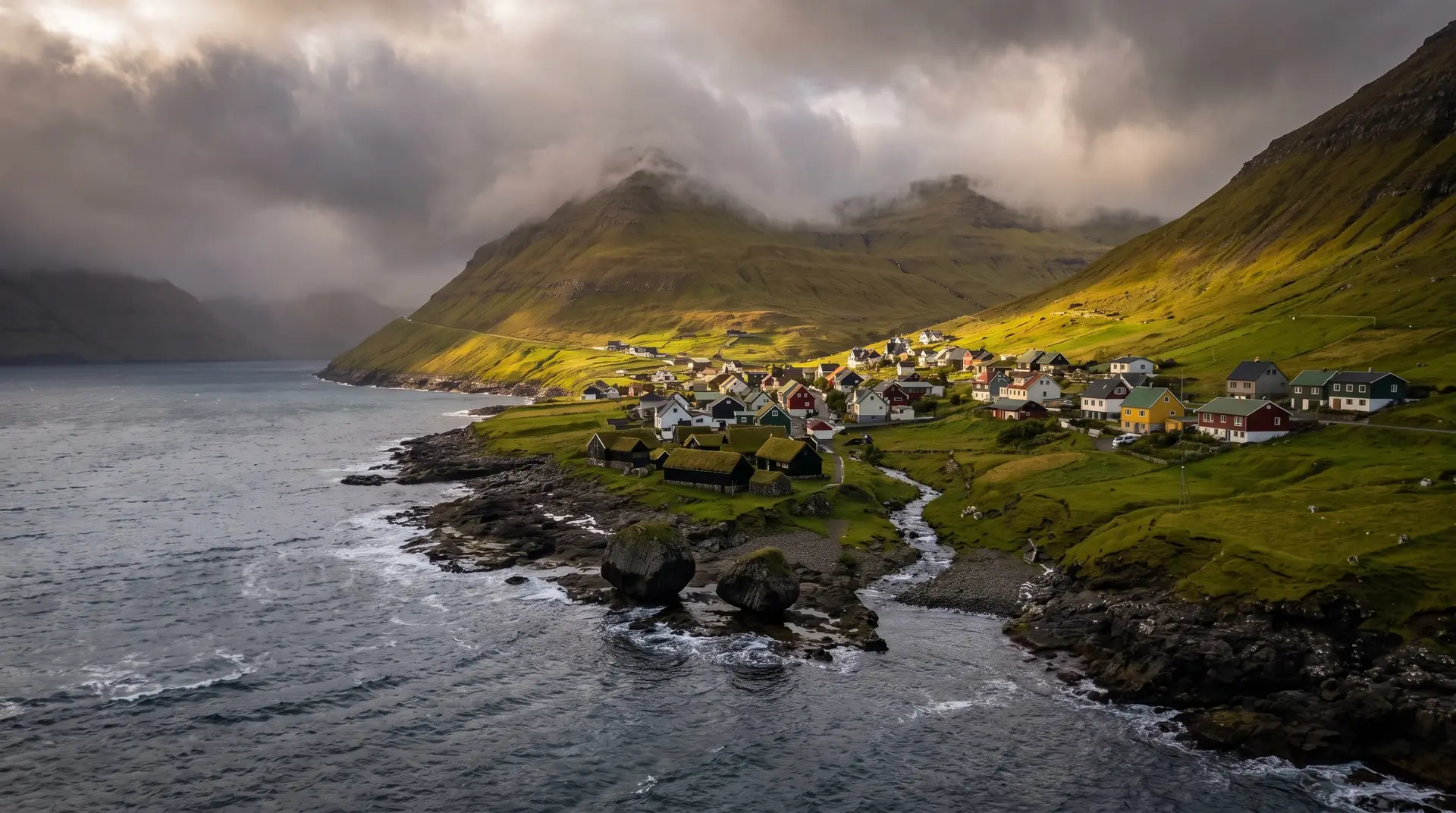
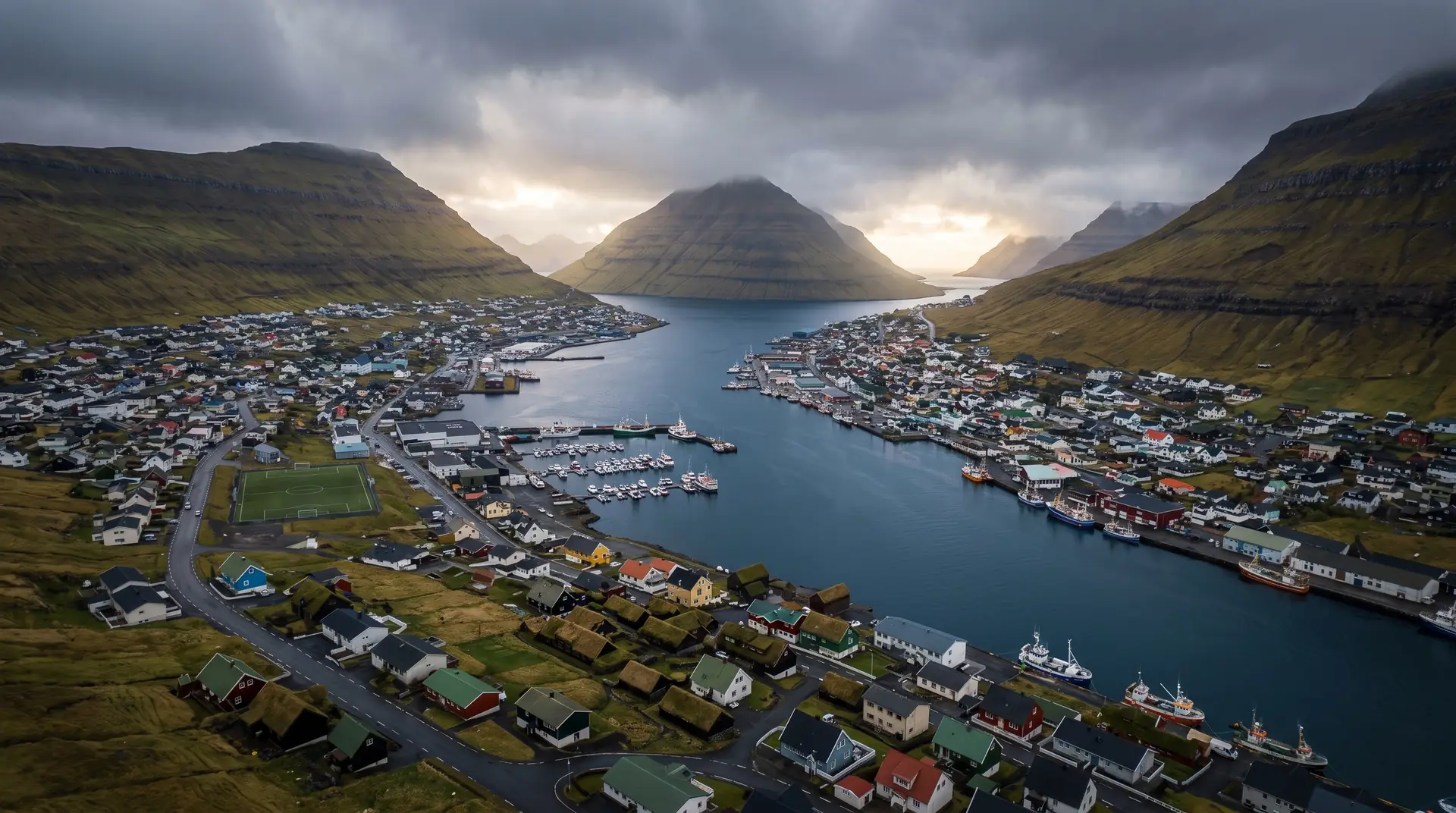
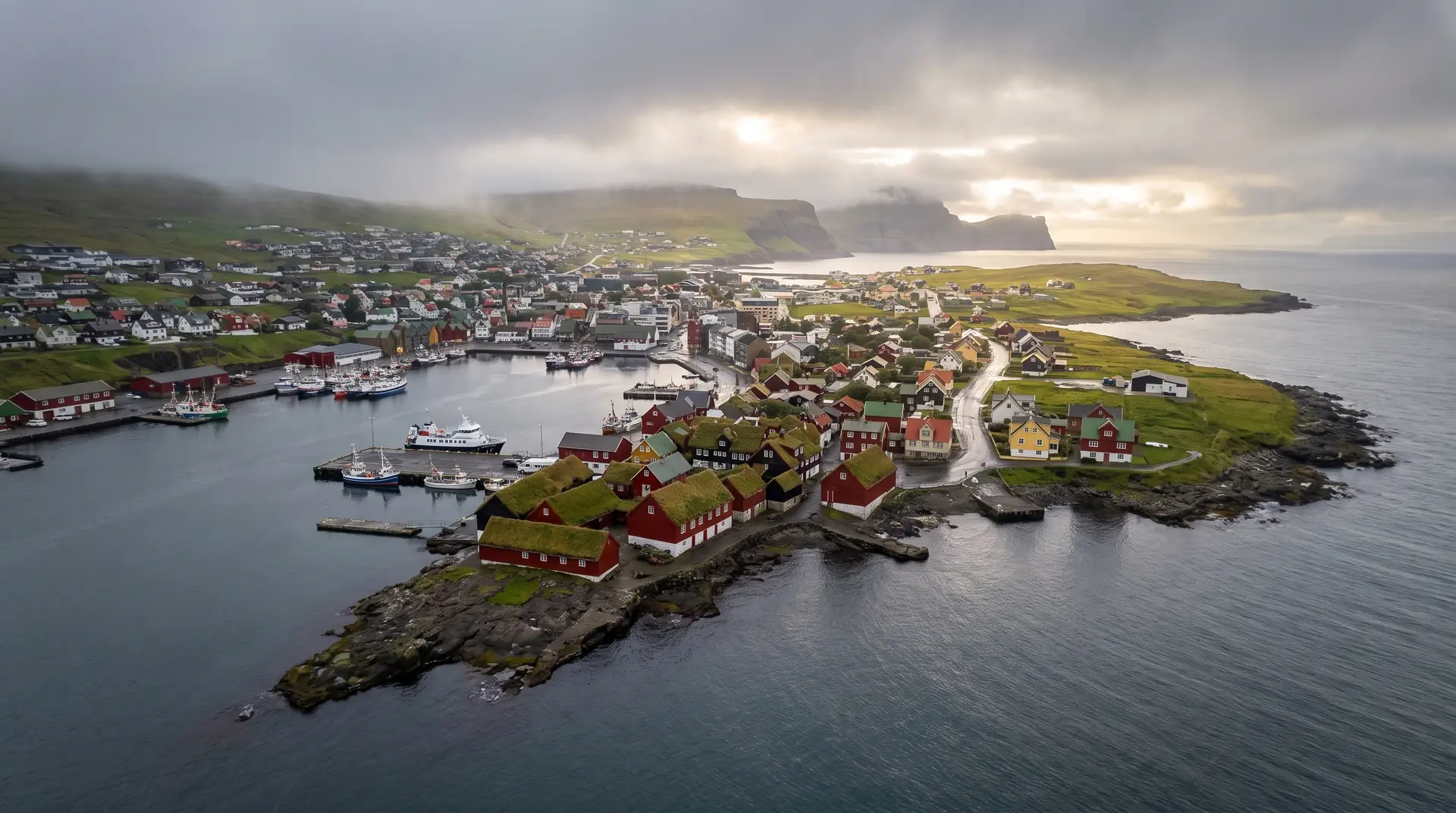
Surrounding villages, hikes, and weather overlays — open the full atlas to explore in motion.
Within an
afternoon's drift.
The village that books bands.
“Five thousand people on a beach, and a host population that mostly volunteers.”
G! has run in Syðrugøta every July since 2002, and its twenty-fifth edition filled the bay from 16 to 18 July 2026. Capacity sits somewhere between five and six and a half thousand — larger than the two villages combined by a wide margin — and roughly fifteen hundred volunteers put it up and take it down. Stages stand on the beach itself. People swim between sets.
The rest of Gøta’s year is quieter and much older. Blásastova, the house museum at Tróndargøta 29, keeps the domestic version of the story behind turf and tarred timber, opening Tuesday to Saturday from one until four on its current schedule. Nearby, a monument keeps the name of Tróndur í Gøtu, the chieftain the sagas set against the Christianising of the islands.
Come outside July and you get a working east-coast village with a good bay, a museum with short hours, and no evidence at all of what happens here in the middle of summer.