What makes a Faroese village
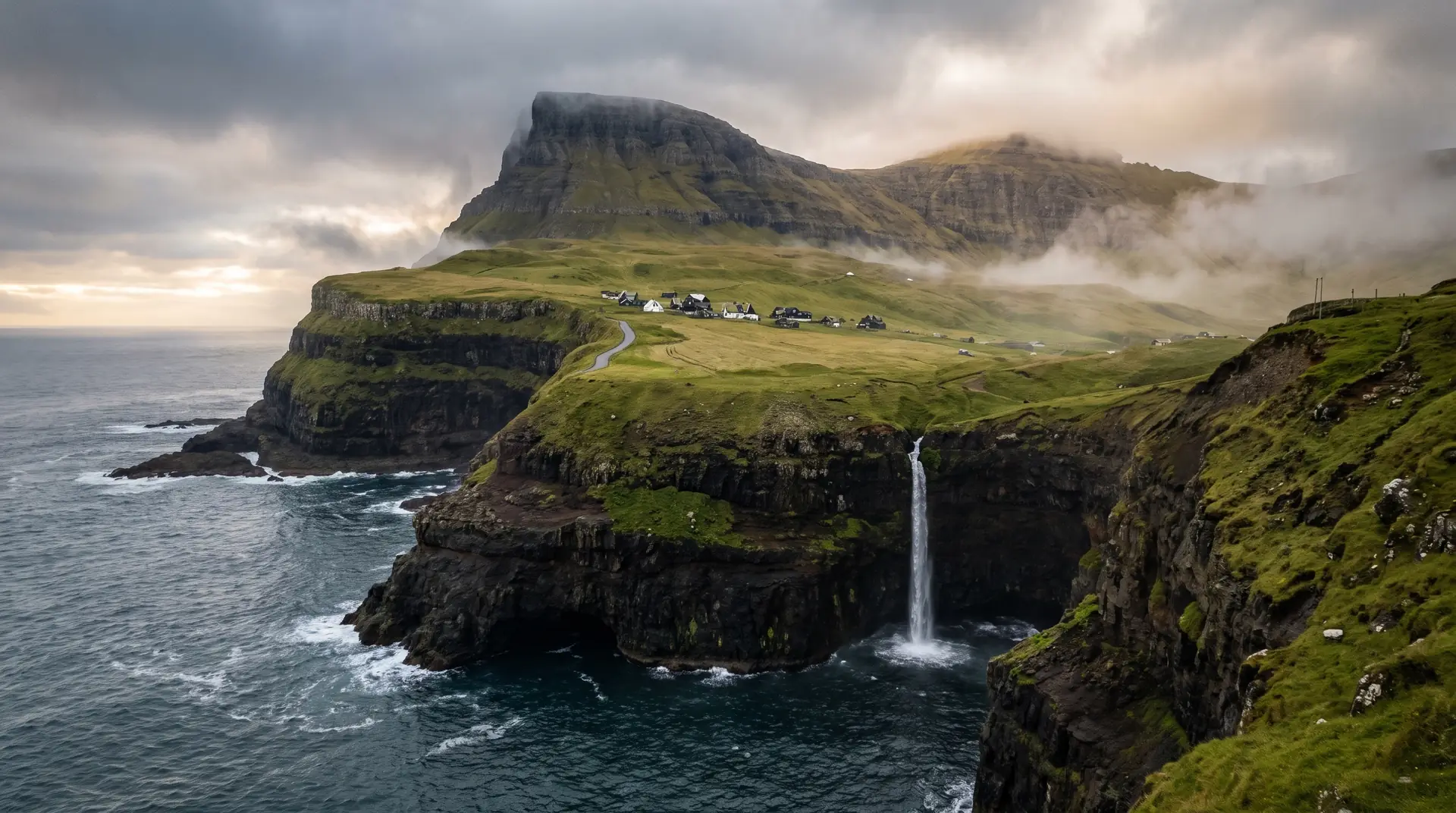
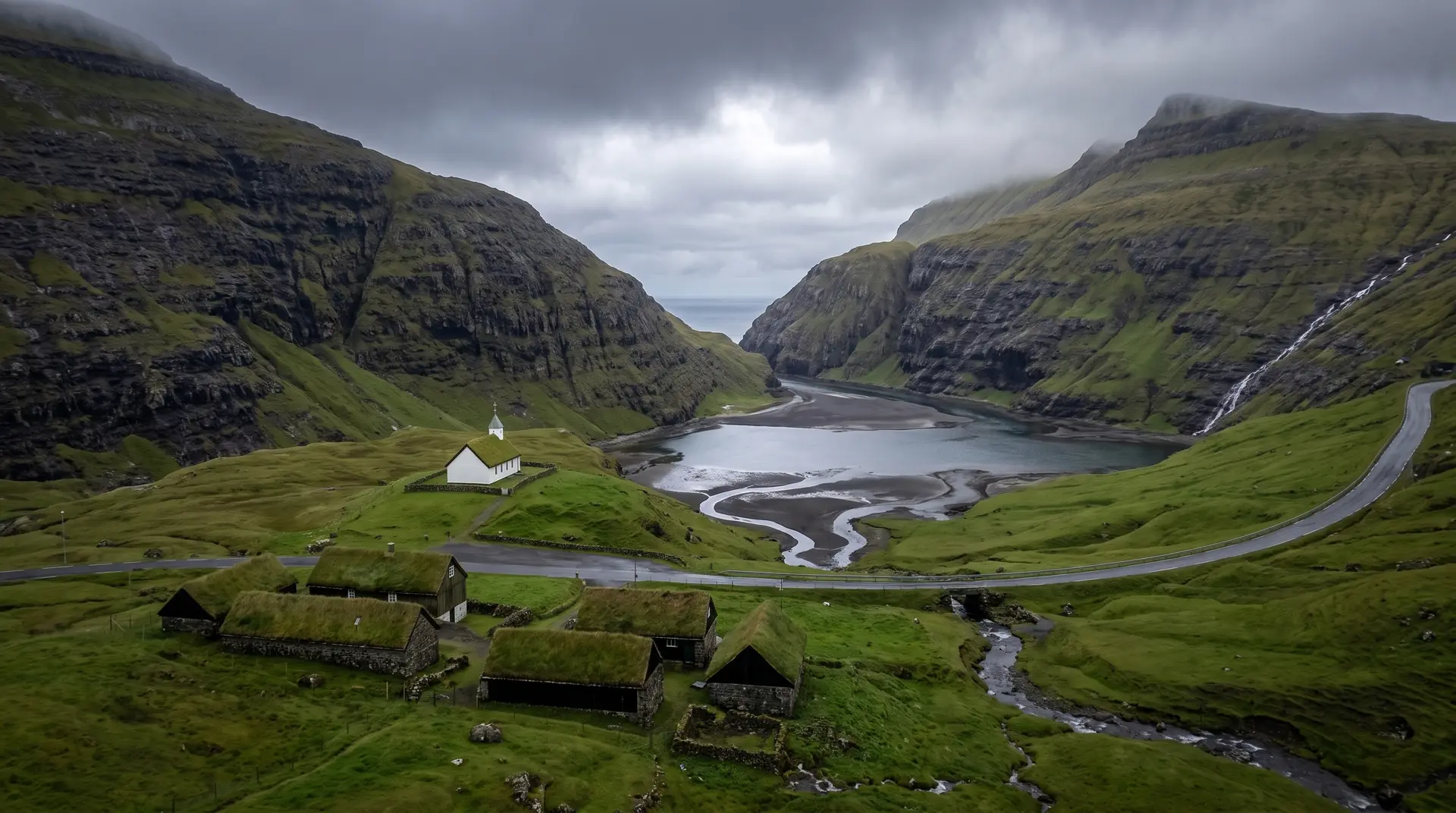
A village in the Faroes is rarely more than a few dozen houses arranged around a harbour or beneath a cliff. The grammar is consistent — black timber, grass roofs, white church — but each settlement is shaped by its specific weather and topography.
Saksun sits at the head of a tidal lagoon enclosed by 400-metre cliffs. Gjógv is built around a natural sea gorge. Gásadalur perches on the only flat land for kilometres. None of these places exist by accident.
How to visit
Drive yourself. Buses reach the larger villages but the rhythm of Faroese travel rewards being able to stop. Roads are excellent — single-lane tunnels through mountains are the only adjustment.
Stay overnight when you can. Most villages empty by 18:00 when day-trippers leave; what remains is the version worth seeing.