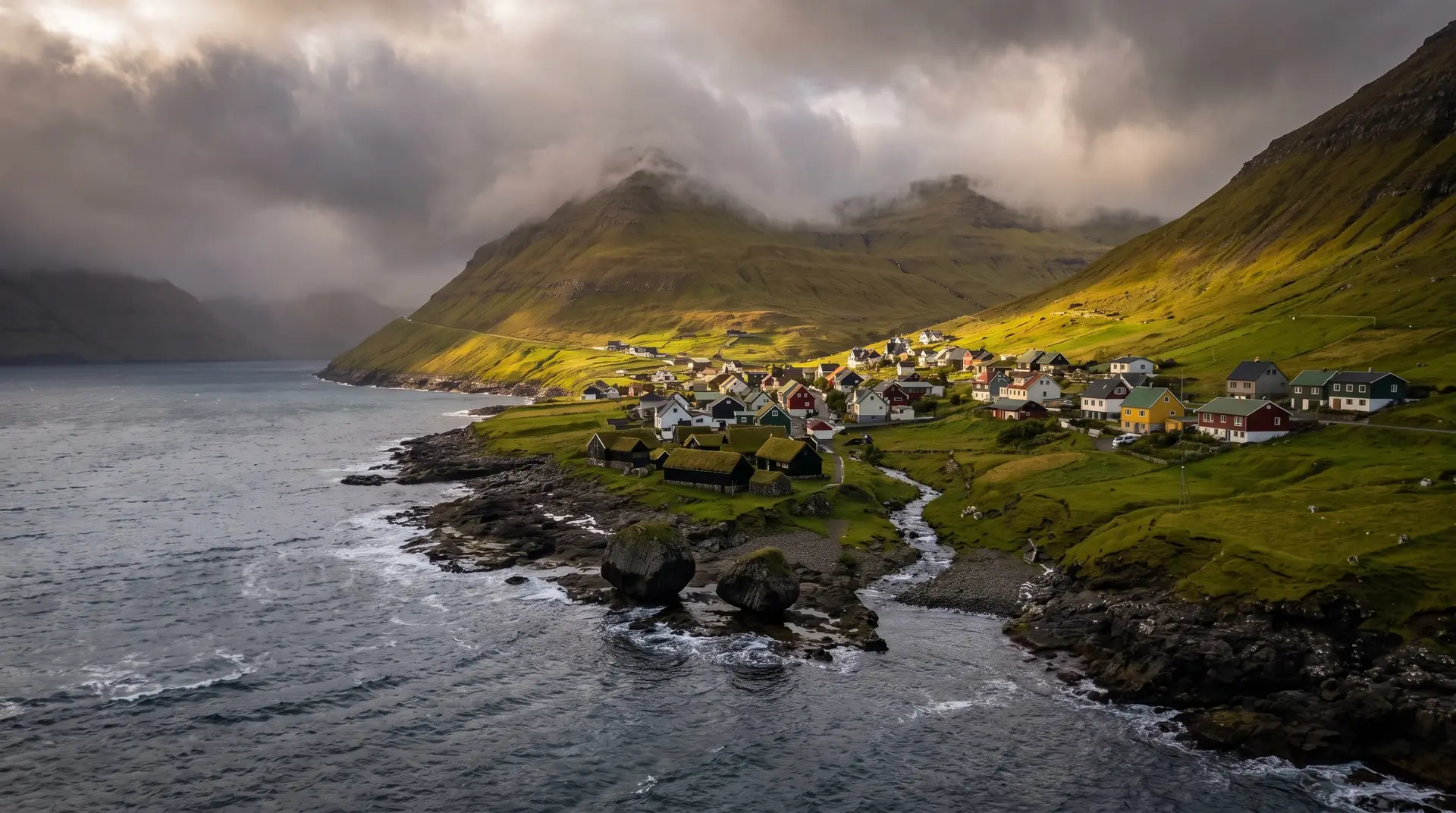
Oyndarfjørður.
Two boulders on the shore that the swell has never quite settled.
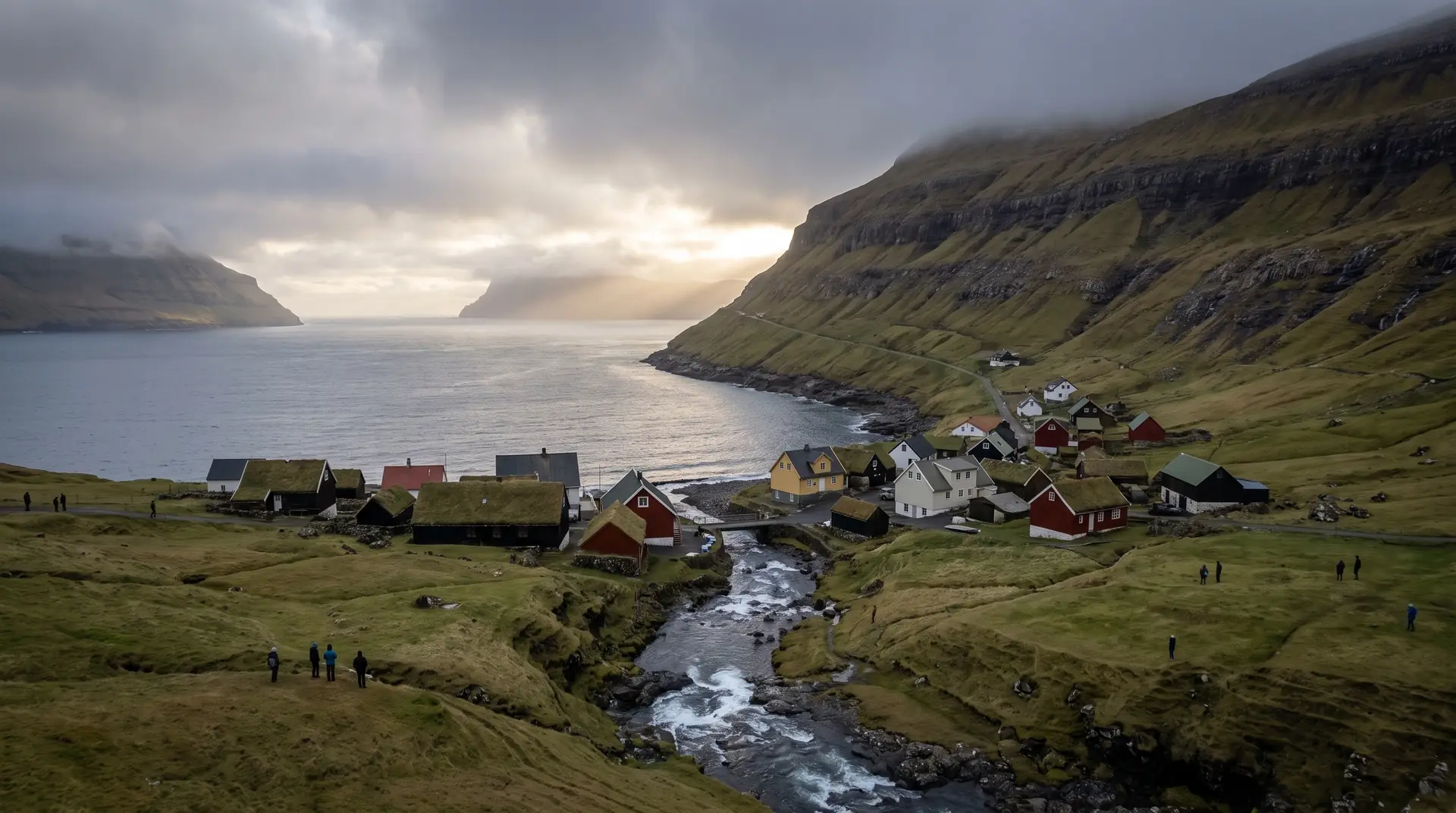
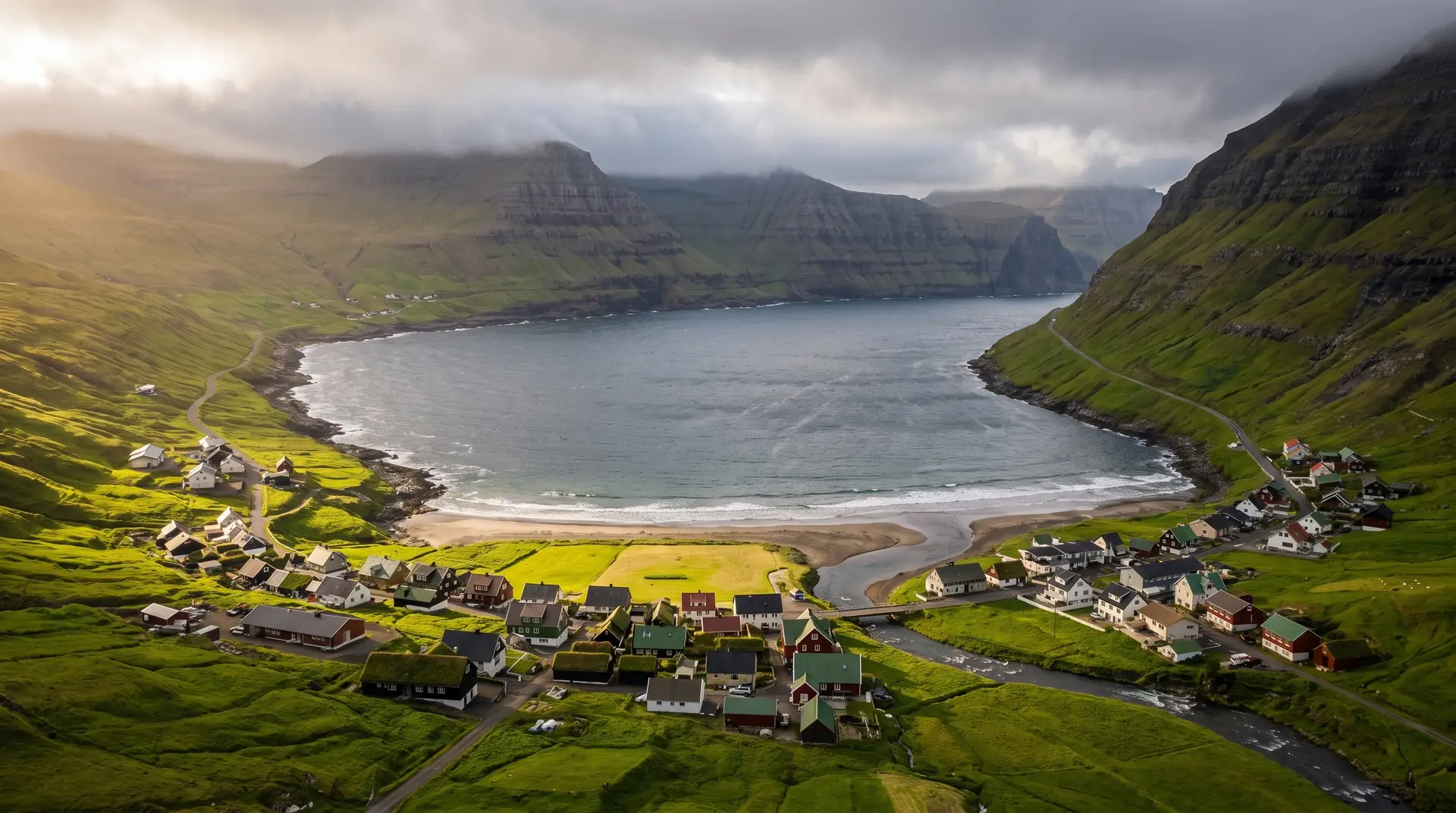
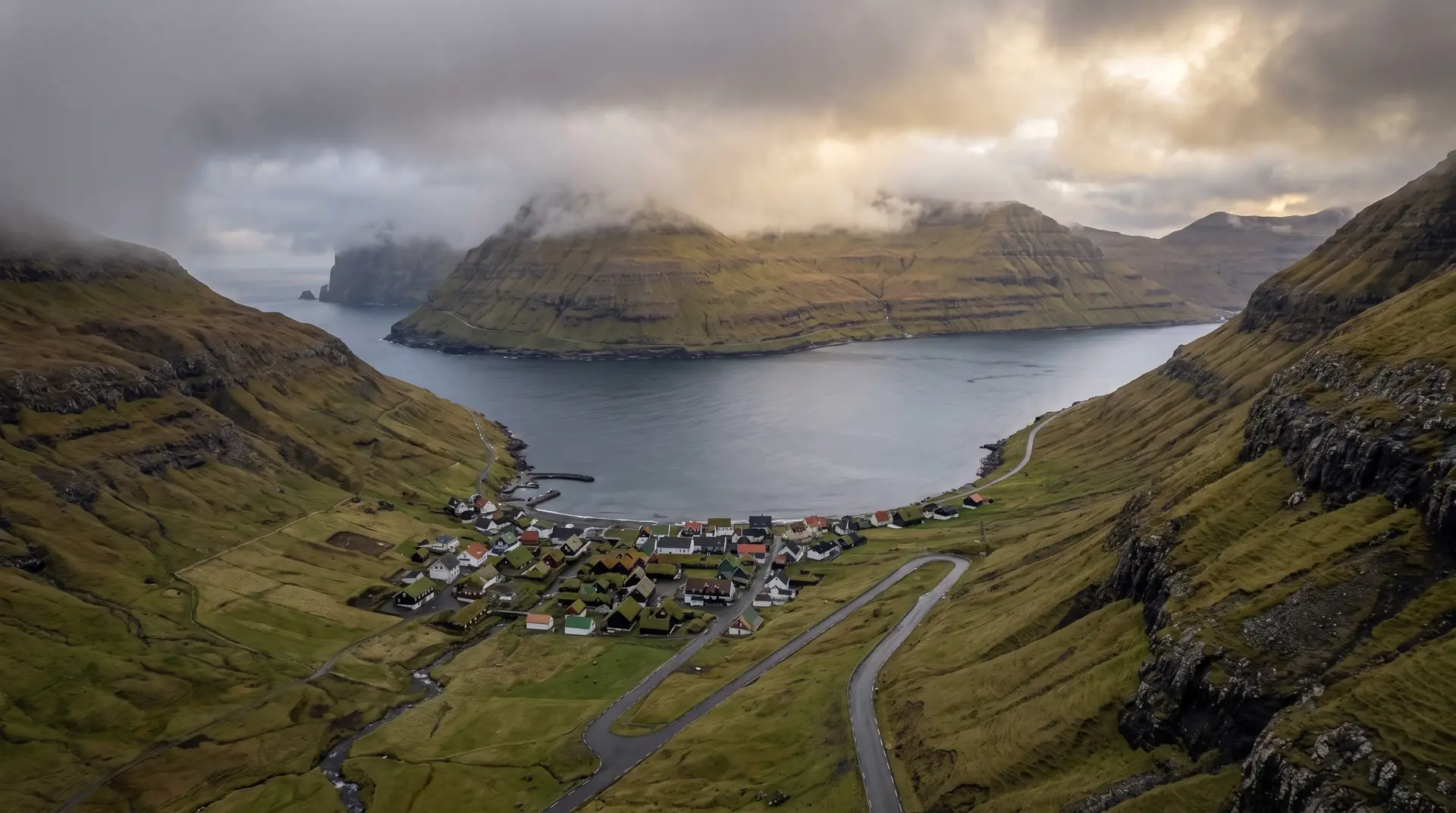
A hundred and twenty people live along this east-coast fjord. On the rocks past the last houses sit the Rinkusteinar — great stones that rock, visibly and continuously, with the sea.
- 01The stones keep time with the swell, not the wind
- 02A short coastal path leaves the village and ends at them
- 03No bus reaches the fjord — the car is the only way in
- 04Winter seas make the rocks spectacular and unapproachable
The place, as it lets itself be seen.
How the weather
behaves here.
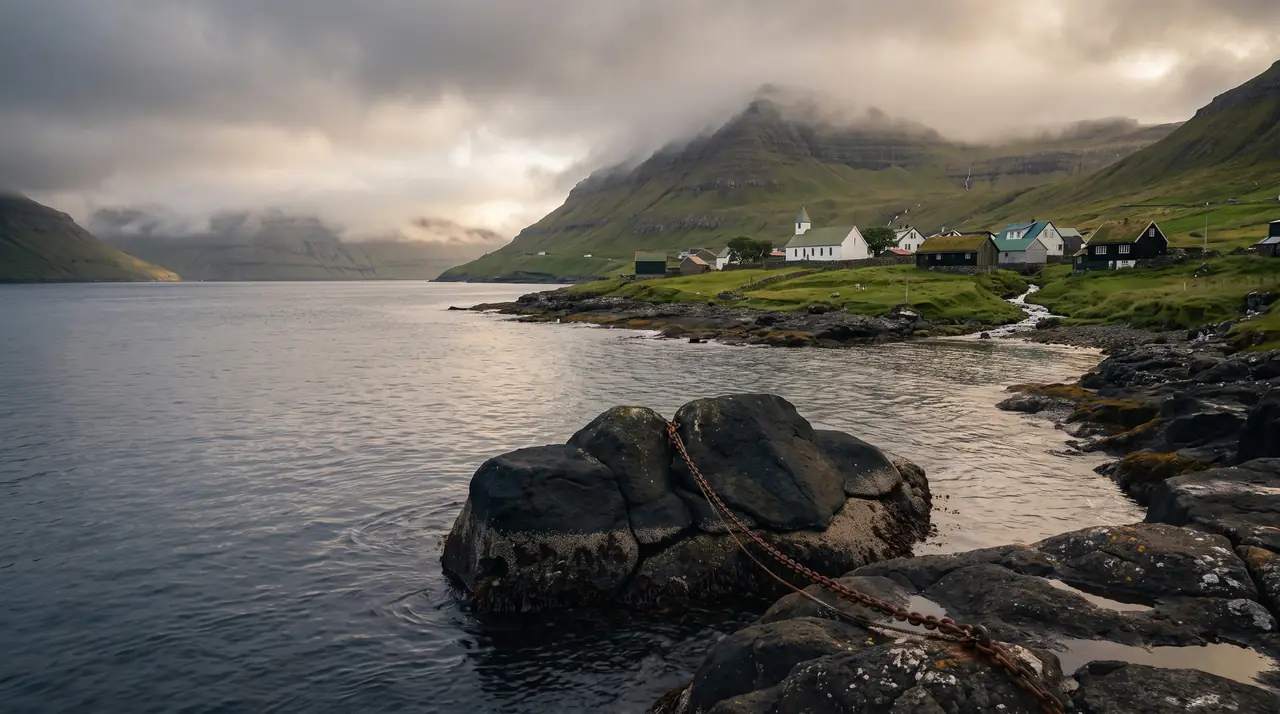
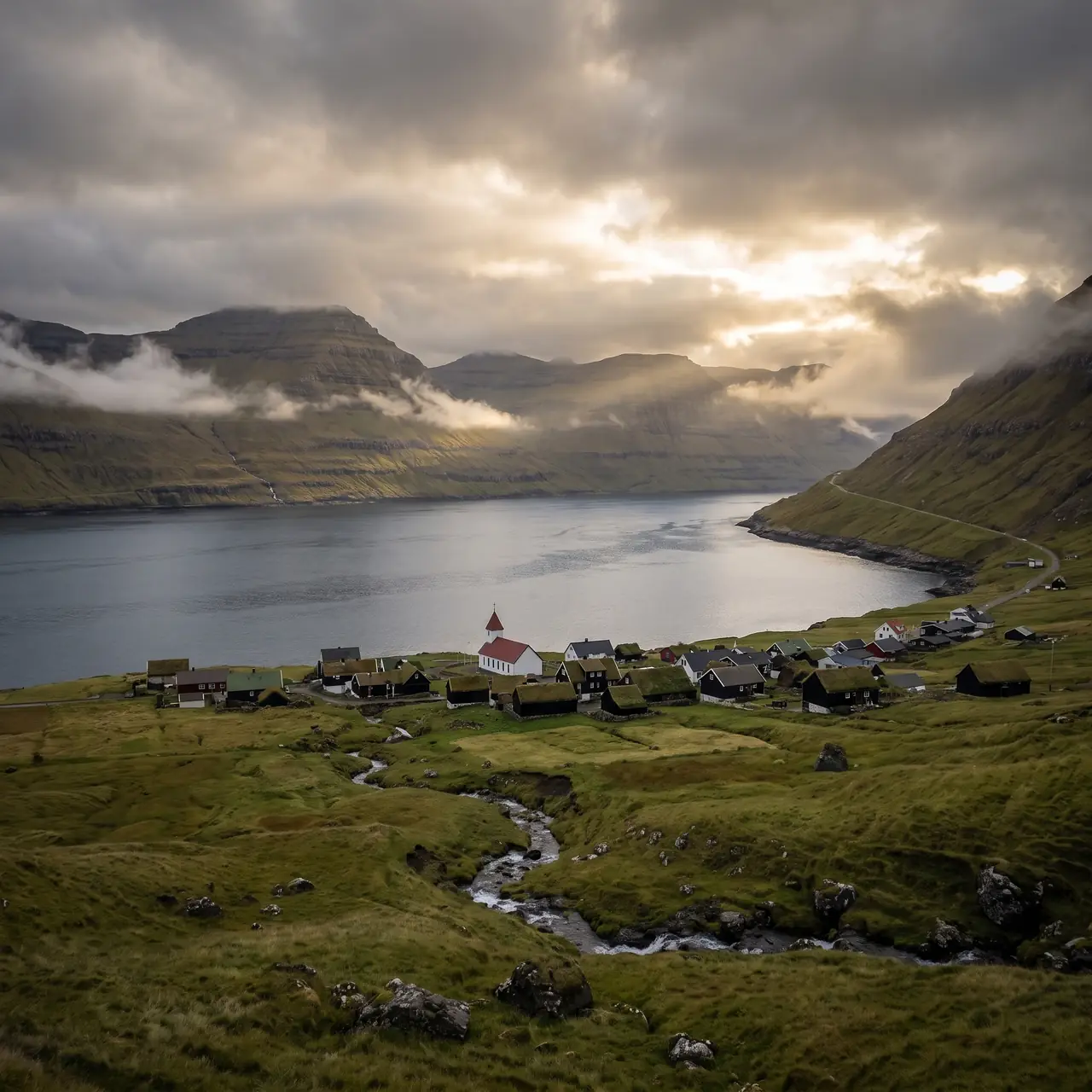
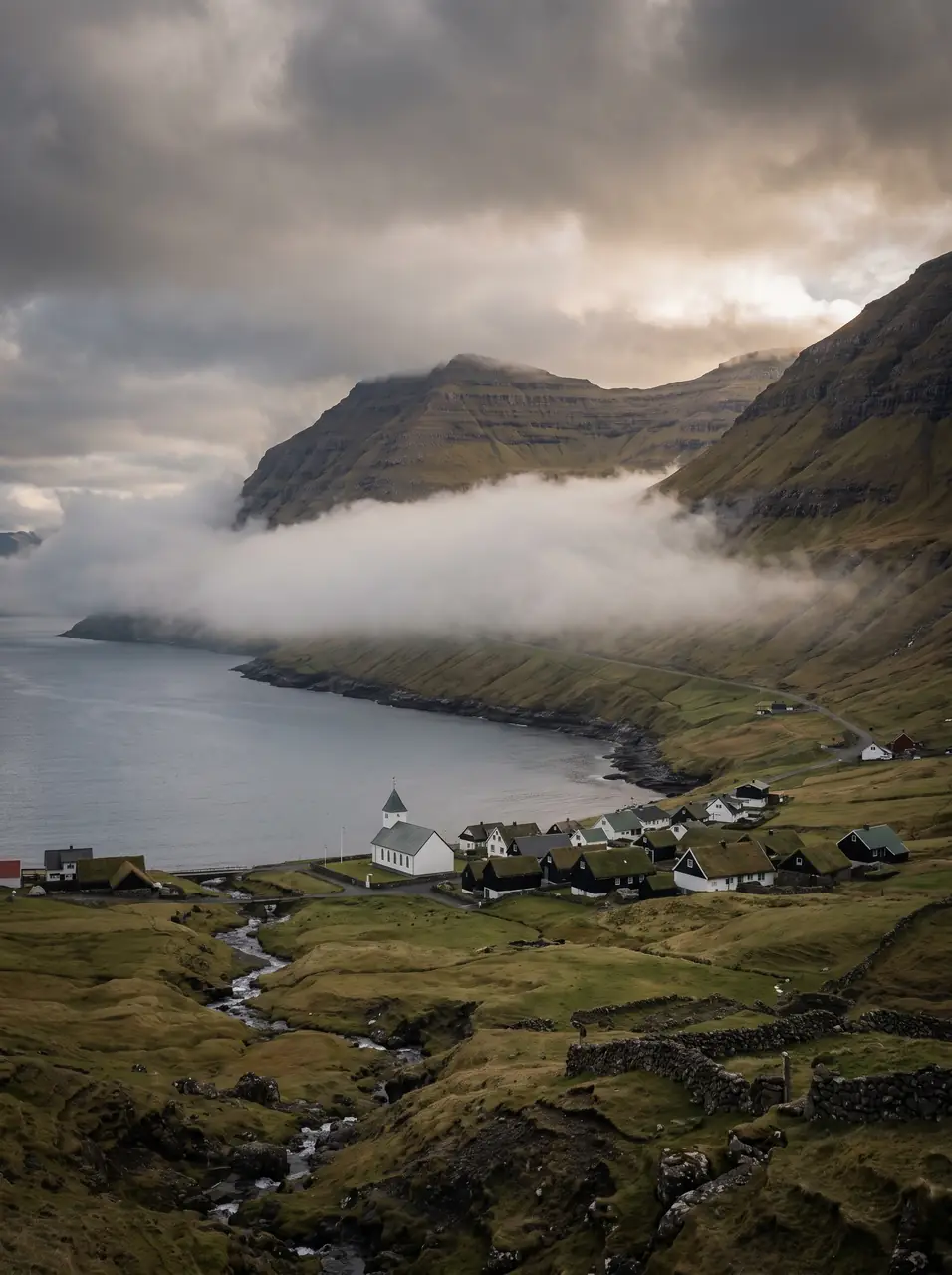
Read the air before you arrive. Fronts pass fast in the Faroes — fog, wind, and light can rewrite this place within an hour.
How to arrive,
how to stay.
- Access
- Road down from the Eysturoy east-coast route · no public transport to the village
- Parking
- Easy · park at the football pitch and walk from there
- Fees
- Free · the coastal path to the Rinkusteinar carries no charge
- Difficulty
- Easy
- Duration
- 30–60 min to the stones and back
- Best season
- May–September
- Crowd level
- Quiet
- Drone
- Restricted
- Safety
- Wet rock and a working swell · stay off the stones and back from the waterline
A field guide
for the light.
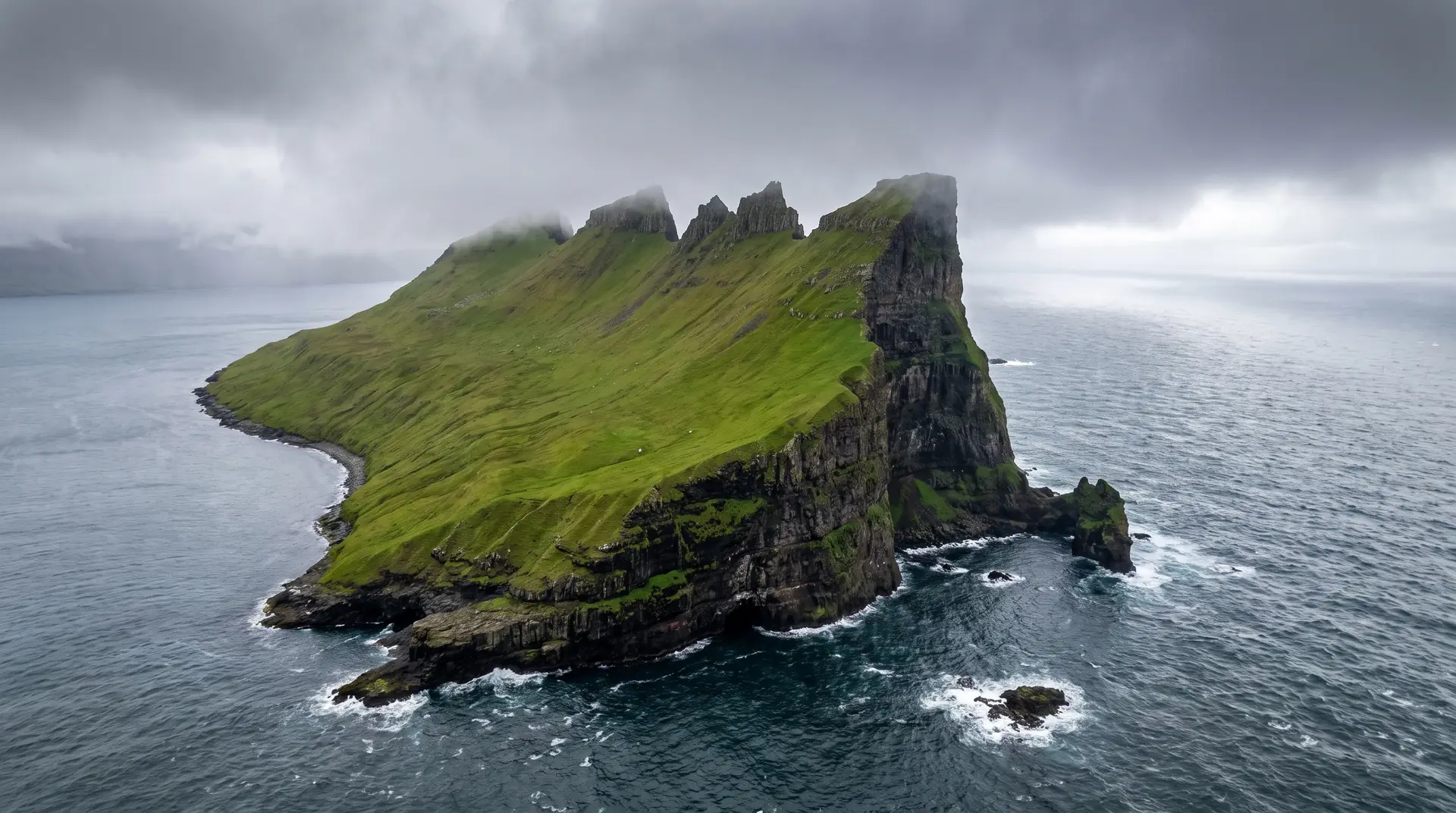
Grey day with a working swell — the motion is the whole subject. Two seconds on the shutter turns the surf to smoke and leaves the stones hard-edged; that contrast is the photograph.
- 24–70mm standard
- ND for long exposures
- 70–200mm from the road above
Keep 150 m off the houses and under 120 m · the shoreline south of the village is the open line.
October–March for swell · June for light down the fjord
62.28° N · 6.85° W
Surrounding villages, hikes, and weather overlays — open the full atlas to explore in motion.
Within an
afternoon's drift.
The stones that will not settle.
“Everything else on this coast has finished moving. These two are still deciding.”
The Rinkusteinar sit at the waterline a short walk beyond the village, and they rock. Not imperceptibly, not once in a storm — steadily, in time with the swell, two boulders the size of small rooms keeping a rhythm that has outlasted everyone who ever came to watch it.
Legend gives them a supernatural origin, as legend does. The plainer explanation is glacial: erratics left balanced on smaller stones, with wave energy and buoyancy doing the rest, which is a satisfying answer only until you stand next to them and feel one shift.
Oyndarfjørður itself is a hundred and twenty people along a fjord with no bus service and a football pitch that doubles as the car park. Nobody has built anything around the stones. There is a path, and then there is the sea working on the rock, which is exactly the right amount of interpretation.