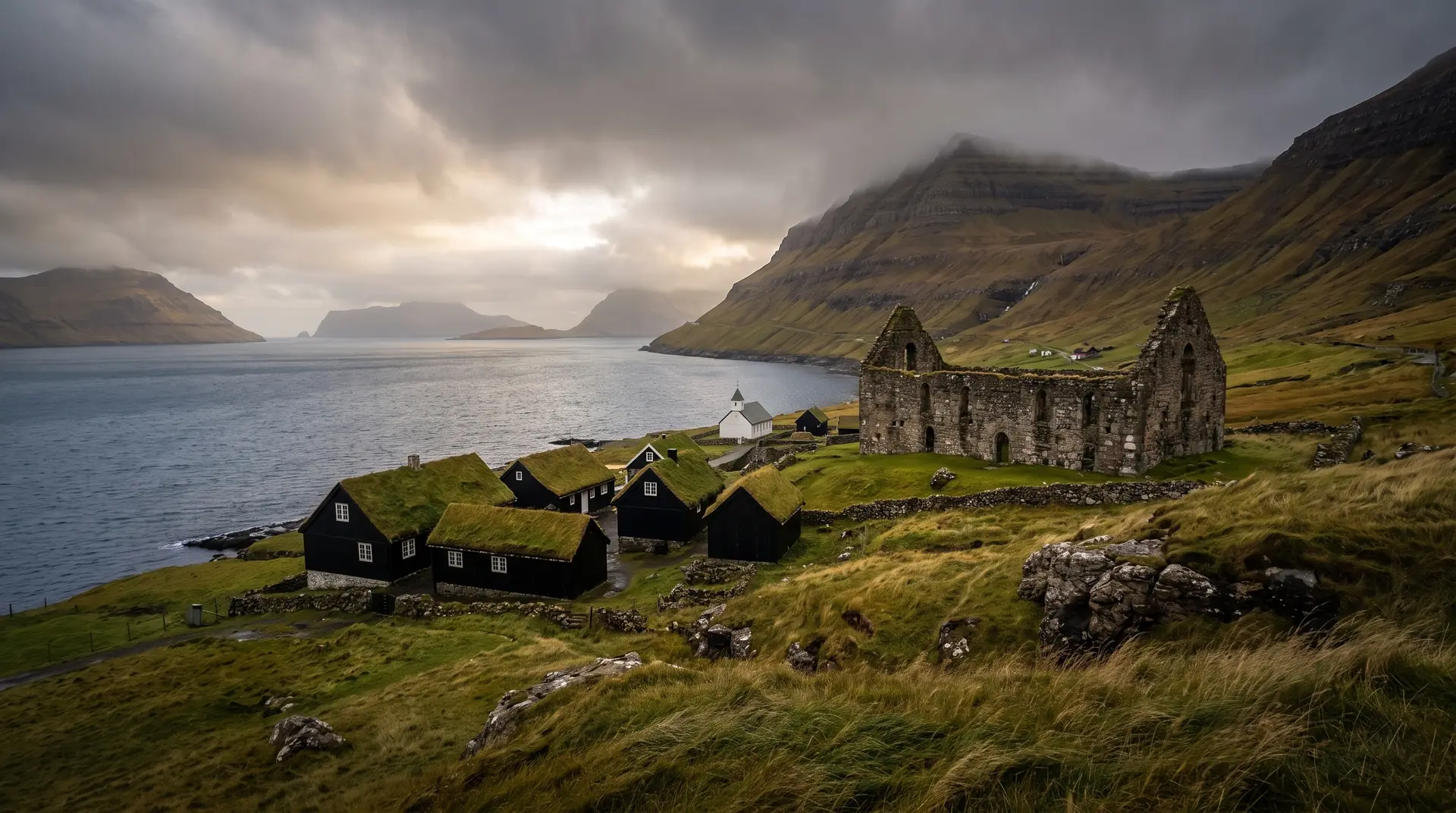
Kirkjubøur.
Nine hundred years of Faroese history in one shoreline hamlet.
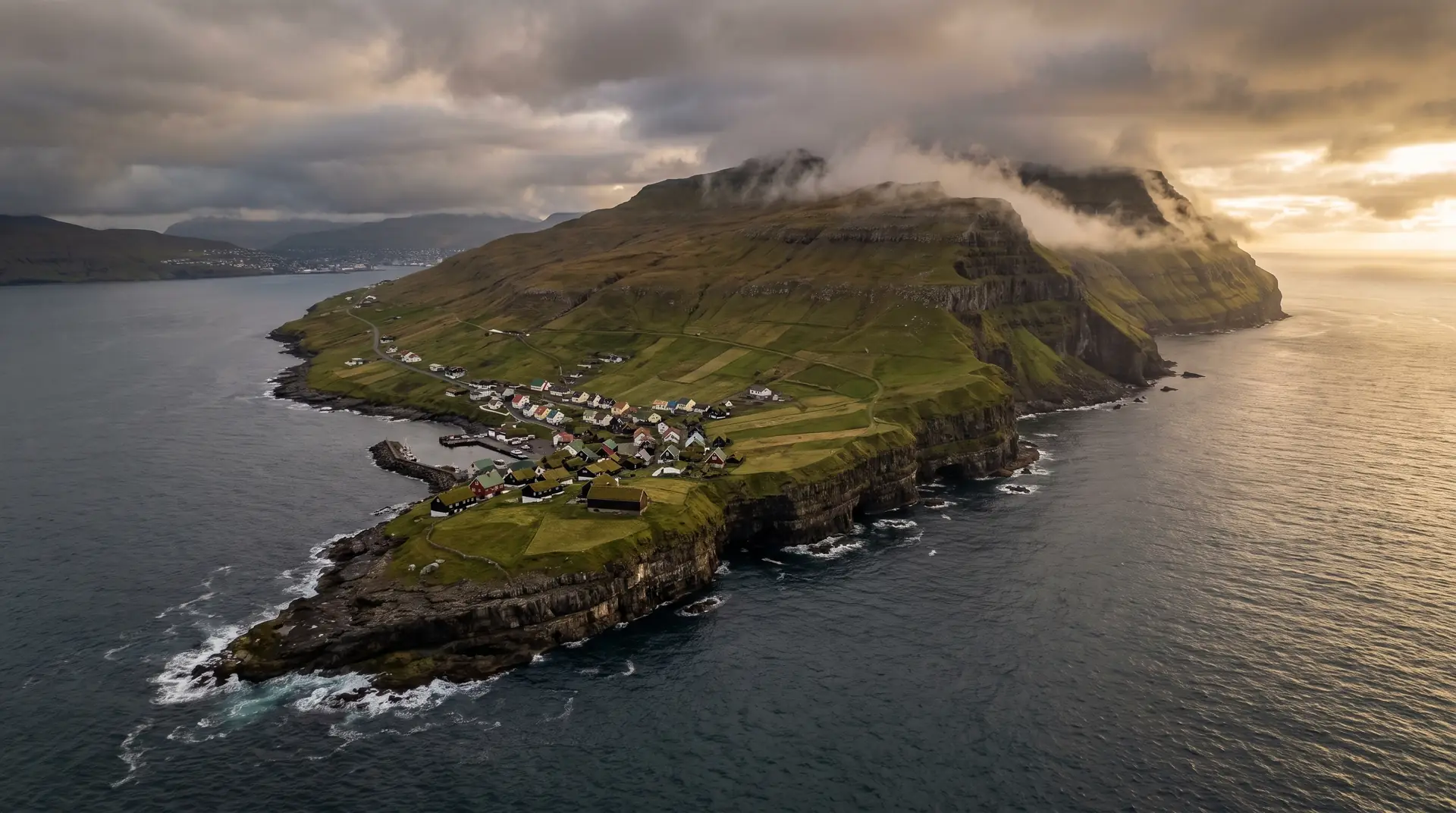
The islands’ medieval capital: the roofless Magnus Cathedral, Saint Olav’s Church from around 1250, and Roykstovan — a farmhouse lived in for some nine centuries.
- 01The cathedral ruin has stood unfinished for 700 years
- 02The same family has farmed here for 17 generations
- 03Saint Olav’s still holds services — the islands’ oldest church in use
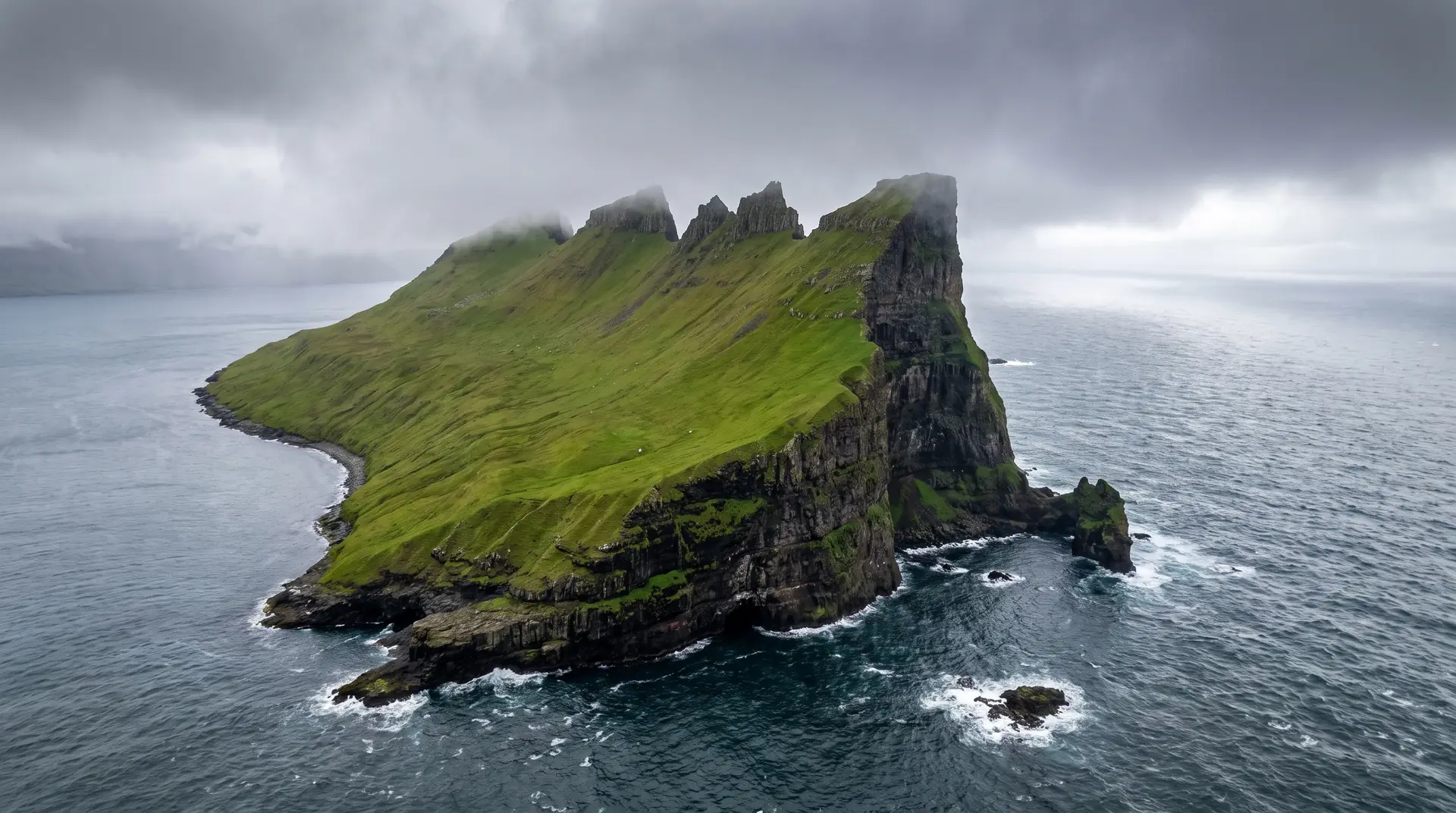
- 04Koltur’s pyramid rises across the sound
The place, as it lets itself be seen.
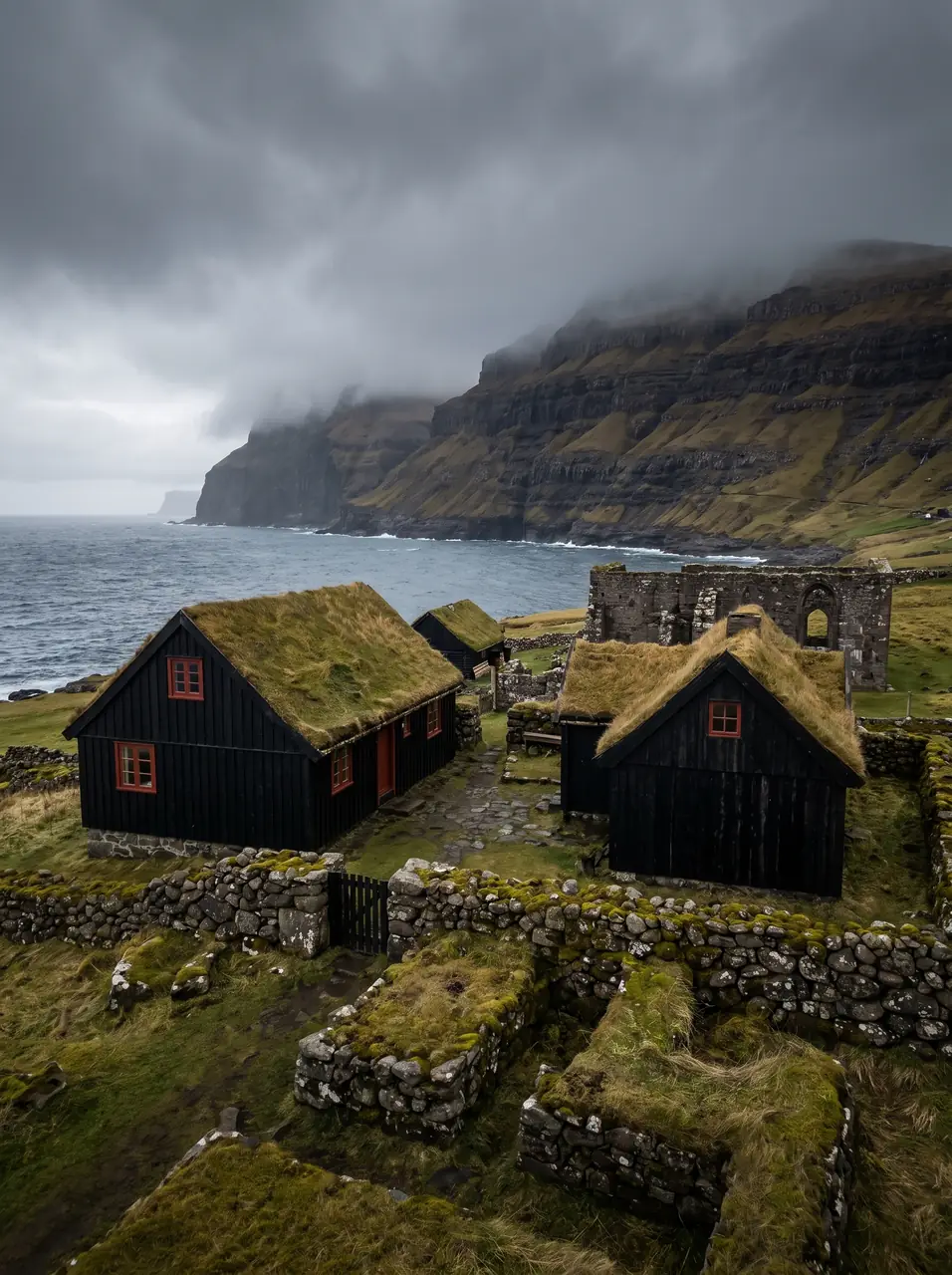
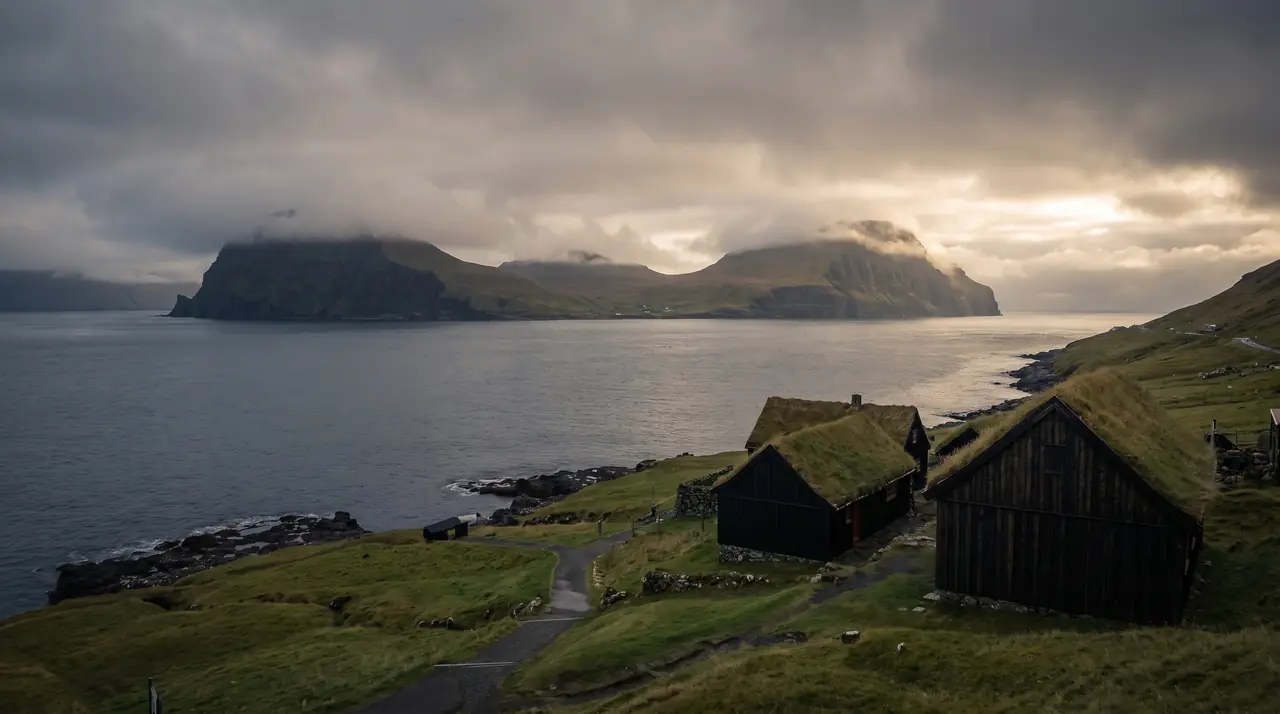
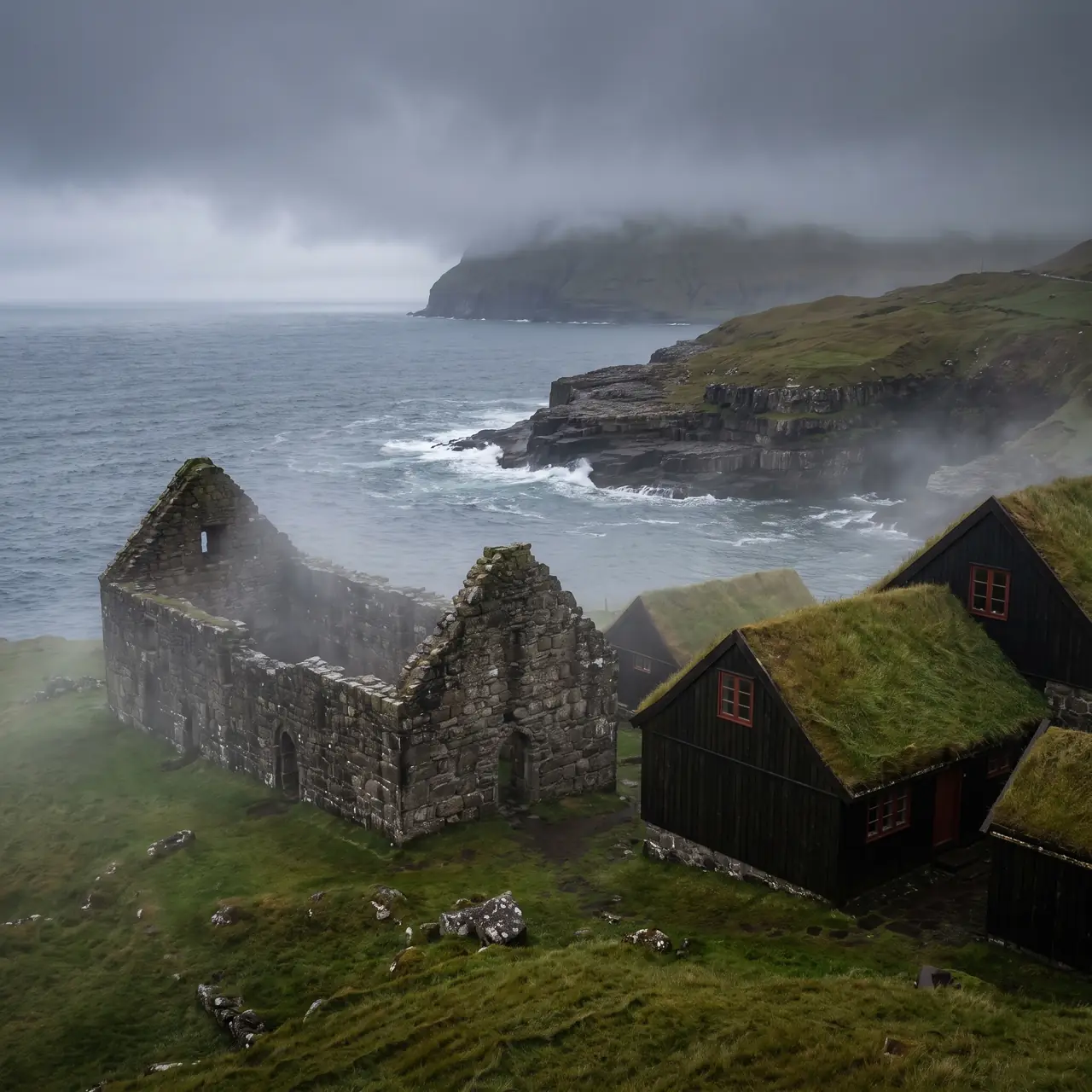
How the weather
behaves here.
Read the air before you arrive. Fronts pass fast in the Faroes — fog, wind, and light can rewrite this place within an hour.
How to arrive,
how to stay.
- Access
- 15 min drive from Tórshavn over the ridge
- Parking
- Lot at the village entrance
- Difficulty
- Easy
- Duration
- 1–2 hours
- Best season
- Year-round
- Crowd level
- Moderate
- Drone
- Restricted
- Safety
- Working farm · stay off the infield and respect the ruin fences
A field guide
for the light.
Low evening sun on the cathedral’s bare gables. Frame the ruin through the churchyard gate; the sound and Koltur close the background.
- 24–70mm standard
- 35mm prime for the lanes
Historic site and working farm — fly from the shoreline south of the village if at all.
October · golden grass against black timber
61.95° N · 6.79° W
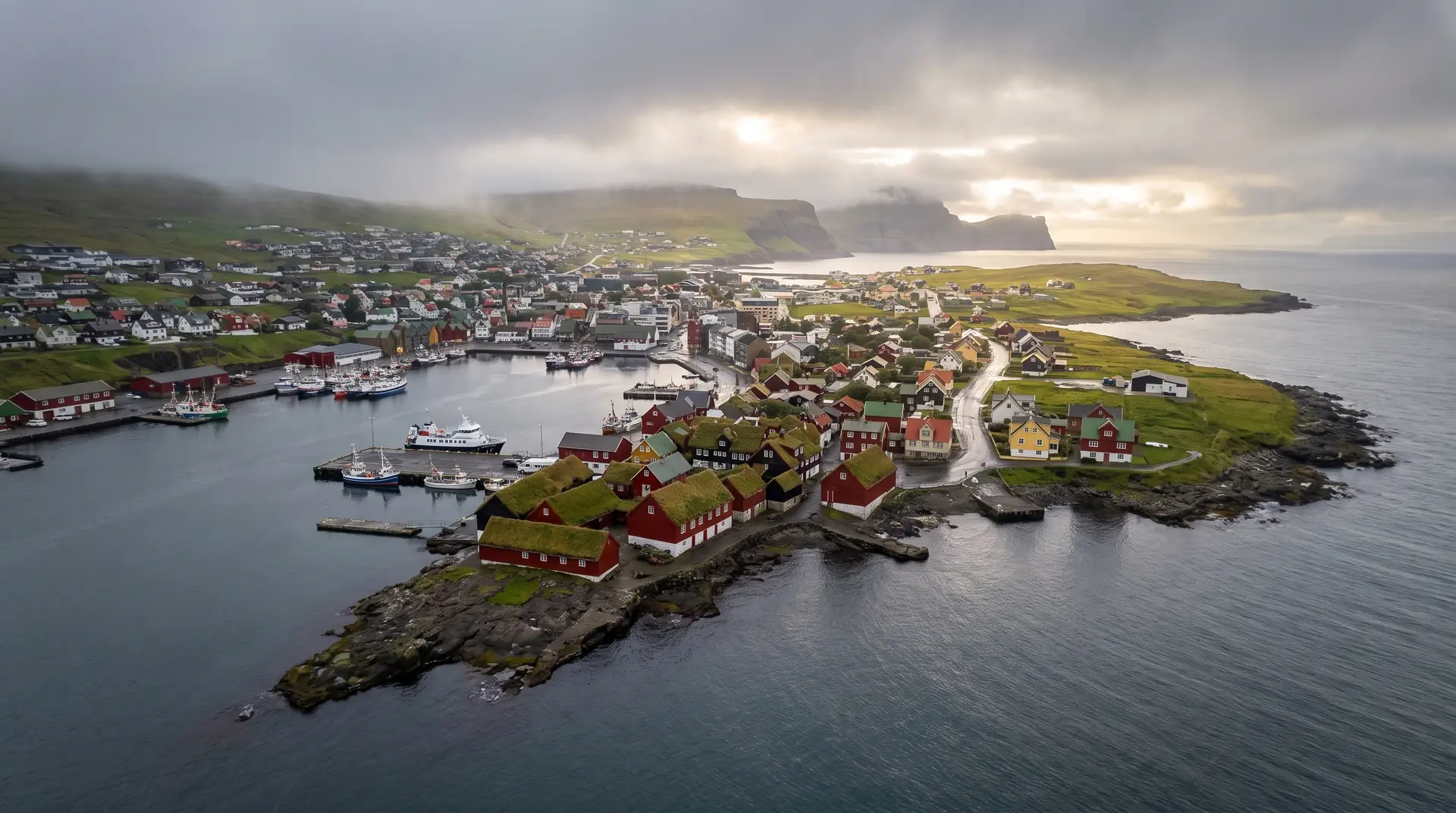
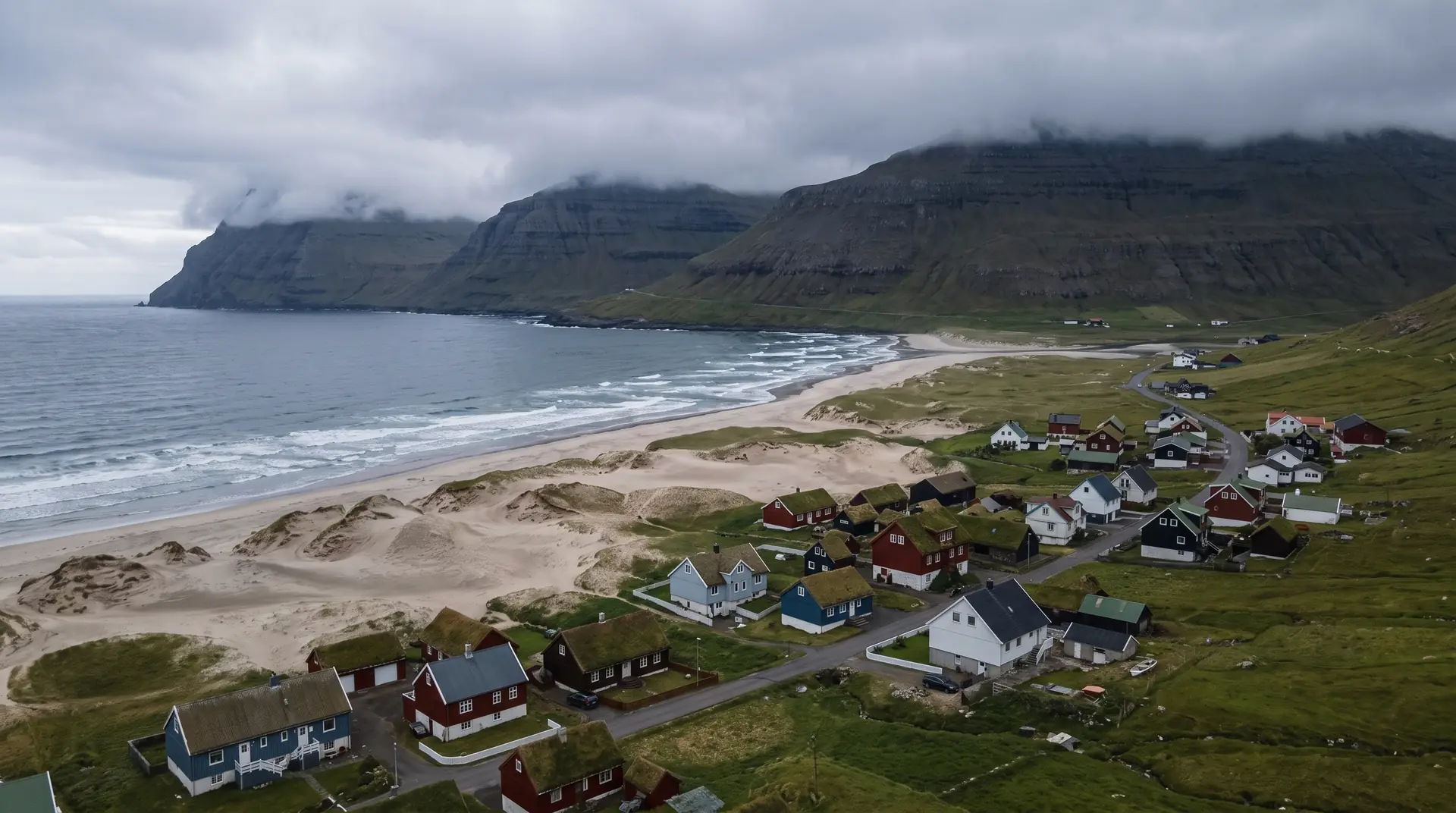
Surrounding villages, hikes, and weather overlays — open the full atlas to explore in motion.
Within an
afternoon's drift.
The cathedral that never got its roof.
“Ambition raised the walls. The Reformation kept the roof.”
Around 1300, Bishop Erlendur began a Gothic cathedral in his seaside seat at Kirkjubøur — a building absurdly grand for a diocese of turf farms. The walls went up, carved and buttressed. Then money, politics and eventually the Reformation intervened, and the Magnus Cathedral has stood open to the weather ever since, the islands’ most eloquent unfinished sentence.
Next door, everything the cathedral is not: Saint Olav’s Church, small and whitewashed, in continuous use since the 13th century, and Roykstovan, the log farmhouse whose smoke-room has sheltered the same farming family — the Paturssons — for 17 generations. The logs, tradition says, arrived as driftwood from Norway.
Come in the late afternoon when the tour buses have gone. The hamlet returns to what it has always been: a farm at the edge of the sound, keeping the church keys.