What winter here is, and is not
It is not cold in any continental sense. January averages 6.2°C by day and 2.1°C at night; December runs 6.5°C and 2.2°C. The Gulf Stream keeps the sea mild and the sea keeps the islands mild, so a Faroese winter is warmer than most European capitals get in the same weeks.
What it is instead is dark and wet and windy. Rain falls on roughly 21 days in January and 20 in December, storms come through every few days, and the wind on an exposed road can make 6°C feel like something else entirely. Pack for horizontal water rather than for frost.
The light budget
Around the December solstice the sun clears the horizon for something like five and a half hours. Add the long blue and grey margins either side and usable light runs roughly 09:30 to 16:30. By late February it has stretched to around eight hours, which is the difference between one location a day and three.
The compensation is real: with the sun that low, the entire day is raking light. There is no harsh midday here in winter, and golden hour is not an hour — it is the shape of the whole afternoon. Photographers who plan around five usable hours rather than resenting them get more out of a winter week than a summer one.
Storms, and what they close
Weather systems typically arrive every few days and they close things. Flights into Vágar divert or cancel. Ferries to the smaller islands suspend — the Mykines boat does not run in winter at all — and mountain roads over the high passes shut when the wind gets up. None of this is unusual and none of it is announced far ahead.
The planning response is slack. Never book a same-day onward connection out of Vágar. Build at least one spare day into a winter trip, and treat your itinerary as an ordered list of options rather than a schedule. The people who have a bad time in a Faroese winter are almost always the ones who had somewhere they absolutely had to be.
Driving in winter
The tunnels are the reliable network and the mountain roads are not. Where a tunnel and a pass go to the same place, take the tunnel. Wind is the main hazard rather than ice: gusts on exposed coastal stretches can move a small car, and side-wind at a tunnel mouth catches people out.
Ice does form on the high crossings, sheep are still on the road, and fog can take visibility to a few car lengths on ground that was clear minutes earlier. Drive with lights on, leave large gaps, and check the road picture before committing to a mountain route in the dark. Daylight is short enough that most winter driving happens in some form of dusk.
What is actually good about it
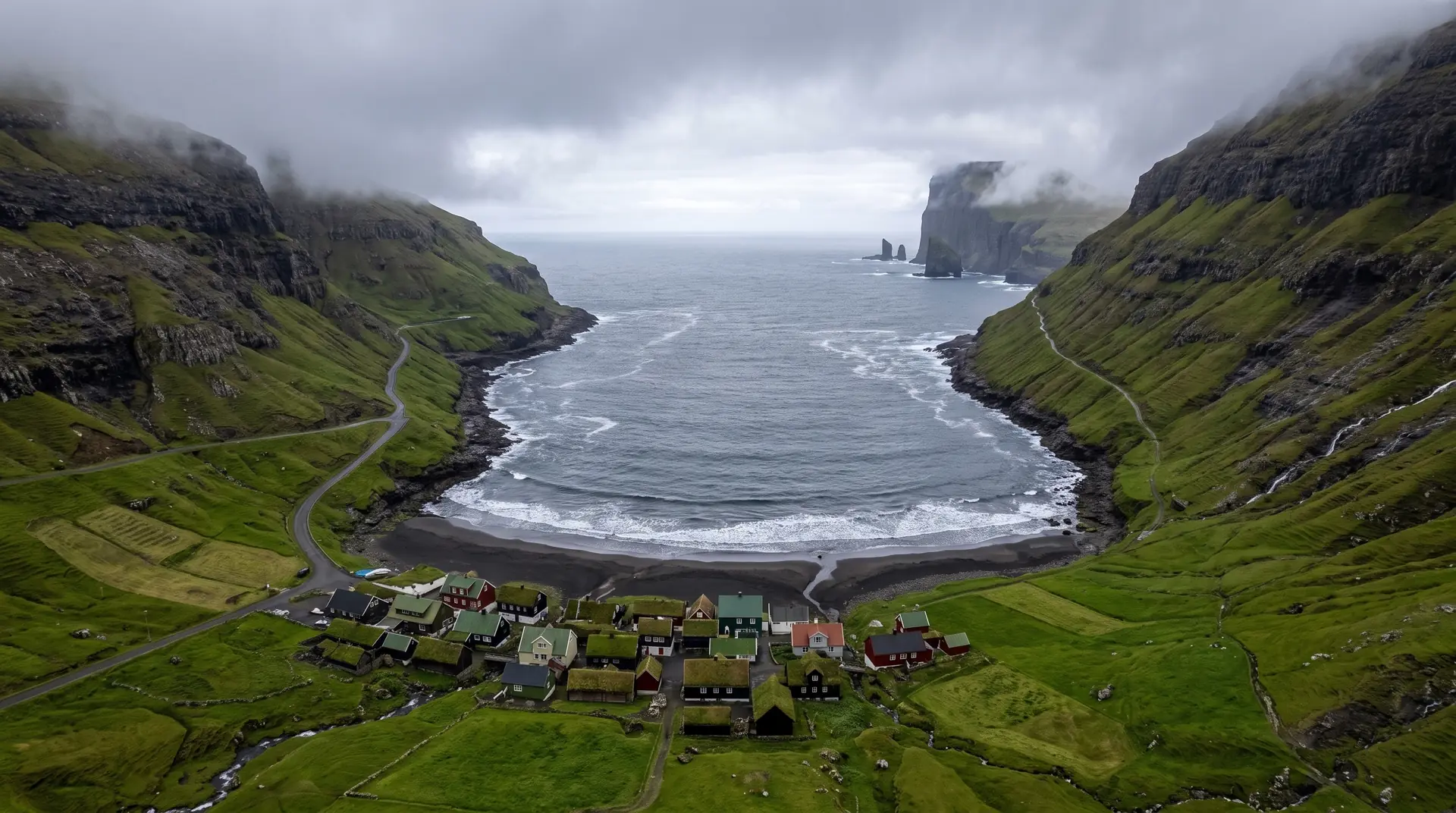
Solitude, first. The villages belong to the people who live in them again, the trailheads are empty, and the light in Saksun or Gjógv arrives with nobody else standing in it. Storm-watching is the specific reason many photographers come: December is the strongest month for it with January close behind, and the sea against Suðuroy's cliffs or the north coast is genuinely difficult to comprehend.
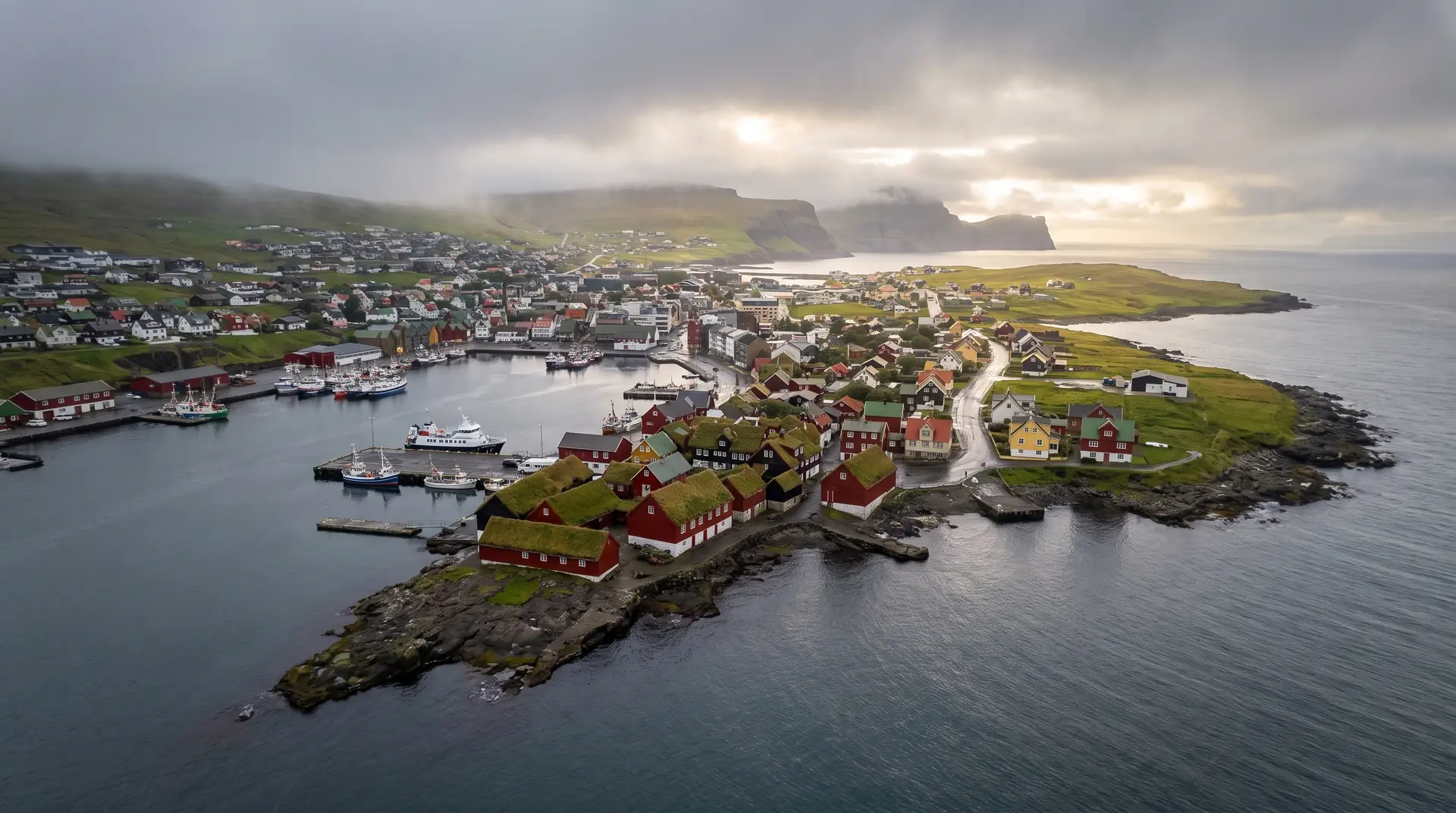
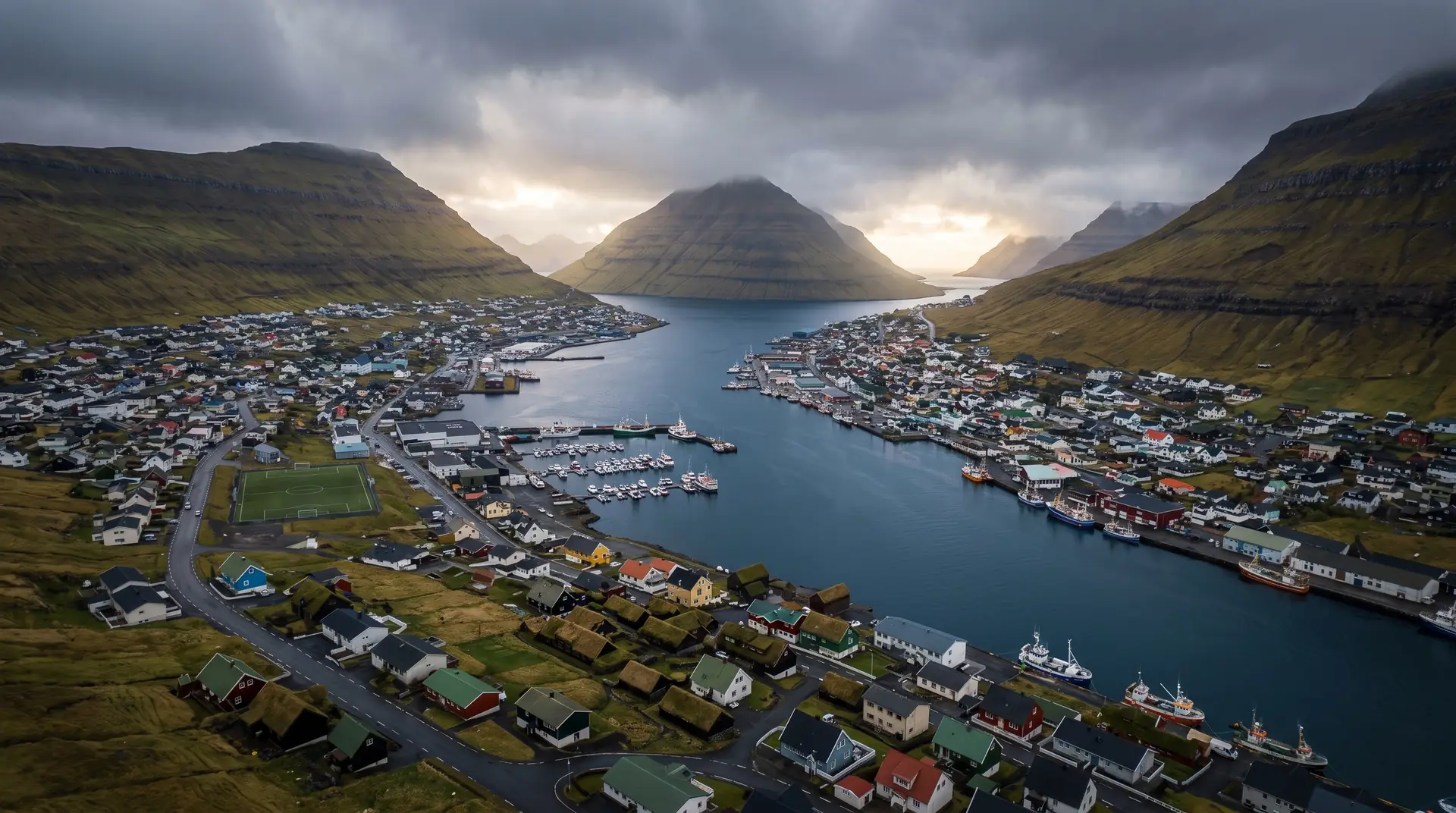
The capital works in winter in a way it does not in July. Wet lanes, café windows, harbour light, and a working fishing town up in Klaksvík doing what it exists to do. Prices drop away from the summer premium, and rooms that are impossible in June are available in February.
The aurora is possible: these are dark skies at 62°N and it does appear. It is not a reason to book, because the scarce ingredient is not solar activity but a clear night, and clear nights are precisely what a Faroese winter is short of. Treat it as a bonus rather than an itinerary item.
Choosing your winter month
February is the best of them. Rain days fall to about 17 from January's 21, daylight has climbed to around eight hours, and the low-season pricing is still in force. For anyone who wants winter atmosphere and also wants to get out of the car, it is the clear pick.
January is the most dramatic and the least forgiving — the atmosphere is unmatched and the margin for error is thin. November is dark and damp with rain on about 20 days and roughly seven hours of light, better for an atmospheric stay than for active sightseeing. December pairs the shortest days of the year with one of the highest rain-day counts, which makes it the worst value on the calendar and, for storm-watchers specifically, the best month there is. Both things are true.
How to plan and what to pack
A genuinely waterproof shell and overtrousers, not a water-resistant jacket. Layers you can shed indoors. Boots with grip for wet basalt and mud. A headtorch, because you will be walking back in the dark. Gloves that still work when soaked, and more of them than you think.
For the trip itself: one base rather than two, everything within an hour's drive of it, a spare day, and an indoor fallback for each planned location. Book accommodation with a kitchen if you can — winter Sundays and rural evenings are exactly when the supermarket habit pays off.